
ALLEA Research Ethics and Integrity Council Holds Inaugural Meeting in Berlin
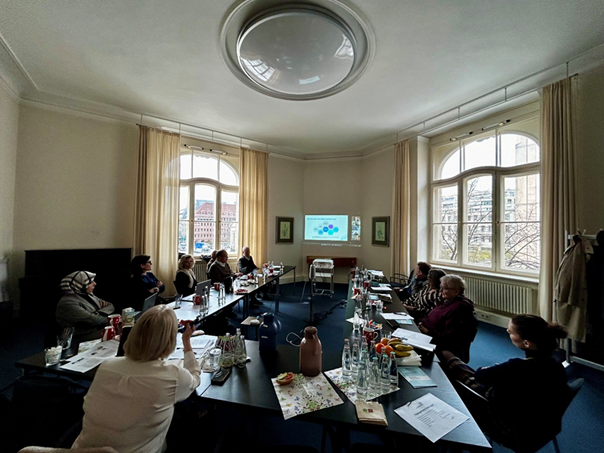
On 24 March 2026, the ALLEA Research Ethics and Integrity Council (REIC) held its inaugural meeting at the Berlin-Brandenburg Academy of Sciences and Humanities (BBAW) in Berlin. It brought together research ethics and integrity experts from ALLEA Member Academies under the chairpersonship of Dr Maura Hiney (Royal Irish Academy). The meeting marked the formal launch of the Council’s activities, building on the legacy of ALLEA’s Permanent Working Group on Science and Ethics (PWGSE) and its contributions to shaping the European research integrity landscape.
The session was opened by ALLEA’s new Director, Tatjana König, who welcomed Council members. She acknowledged the achievements of the PWGSE, particularly the European Code of Conduct for Research Integrity (ECoC), now widely recognised as a key reference document for researchers, institutions, funders and policymakers. Council members represent a wide range of disciplines – including philosophy, law, medical ethics, computer science, and the natural sciences – and diverse national contexts, reflecting the interdisciplinary and international nature of research ethics and integrity challenges.
The European Code of Conduct for Research Integrity: Towards the Next Revision
A central focus of the meeting was the future development of the European Code of Conduct for Research Integrity (ECoC). Building on its 2023 revision, the Council initiated discussions on the next update, envisaged for publication in 2028. Members emphasised the importance of maintaining the Code’s core principles while ensuring its continued relevance in a rapidly evolving research environment. Since the 2023 publication, the Code has been translated into 25 European and non-European languages.
Key areas identified for consideration in the next revision include the implications of emerging technologies such as artificial intelligence, the ethical dimensions of research in poly-crisis contexts, research security, funding transparency, and the influence of social media on research practices. The group also highlighted the need to maintain the high-level nature of the Code while balancing specificity with flexibility, ensuring that the Code remains applicable across national systems and disciplinary contexts.
Preparatory work on the revision process is now underway, which will be informed by extensive stakeholder consultation planned over the coming year. Digital presentation of the Code to highlight the excellent supplements produced by EU projects on specific ethics and integrity issues will also form part of the Council’s work.
Strengthening Research Ethics and Integrity through European Collaboration
The Council also discussed its contribution to European research policy, particularly in the context of the European Research Area (ERA) and specifically in the ERA Action 18 on Ethics and Integrity. The REIC will support ongoing efforts to promote the dissemination and implementation of the Code, as well as to monitor emerging ethical challenges across Europe.
Two Horizon Europe-funded projects – SIMPLIFY and SAEGE – were presented as key initiatives linked to the Council’s work. SIMPLIFY aims to strengthen the implementation of research ethics and integrity frameworks at institutional level, while SAEGE supports the activities of the European Group on Ethics (EGE) by providing research and evidence synthesis. Both projects offer important opportunities for collaboration, knowledge exchange, and alignment with the REIC’s objectives.
Looking Ahead: Priorities and Next Steps
The meeting concluded with an exchange on priorities for the Council’s future work. In addition to the Code revision, members identified a range of topics for further exploration, including academic freedom, citizen science, responsible research in policy contexts, and the ethical implications of commercialisation and dual-use research.
The inaugural meeting demonstrated a strong commitment among members to advancing research ethics and integrity in Europe and to ensuring that the European Code of Conduct remains a robust and forward-looking framework for responsible research.