
ALLEA Science Policy Standing Committee Sets Priorities for Horizon Scanning, Task Force Coordination, and Emerging Policy Challenges
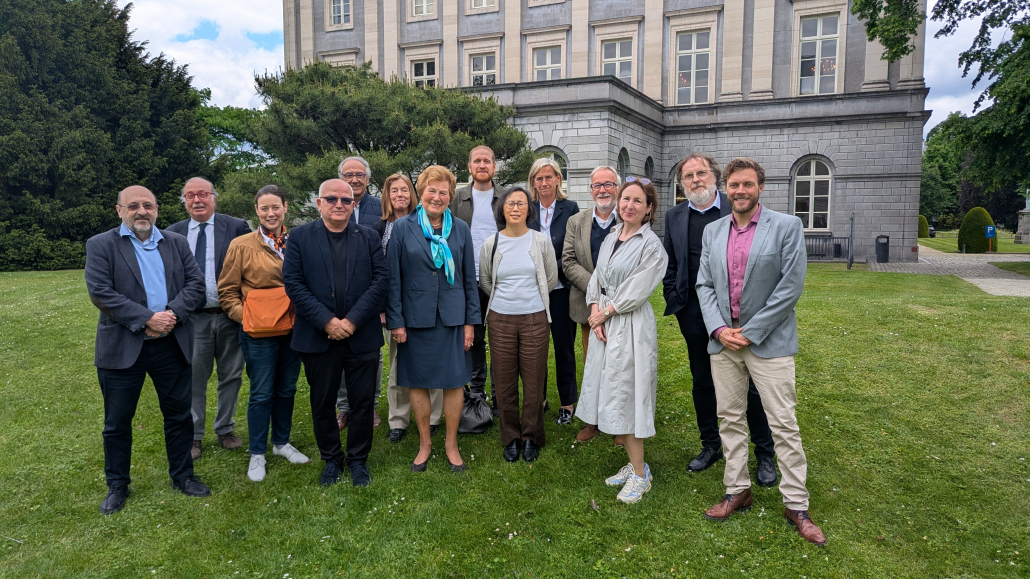
On 7 May, the ALLEA Science Policy Standing Committee (SPSC) convened in Brussels to discuss emerging challenges and opportunities for European science and research.
Hosted by the Royal Flemish Academy of Belgium for Science and the Arts (KVAB) and its President and SPSC Chair, Professor Godelieve Laureys, the meeting brought together experts from across Europe to exchange views on key science-policy developments and future priorities for the research landscape.
Discussions focused on a range of interconnected topics shaping the future of science in Europe, including public trust in science, research security, artificial intelligence, open science, and the sustainability of research systems. The committee members reflected on how European academies can contribute to addressing these challenges through independent expertise, collaboration, and engagement with policymakers and society.
In preparation for the upcoming ALLEA General Assembly in Warsaw (26-29 May), the SPSC explored different formats to engage Member Academies, particularly in the identification of crucial topics and issues that may require greater attention in the years ahead.
The Committee also explored a number of major policy developments shaping Europe’s future, including competitiveness, security, emerging technologies, and the green transition. The discussion underscored the growing need for independent scientific advice to address complex societal challenges, and highlighted the unique role of academies in bringing long-term perspectives to fast-moving policy debates.
The Science Policy Standing Committee is a central forum within ALLEA for strategic reflection on science-policy developments and for supporting collaboration across the European academy community. Established to respond to a rapidly evolving European research and innovation landscape, the Committee ensures that ALLEA’s activities remain timely, transparent, and strategically aligned with its mission to promote science for the benefit of society.