
ALLEA Task Forces Meet in London to Discuss Academic Freedom, Research Security, and Data Protection
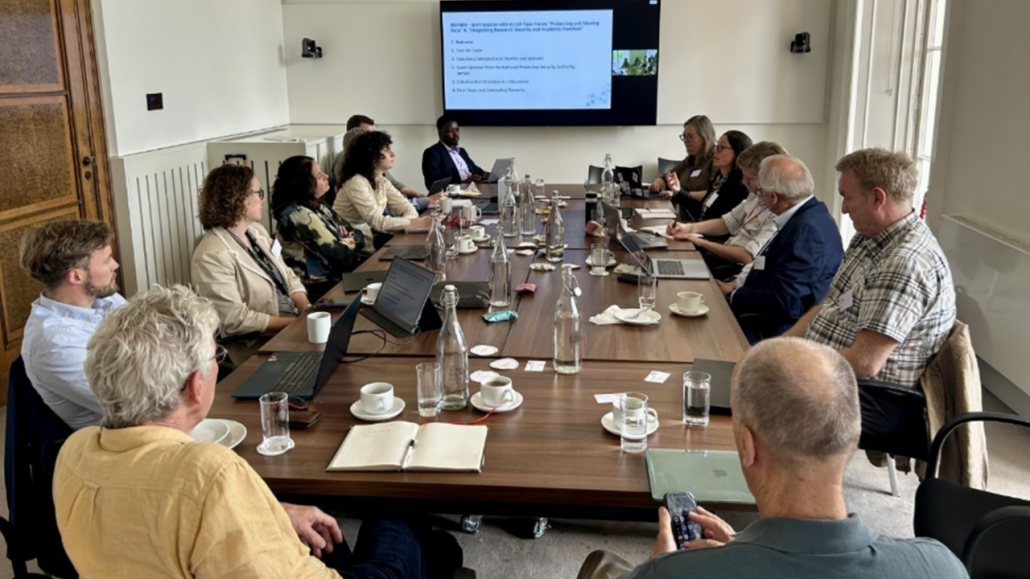
On 15 June, the ALLEA Task Forces on Integrating Research Security and Academic Freedom and on Protecting and Sharing Data held hybrid meetings in London, hosted by the Royal Society and King’s College London.
The meeting brought together 17 experts – virtually and in person – to navigate the increasingly complex intersections of Open Science, institutional safety, and geopolitical pressures in rapidly changing research environments.
During the morning sessions, the Task Force on Integrating Research Security and Academic Freedom evaluated the rise of government oversight over federally funded research. Members of the task force contrasted prescriptive international regulations with empowering, risk-management approaches. They analysed how economic security complicates national security definitions, and explored distinct disciplinary challenges, such as dual-use export controls in applied sciences versus transnational repression in the humanities.
In parallel, the Task Force on Protecting and Sharing Data discussed the responsible and resilient use of artificial intelligence (AI) in research, focusing on risks like commercial tool dependency and data poisoning (the intentional and malicious injection of corrupted, biased, or false information into an AI or machine learning model’s training dataset). They also addressed urgent European Commission consultations regarding Text and Data Mining (TDM) rights, open access frameworks, and the friction between the General Data Protection Regulation (GDPR) and academic research. This task force is currently drafting a statement on generative AI and research integrity.
This was followed by a joint session, during which the task forces assessed strategic synergies, examining how data protection, trust, and transparency overlap with research security. Their dialogue emphasised that bolstering internal data security and collaboration is essential for protecting trust among researchers. They further concluded that better communication of the broad societal value of academic freedom is crucial for safeguarding public trust in science. To bridge their respective mandates and move their work forward, the task forces committed to ensuring a regular knowledge exchange.