Archive for category: Research Culture

European Science Organisations Reach Agreement on Reforming Research Assessment

Following a six-month collaborative process involving more than 350 European organisations from over 40 countries, an Agreement on Reforming Research Assessment has been reached and made public today. ALLEA has contributed to the Agreement as part of a core group of 20 research organisations that supported the drafting team throughout the process.

The Agreement summarises a shared vision on how to reform assessment practices for researchers, research projects and research performing organisations, with overarching principles founded on quality, impact, diversity, inclusiveness, and collaboration.

The envisioned reforms are centred around the following four core commitments:

  1. Recognise the diversity of contributions to, and careers in, research in accordance with the needs and nature of the research
  2. Base research assessment primarily on qualitative evaluation for which peer review is central, supported by responsible use of quantitative indicators
  3. Abandon inappropriate uses in research assessment of journal- and publication-based metrics, in particular inappropriate uses of Journal Impact Factor (JIF) and h-index
  4. Avoid the use of rankings of research organisations in research assessment

Several additional supporting commitments aim to enable the move towards new research assessment criteria, tools and processes, and to facilitate mutual learning, communicate progress and ensure that new approaches are evidence informed. The Agreement further includes anticipated timeframes for implementing the reforms and evaluating progress and describes the operational structures for a coalition of organisations devoted to working together to implement the changes.

Next Steps

The collection of signatures to join the Coalition supporting the Agreement will be launched on 28 September 2022 at the EU Research and Innovation Days. A General Assembly of Coalition members will further decide on the governance of the Coalition, the strategy guiding the operations and activities of the Coalition as a whole, its annual work-plan and budget. The first General Assembly is expected to take place towards the end of this year.

As a European umbrella organisation of academies of sciences and humanities, ALLEA was able to provide an interdisciplinary perspective based on shared European academic values. ALLEA contributed to the Agreement through its Permanent Working Group on Science & Ethics and the Working Group European Research Area. Previously, ALLEA had also worked with the Global Young Academy on recommendations on the topic.

In a parallel endeavour, the Council of the European Union has recently adopted its Conclusions on Research Assessment and Implementation of Open Science. ALLEA welcomes the principles set out in the Conclusions for designing novel approaches to research assessment and emphasises that there is no “one-size-fits-all” format: any reforms should be driven by researchers taking responsibility for improving research assessment in their communities, following the core concept of self-regulation set out in the European Code of Conduct for Research Integrity. (Read ALLEA’s full response here)

More information

  • The complete Agreement for Reforming Research Assessment can be found here, as well as an overview of frequently asked questions regarding the Agreement and the Coalition.
  • Further information on the drafting process and the actors involved can be found here.

ALLEA Welcomes Council Conclusions on Research Assessment and Open Science

ALLEA welcomes the adoption of the Conclusions on Research Assessment and Implementation of Open Science by the Council of the European Union on 10 June. See ALLEA’s full response here.

The Conclusions are in agreement with points that ALLEA has made over the years, in particular on the necessity of appropriately implementing and rewarding open science practices and the development of research assessment criteria that follow principles of excellence, research integrity and trustworthy science.

At the same time, ALLEA continues to stress that it matters how we open knowledge, as the push for Open Access publishing has also paved the way for various unethical publishing practices. The inappropriate use of journal- and publication-based metrics in funding, hiring and promotion decisions has been one of the obstacles in the transition to a more open science, and furthermore fails to recognize and reward the diverse set of competencies, activities, and outputs needed for our research ecosystem to flourish.

ALLEA therefore welcomes the principles set out in the Conclusion for designing novel approaches to research assessment, with particular weight on recognizing (1) the critical role for peer review in research assessment and (2) the importance of integrity and ethics in developing criteria focused on quality and impact. 

ALLEA underscores that the described reforms are urgently needed and require concerted efforts from the international academic community, supported by infrastructures for exchanging best practices as well as the necessary financial resources to implement these. 

Read ALLEA’s full response

Transforming Science: Pathways Towards Sustainability and Trustworthiness

The ALLEA symposium ‘Transforming Science: Pathways Towards Sustainability and Trustworthiness’ brought together leading scientists, policymakers and research managers in Brussels to discuss the transformations the scientific system must address to be ready for future crisis after the Covid-19 pandemic.

The event took place on 11-12 May, hosted by the Royal Academy of Sciences, Letters and Arts of Belgium and the Royal Flemish Academy of Belgium for Science and the Arts at the Academy Palace, in the heart of the Belgian capital. The symposium was part of the annual meeting of ALLEA member academies, more than 50 academies from about 40 countries in Europe.

In two days of keynotes and panel discussions, more than 400 online and in-person participants joined four sessions addressing 3 main themes: Science-Policy Relations in an Age of Complexity, Transforming Research Cultures and Towards Climate Sustainability in the Academic System.

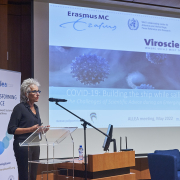
Speakers included political representatives such as Mariya Gabriel, European Commissioner for Innovation, Research, Culture, Education and Youth, and Thomas Dermine, Belgian Secretary for Economic Recovery and Strategic Investment with responsibility for Science Policy. Marion Koopmans, Director of the WHO Collaborating Centre for Emerging Infectious Diseases at Erasmus MC, delivered the scientific keynote.

All videos and photos of the event are available on the media room.

11 May | Opening Session

Speakers
  • Prof Didier Viviers
    Permanent Secretary of the Royal Academy of Sciences, Letters and Fine Arts of Belgium (ARB)
  • Prof Antonio Loprieno
    President of ALLEA
  • Thomas Dermine
    Belgian State Secretary for Scientific Policy, Recovery Program and Strategic Investments
  • Mariya Gabriel
    European Commissioner for Innovation, Research, Culture, Education and Youth


11 May | Keynote ‘Building the Ship while Sailing: The Challenges of Scientific Advice during an Emerging Crisis’

Keynote

Prof Marion Koopmans
Director of the WHO Collaborating Centre for Emerging Infectious Diseases at Erasmus MC


12 May | Session 1: Science-Policy Relations in Times of Complexity

Keynote
Prof Christiane Woopen, Professor at Center for Life Ethics, University Bonn
Being Caught between All Stools? Sciences and Policy Advice

Presentations

  • Prof Michael Bang Petersen, Professor at Aarhus University
    Using Social Science to Uphold Trust during a Crisis: Lessons from the COVID-19 Pandemic
  • Prof Tina Comes, Professor at Delft University of Technology & Maastricht University
    Science under pressure. Transforming crises
  • Prof Eric Lambin, Member of the European Commission’s Group of Chief Scientific Advisors.
    Engaged scholarship, system thinking, and partnerships
12 May | Session 2: Transforming Research Cultures

Keynote

Prof Maria Leptin, President of the European Research Council
Science communication for an age without gatekeepers

Discussion panel

  • Prof Maria Leptin, President of the European Research Council
  • Prof Antonio Loprieno, President of ALLEA
  • Dr Marc Schiltz, President of Science Europe
  • Dr Magdalena Skipper, Editor In Chief of Nature
  • Prof Andrea Pető, Professor at Central European University

ALLEA Joins the European Commission Coalition on Research Assessment Reform

ALLEA has joined the European Commission’s core group working on reforming research assessment. The group will support the drafting of an agreement led by the European University Association, Science Europe and the European Commission on key issues and timelines for implementing changes.

The coalition is composed by funding organisations, research performing organisations, national/regional assessment authorities or agencies, associations of research funders, of research performers, of researchers, as well as learned societies and other relevant organisations.

ALLEA is represented by Deborah Oughton, member of the ALLEA Permanent Group Science and Ethics and representative of the Norwegian Academy of Science and Letters. She is a Professor at the Environmental Sciences and Natural Resource Management Faculty of the Norwegian University of Life Sciences.

Towards a Research Assessment Reform

In 2021, the European Commission published the scoping report ‘Towards a reform of the research assessment system’. The publication presents the findings from a consultation with European research stakeholders and identifies the goals that should be pursued with a reform of research assessment. The report proposes a coordinated approach based on principles and actions that could be agreed upon by a coalition of research funding and research performing organisations committed to implement changes.

Research assessment reform is one of the topics ALLEA has worked jointly with its Member Academies and partners in recent years. In July 2021, ALLEA and the Global Young Academy (GYA) published a report covering the key takeaways of their webinar ‘Research Assessments that Promote Scholarly Progress and Reinforce the Contract with Society’. The event brought together science and policy stakeholders to rethink current research assessment models.

The key areas for research assessment identified by the stakeholders were how to strike a balance between funding of research to advance scientific progress and public accountability, how to assess the societal relevance of research and who defines the criteria, and how research assessment should be done.

In 2020, ALLEA, the Global Young Academy and STM (International Association of Scientific, Technical and Medical Publishers) organised a series of workshops about the future of peer review in scholarly communications. A short summary report is available here.

ALLEA-GYA Event Report on Research Assessment Published

ALLEA and the Global Young Academy (GYA) have published a report covering the key takeaways of their webinar ‘Research Assessments that Promote Scholarly Progress and Reinforce the Contract with Society’. The event brought together science and policy stakeholders to rethink current research assessment models.

The report tackles three main questions debated by presenter Ellen Hazelkorn (BH Associates) and discussants Kostas Glinos (European Commission), Michael Hill (DORA Steering Committee), and Martin Dominik (Global Young Academy):

  • How can we strike a balance between funding of research to advance scientific progress in itself on the one hand, and public accountability in terms of societally relevant research on the other when assessing research?
  • How can the societal relevance of research best be assessed and who defines the criteria?
  • How should research assessment be done?

Among other messages, the report underlines that:

  • All research that significantly adds to the scholarly record holds the potential of being translated into concrete value for society sooner or later, although not necessarily by those who originally carried out that research.
  • Societal accountability covers a wide sphere of impact, hence there is a need to include researchers from the social sciences and people with expertise on social impact, as well as co-expertise between researchers and lay-people.
  • Meaningful assessments will need to respect and be tailored to a specific context, provide an answer to a concrete question, and meet the aim of the assessment.

The report is based on a webinar held on 25 November 2020 and moderated by Roger Pfister (Swiss Academies of Arts and Sciences). The video can be watched on ALLEA’s YouTube channel. The work was led by the ALLEA Permanent Working Group Science and Ethics.

This project is part of a strategic partnership between ALLEA and the GYA, which seeks to strengthen cross-border collaboration between researchers from different age groups, disciplines and career stages. Building on and further consolidating existing forms of cooperation, both organisations aimed to analyse and rethink current research assessment models, as well as scientific publication and peer-review practices.

Download Event Report