
GREENING RESEARCH
In 2023, the Intergovernmental Panel on Climate Change (IPCC) released its Sixth Assessment Report highlighted that climate change is a worldwide challenge that requires concerted global action from all sectors of society – governments, private sector, civil society, and academia. The report also warns that the window for this action is rapidly narrowing. The academic system is contributing extensively to combating climate change by (i) research into the climate crisis and its impact; (ii) research into mitigation and adaptation strategies and technologies; (iii) education of the general public, as well as students; (iv) science-based policy advice. However, despite its positive impact – academia is also guilty of having a significant carbon footprint.
Several global studies of universities show substantial emissions from energy use, travel, heating, laboratory consumption and procurement, with some national analyses estimating that the higher-education sector accounts for millions of tonnes of CO₂ emissions annually. As institutions that both study and shape society, research-performing and research-funding organisations have a responsibility to align their practices with the science they produce. Achieving a “greener” research ecosystem will require cultural change, new incentives, and coordinated action across researchers, administrators, funders, and policymakers.
ALLEA’s activities on advancing climate sustainability in academia are led by the newly established Net Zero Task Force.
Related Projects
Climate Sustainability in the Academic System
The sixth assessment report of the IPCC highlights the urgency of the climate crisis. To meet the goals of the Paris agreement, swift and transformative change across all sectors of industry, policy and society are now required, including academia. To this end, a special focus needs to be placed on travel practices and physical versus virtual mobility.
Related Publications
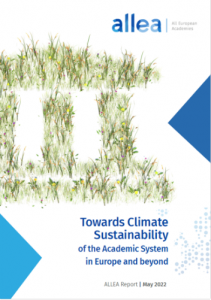
Towards Climate Sustainability of the Academic System in Europe and beyond
The report, released in May 2022 by the ALLEA Working Group Climate Sustainability in the Academic System, examines academia’s impact on the climate and provides recommendations on how academia can reach its sustainability goals.
 https://allea.org/wp-content/uploads/2022/10/shutterstock_2042265395-scaled.jpg 1707 2560 maria ronald https://allea.org/wp-content/uploads/2019/04/allealogo-1-300x83.png maria ronald2022-10-25 17:17:222022-10-26 11:28:37Fighting for Sustainable Science – One Lab at a Time
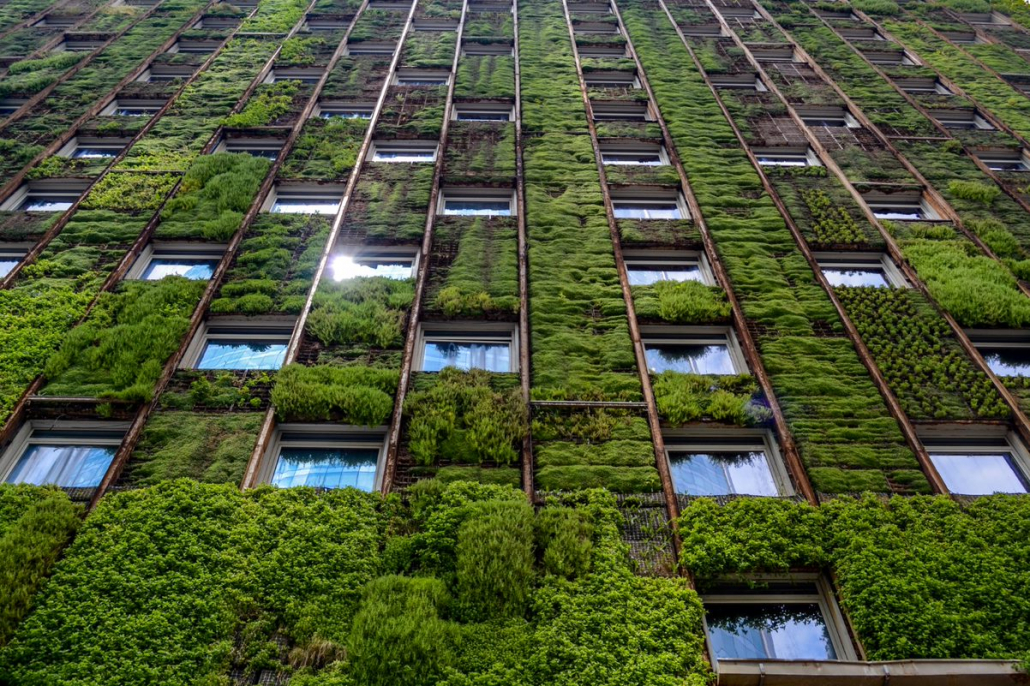 https://allea.org/wp-content/uploads/2021/07/climate_sustainability_working_group.jpg 801 1202 Dino Tramontani https://allea.org/wp-content/uploads/2019/04/allealogo-1-300x83.png Dino Tramontani2022-05-05 11:17:292022-05-25 18:21:17The Academic System Is Not Exempt from Imperatives to Transition to Climate Sustainability
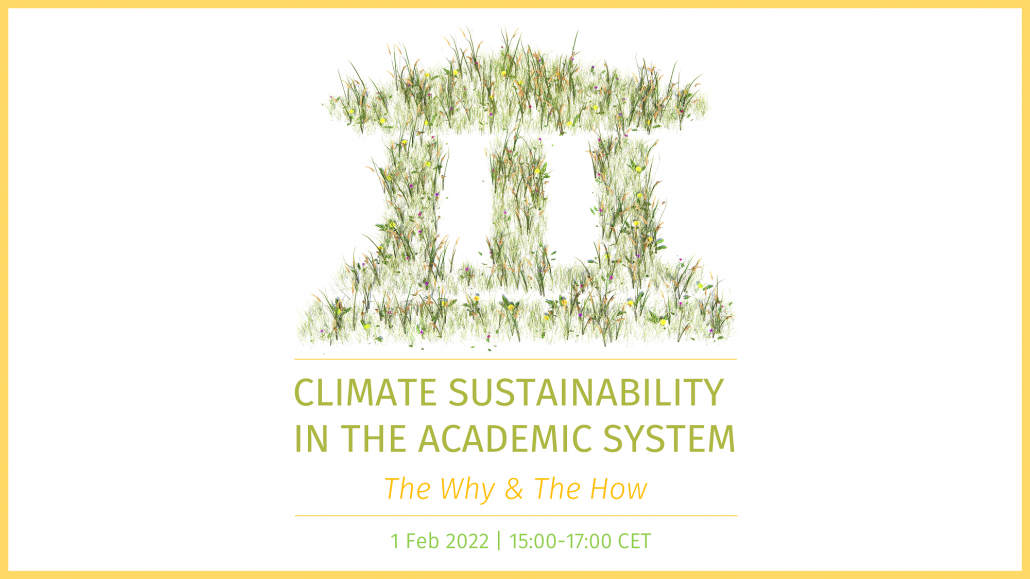 https://allea.org/wp-content/uploads/2022/02/Slide2-2.png 1125 2000 Dino Tramontani https://allea.org/wp-content/uploads/2019/04/allealogo-1-300x83.png Dino Tramontani2022-02-03 16:04:102022-02-15 12:06:02Online Panel: Climate Sustainability in the Academic System
Related Events
 https://allea.org/wp-content/uploads/2023/11/Thumbnail_Event_November-2.png 628 1200 Dino Tramontani https://allea.org/wp-content/uploads/2019/04/allealogo-1-300x83.png Dino Tramontani2022-11-02 12:42:442025-12-01 14:21:18Panel: Towards Climate Sustainability – Taking the Academic System from Evidence to Action
 https://allea.org/wp-content/uploads/2023/11/Thumbnail_Event_February-1.png 628 1200 Dino Tramontani https://allea.org/wp-content/uploads/2019/04/allealogo-1-300x83.png Dino Tramontani2022-02-01 15:03:142025-12-01 14:22:09Climate Sustainability in the Academic System – the Why and the How