ALLEA Contributes to High-Level Discussions on the Role of Science in Ukraine’s Recovery
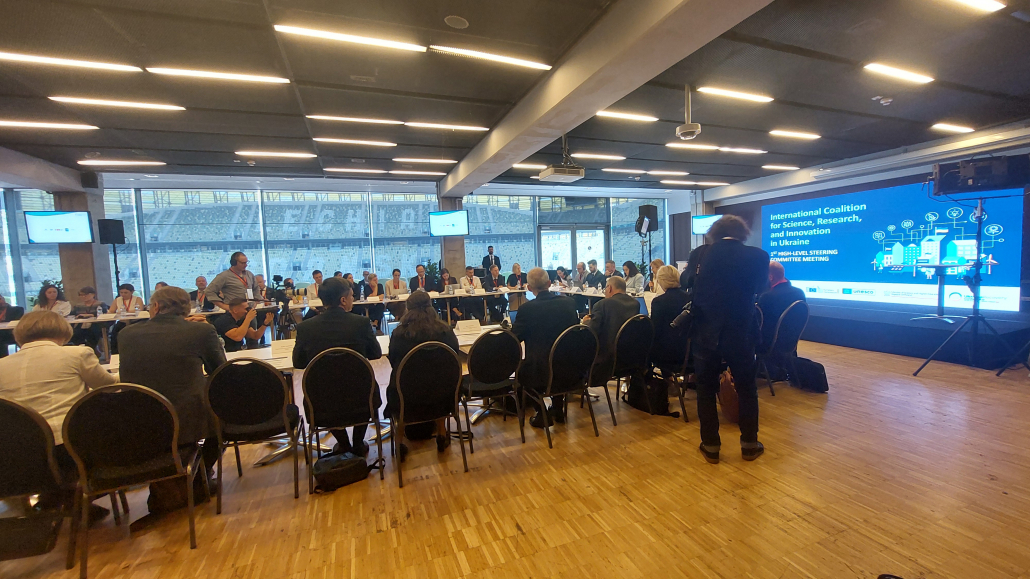
On 26 June, ALLEA participated in the first High-Level Steering Committee Meeting of the International Coalition for Science, Research and Innovation in Ukraine in Gdańsk, Poland, reaffirming the role of European academies in supporting Ukraine’s scientific community and contributing to the country’s long-term recovery through science, research, and innovation.
Representing ALLEA were its President, Paweł Rowiński, and Senior Policy & Strategy Officer, Matthias Johannsen. Convened within the framework of the Ukraine Recovery Conference 2026, the meeting brought together ministers, research organisations, funding agencies, international organisations, and scientific networks to provide strategic guidance for the Coalition’s future work and strengthen international coordination in support of Ukrainian science.
ALLEA has supported Ukrainian science since the beginning of Russia’s full-scale invasion in 2022. Through initiatives such as the European Fund for Displaced Scientists (EFDS), advocacy for academic freedom and sustained cooperation among its Member Academies, ALLEA has consistently argued that science and research are essential to Ukraine’s resilience, recovery, and future integration into the European Research Area.
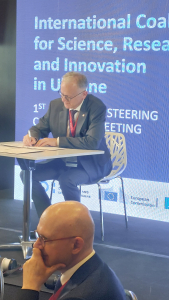
President Rowiński signs the Gdańsk Declaration
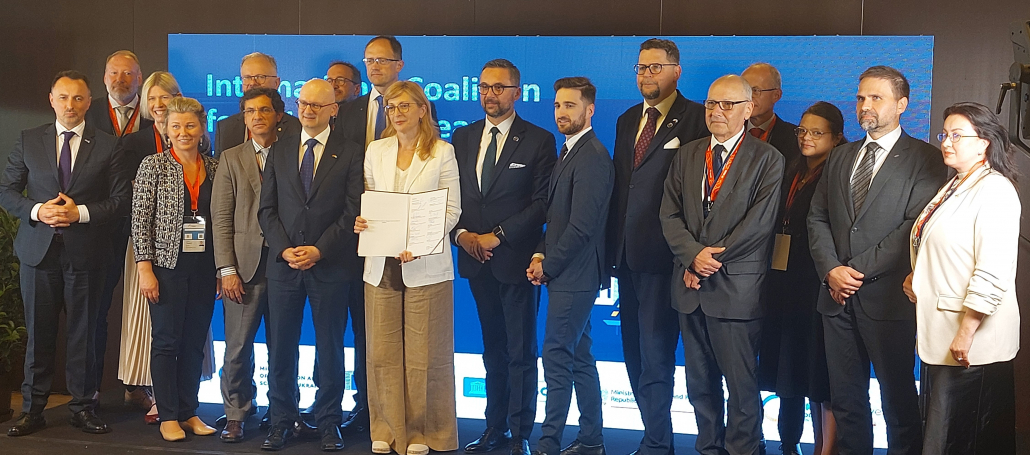
A key outcome of the meeting was the signing of the Gdańsk Declaration on Science, Research and Innovation in Ukraine, which sets out a shared vision for making science, research, and innovation key pillars of Ukraine’s modern and sustainable recovery. The Declaration calls for coordinated international action to strengthen research capacity, support institutional reform, foster international partnerships, and invest in both people and institutions as Ukraine rebuilds its research and innovation ecosystem.
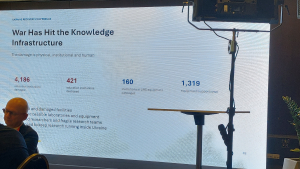
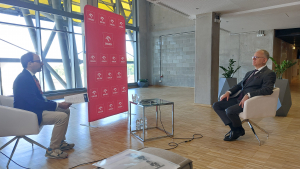 During the High-Level Roundtable, President Rowiński delivered an intervention on behalf of ALLEA, stressing that rebuilding Ukraine must go beyond reconstructing physical infrastructure to supporting and maintaining scientific capacity. He highlighted the importance of long-term institutional partnerships, trusted scientific networks, and sustained investment in researchers. He also underlined the central role of the National Academy of Sciences of Ukraine and other research organisations in the country’s recovery from the war.
Drawing on ALLEA’s recent work, Prof Rowiński referred to the newly established EFDS Alumni Network, which enables displaced and diaspora researchers to contribute knowledge, mentoring, and collaboration in support of Ukraine’s scientific recovery, as well as to the Appeal in Support of Ukrainian Science, recently adopted by the ALLEA General Assembly in May 2026, reaffirming the long-term commitment of European academies to supporting Ukrainian researchers and institutions.
 The discussions throughout the meeting reflected a shared understanding that support for Ukrainian science must evolve from emergency assistance towards long-term capacity-building. Participants repeatedly emphasised the importance of sustainably investing in researchers, institutions, and international partnerships, improving coordination among international initiatives, and ensuring that science, research and innovation are fully embedded in Ukraine’s recovery and future integration into the European Research Area.
By adopting the Gdańsk Declaration, ALLEA joins fellow Coalition members in reaffirming that strengthening Ukrainian science is an investment not only in Ukraine’s future, but also in a more resilient and competitive European Research Area.