
“We Have to Be Ready to Support Ukrainian Researchers as Long as Necessary”
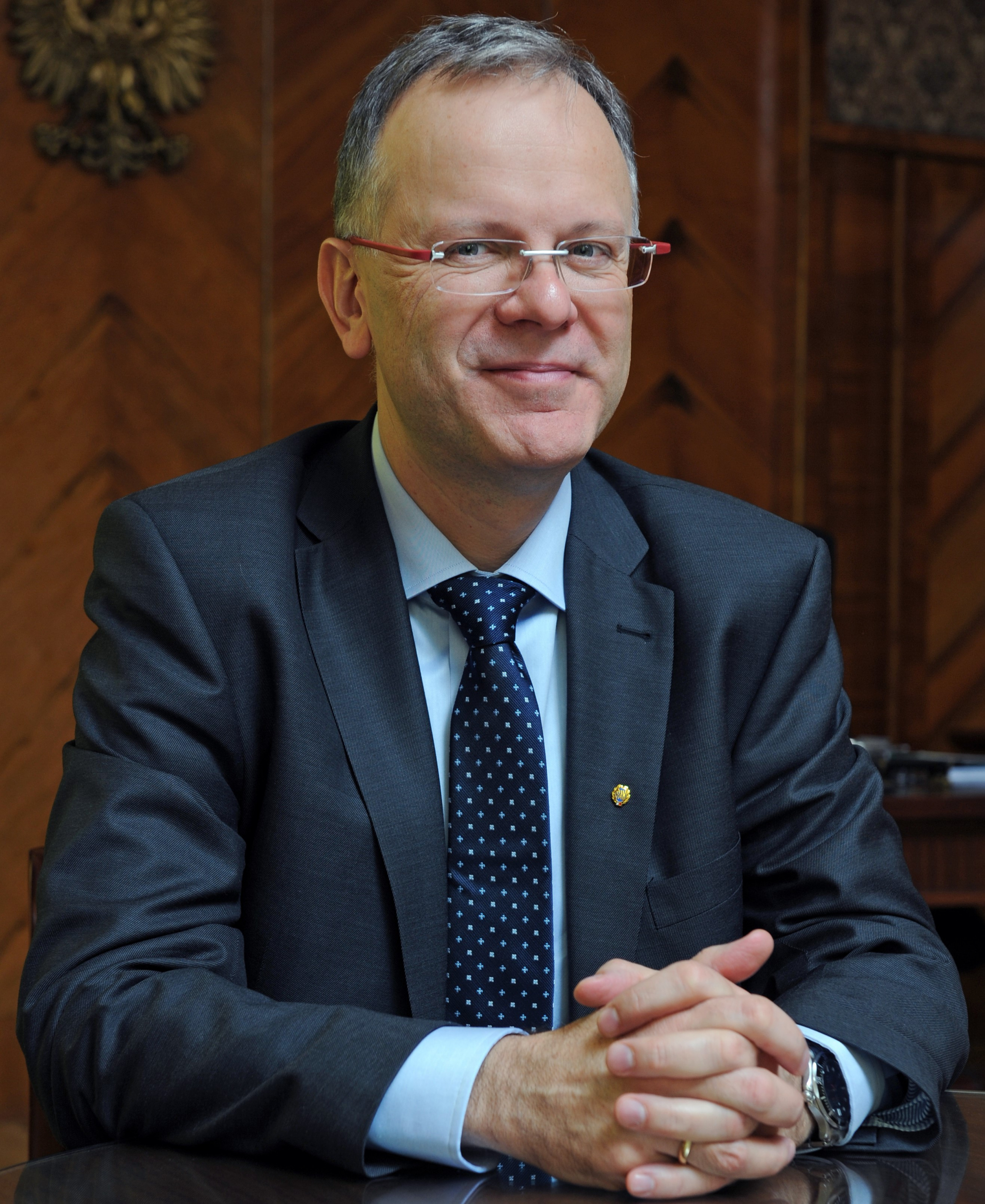
Professor Paweł Rowiński. Photo: Jakub Ostalowski
Since the Russian invasion of Ukraine shocked the world on 24 February 2022, and the humanitarian crisis that hence unfolded, more than 10 million people have been forced to flee their homes, with an estimated 6.5 million internally displaced within Ukraine, and an estimated 4 million fleeing to neighbouring countries, including Poland, Romania, Moldova and Hungary.
Of these neighbouring countries who have received Ukrainian refugees, Poland has received the largest amount, currently estimated at 2.3 million people. Thousands of them are scientists and researchers who have been forced to seek for a safe environment to continue their academic work. The international scientific community has mobilised fast to provide them with immediate assistance. Among them, the Polish Academy of Sciences (PAS), an ALLEA Member Academy, has set up a support programme with research stays specifically designed for scientists who have been displaced by the war.
“We do feel that systemic solutions are needed at this stage,” says Professor Paweł Rowiński, Vice President of the Polish Academy of Sciences and member of the ALLEA Board. He shares the current experience of the PAS in providing support to displaced scholars.
“The involvement of the civil society, non-governmental organisations and local governments over the last weeks has been impressive.”
Question: Almost 2.3 million refugees have crossed the Ukrainian-Polish border in the last weeks. How would you describe the general situation in Poland in relation to the arrival of Ukrainian refugees?
Paweł Rowiński: The current migration crisis poses a great challenge for Poland. However, the involvement of the civil society, non-governmental organisations and local governments over the last weeks has been impressive. In order to cope with this humanitarian crisis regular citizens have opened up their homes and invited guests from Ukraine to their spare bedrooms or living rooms. In the first weeks of war, when Polish border with Ukraine has been crossed by over 100.000 people daily, many Poles have been serving as ad hoc volunteers, preparing sandwiches or serving home-made soups on railway stations. Now, after over a month of war, the support is becoming more and more professional; however, many activities are still performed by regular citizens on a voluntary basis. We do feel that systemic solutions are needed at this stage.
Q.: Can you share the steps taken by the Polish Academy of Sciences to provide assistance to displaced Ukrainian scholars?
P.R.: On March 1st the Polish Academy of Sciences has signed a new MoU with the National Academy of Sciences of Ukraine. On the same day, within the framework of this agreement, we have launched a call for proposals to support 3 to 6 month stays of Ukrainian scholars at the Institutes of the PAS. Note that under the umbrella of the PAS operate 70 research institutes. The funding was available to all researchers after their PhD regardless of their nationality, provided that before the war they had been employed at a Ukrainian scientific institution. Our budget allowed us to fund 50 scholars and it ran out within 4 days. We have therefore reached out to all international organisations the PAS is a member of to ask for additional support. We have received positive feedback from many organisations which either made a donation to our programme or waived our membership fees for 2022, allowing us to allocate our contributions to Ukrainian scholars at risk.
Thanks to the support of various institutions (see list below) we were able to support additional 20 scholars. All donations have been used in their entirety to support Ukrainian scholars. Simultaneously, many academies around the world reached out to us with their offers of help. We are truly grateful to our friends and partners around the world for their initiatives supporting Ukrainian scholars at risk. Thanks to our partnership with the National Academies of Sciences from the U.S. we are now able to continue the support scheme for displaced Ukrainian scholars at the PAS.
I need to also emphasize other ways of support. For example, the PAS Conference Centre in Jablonna offered free meals for more than 100 refugees from Ukraine. Our botanical garden and museums offered free access to all Ukrainian citizens. Most of our institutes proposed their own ways of support. Many of them prepared free accommodation for numerous researchers, and some researchers were also offered various kinds of contracts. One of our institutes – the Institute of Low Temperature and Structural Research in Wrocław – is in the process of transferring all the resources of three Ukrainian institutes to its own server in Poland. It will allow B.Verkin Institute for Low Temperature Physics and Engineering of the National Academy of Sciences of Ukraine in Kharkov, O.Ya. Usikov Institute for Radiophysics and Electronics and Institute of Radio Astronomy of the National Academy of Sciences of Ukraine to continue their operation. Moreover, two serious Ukrainian journals: Journal of Mathematical Physics, Analysis, Geometry and Fizika Nizkikh Temperatur – Low Temperature Physics are continuously issued by that institute in Wroclaw. Plenty of alike initiatives are born in other PAS institutes.
“Right now we need financial support to provide basic living conditions for scholars who have fled Ukraine.”
Q.: Has the PAS received any support from EU-level institutions? Which other scientific organisations have you been collaborating with and how?
P.R.: We did not receive any support from EU-Level institutions. We hope that the EU will follow soon with providing support to all Ukrainian scholars at risk. Many academies set up different support schemes. For example Academia Sinica from Taiwan invited students and scholars from Ukraine for up to 6 month stays in Taiwan while the U.S. National Academy of Sciences has provided additional budget for scholars hosted in the Institutes of the PAS. Thanks to the partnership with our friends from the US. the support scheme launched in cooperation with the National Academy of Sciences of Ukraine is again operational. We are also promised to receive additional funds from the Polish government but it is yet to materialise and for now we need to wait.
Q.: What type of help is most needed right now, and what would be the best way for the international scientific community to support the actions being taken by the Polish Academy of Sciences?
P.R.: Right now we need financial support to provide basic living conditions for scholars who have fled Ukraine. We have to remember however that many scholars, including male scholars aged between 18-60 years old, cannot leave the country. So we need to find a way to support their work in Ukraine. Many Ukrainian science institutions advocate for remote/online opportunities for their students and staff – open training courses, virtual labs, mentoring programmes, etc.
Q.: Given the current state of affairs, how much longer do you foresee that the PAS will be able to provide this support to scholars displaced by the war?
P.R.: The budget from the U.S. National Academy of Sciences allows to fund ca. 150 stipends for 3 months, or fewer stipends but for longer periods. At this moment in time we are not able to predict when Russia will stop the attack on Ukrainian civilians, schools, universities, hospitals, etc. We have to be ready to support Ukrainian researchers as long as necessary. Not to mention the investments that will have to be made to restore Ukrainian science base after the war.
Q.: What recommendations can you provide from the experience of the PAS to other scientific institutions setting up support schemes for displaced scholars?
P.R.: Stay in touch with the community under threat. Build your programmes in cooperation with the institutions affected by war. Act fast. Focus on people but don’t forget about the infrastructure.
About Paweł Rowiński
Professor Paweł Rowiński holds a degree in mathematics by the University of Warsaw, and doctoral and habilitation degrees in earth sciences with a specialisation in geophysics by the Institute of Geophysics, Polish Academy of Sciences.
Professor Rowiński has published more than 170 refereed scientific publications. He serves as Associate Editor for several prominent scientific journals and publications. In 2018 he was elected the Vice Chair of the Europe Division Leadership Team of the International Association for Hydro-Environment Engineering and Research IAHR. Since May 2015, he serves as Vice-President of the Polish Academy of Sciences.
—
The following institutions have provided support for the Polish Academy of Sciences to continue assisting scholars in need:
- International Astronomical Union
- International Centre for Mechanical Sciences
- International Geographical Union
- Nuclear Physics European Collaboration Committees
- International Union of Geodesy and Geophysics
- International Committee of Historical Sciences
- International Union of Forest Research Organization
- International Union of Biochemistry and Molecular Biology
- International Astronautical Federation
- International Association of Byzantine Studies
- The Alloy Phase Diagram International Commission
- Scientific Committee on Oceanic Research
- International Federation for Structural Concrete
- Permanent International Committee of Linguists
- International Institute of Noise Control Engineering
- International Numismatic Council
- International Union of Nutritional Sciences
- International Commission of Military History
- International Union of History and Philosophy of Science
ALLEA has partnered with the Breakthrough Prize Foundation to support scholars and scientific institutions impacted by the war in Ukraine, learn more about this initiative here. You can also read about other support schemes by European academies and ALLEA partners on our portal Support for Ukraine.