ALLEA has published a statement today on the inappropriate political infringement on academic curricula in Hungary. “ALLEA is alarmed by the Hungarian government’s recent, recurring and unfounded intervention in the curricula of private and public universities, severely compromising academic freedom and autonomy that are key features of modern science and higher education, and regrettably following a pattern witnessed before”, the statement reads.
https://allea.org/wp-content/uploads/2018/08/Unbenannt1.png564789alleaadminhttps://allea.org/wp-content/uploads/2019/04/allealogo-1-300x83.pngalleaadmin2018-08-21 11:31:262019-07-05 16:06:31ALLEA publishes statement on the inappropriate political infringement on academic curricula in Hungary
The European Federation of Academies of Sciences and Humanities (ALLEA) has submitted feedback to the European Parliament with suggestions for concrete amendments to the Proposal for the Regulation establishing Horizon Europe. It welcomes the main direction of the proposal but voices specific concerns in relation to the participation from all disciplines and especially the inclusion of ‘associated countries’ in the next framework programme.
9 July 2018 (Berlin, Germany) ALLEA welcomes the speed with which the European Parliament is dealing with the matter and the flexibility the structure of the legislation permits to keep up with the dynamic change of research agendas in Europe. All the same, there are a number of concerns about the specific wording of the document.
In relation to the encouragement of participation from all disciplines within the research community, ALLEA fears that the Regulation does not sufficiently support the inclusion of all disciplines, especially the social sciences and humanities (SSH), and argues for substantial investments in transdisciplinary research regarding societal challenges. ALLEA also calls for a greater focus on basic research as a precondition for innovation. Innovation should go beyond just technological aspects and enable change by addressing societal and cultural dimensions, too.
Regarding definitions of ‘associated countries’, ALLEA shares the concerns raised by other stakeholders and calls for a clear and inclusive definition. In the current form, the Regulation is not clear enough on whether third countries (e.g. Switzerland) will have opportunities to participate in the same way that worked successfully in Horizon 2020. ALLEA strongly believes in the openness of science and supports the idea of an integrated European Research Area that is open to global research collaboration.
ALLEA is prepared to engage with the European Commission, the members of the European Parliament and the Council to further elaborate on Horizon Europe. The ALLEA Framework Programme 9 Working Group brings together representatives of its member academies from all over Europe and has published several statements developing a vision for Horizon Europe: https://allea.org/framework-programme-9-working-group/.
About ALLEA (All European Academies)
ALLEA, the European Federation of Academies of Sciences and Humanities, was founded in 1994 and currently brings together almost 60 Academies in more than 40 countries from the Council of Europe region. Member Academies operate as learned societies, think tanks and research performing organisations. They are self-governing communities of leaders of scholarly enquiry across all fields of the natural sciences, the social sciences and the humanities. ALLEA therefore provides access to an unparalleled human resource of intellectual excellence, experience and expertise.
https://allea.org/wp-content/uploads/2016/12/Fotolia_93494284_XS_EU-e1482242438451.jpg169462alleaadminhttps://allea.org/wp-content/uploads/2019/04/allealogo-1-300x83.pngalleaadmin2018-07-09 16:35:412019-10-02 15:16:16European Academies call for a clear and inclusive definition of ‘associated countries’ in Horizon Europe
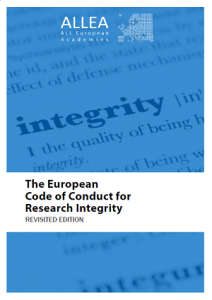
With the support of the European Commission’s Translational Services and ALLEA Member Academies, a new set of translations of the European Code of Conduct for Research Integrity was published in June 2018. The new available translations include Albanian, Bulgarian, German, Greek, Estonian, Lithuanian, Swedish and Turkish. These and other translations of the Code of Conduct can be found here.
Throughout the year, ALLEA will be publishing translations of the European Code of Conduct for Research Integrity in all official languages of the European Union, as well as selected languages from around the globe.
Implementing the Code
The European Code of Conduct for Research Integrity serves the European research community as a framework for self-regulation across all scientific and scholarly disciplines and for all research settings. The 2017 revised edition of the Code addresses emerging challenges emanating from technological developments, open science, citizen science and social media, among other areas. The European Commission recognises the Code as the reference document for research integrity for all EU-funded research projects and as a model for organisations and researchers across Europe. The revised Code was published originally in English on 24 March 2017. Since its publication in English, the Code has been used by multiple research institutions and universities across Europe, and presented in various conferences on research integrity and research ethics.
Make codes for research integrity practical
A correspondence by the lead author of the revised ALLEA Code, Maura Hiney (Royal Irish Academy), was published in Nature on 25 April 2018 calling for making codes for research integrity more practical.
https://allea.org/wp-content/uploads/2019/04/allealogo-1-300x83.png00alleaadminhttps://allea.org/wp-content/uploads/2019/04/allealogo-1-300x83.pngalleaadmin2018-07-02 11:52:232019-06-26 22:32:55European Code of Conduct for Research Integrity – New set of translations available
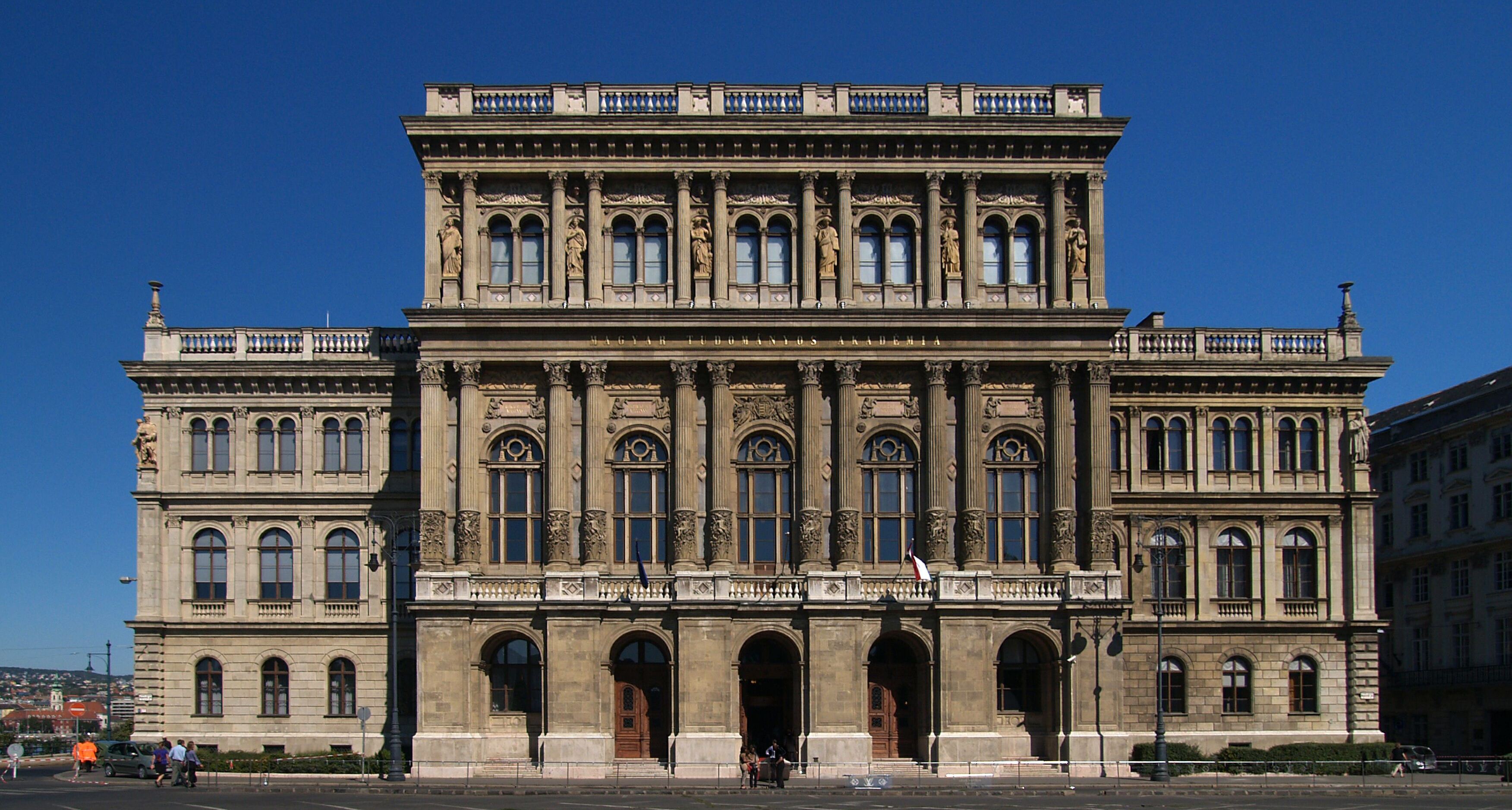
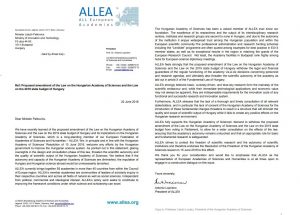
In response to two proposed laws introduced for voting by the Hungarian Parliament and which threaten the scientific autonomy and financial independence of the Hungarian Academy of Sciences, the ALLEA President Antonio Loprieno has sent an open letter to the responsible Hungarian Minister of Innovation and Technology, Mr László Palkovics. You may download and read the letter below.
https://allea.org/wp-content/uploads/2015/09/MTA_Székház01.jpg18783504alleaadminhttps://allea.org/wp-content/uploads/2019/04/allealogo-1-300x83.pngalleaadmin2018-06-25 13:33:132019-07-05 16:08:29ALLEA Publishes Open Letter in support of the Hungarian Academy of Sciences
As part of the ENERI project, ALLEA is pleased to announce the initiation of the ENERI e-Community. The objective of the platform is to create an open database of Research Ethics and Research Integrity experts and a space for discussion, sharing of information, exchange of good practices and training material.
The e-community is intended to be a place for practitioners in the field of RE&RI to be able to share their experiences and sources of knowledge with their European peers in order to harmonise procedures at a European level.
Interested members are invited to contact vogt@allea.org for further information on the registration process.
About ENERI
The “European Network of Research Ethics and Research Integrity” (ENERI) establishes an operable platform of actors in the fields of research ethics and research integrity. ENERI is based on existing networks, projects and infrastructures that already initiated and developed important steps in sharing information, training and capacity building. Research ethics committees, review boards, ombudspersons’ offices, research integrity offices and supporting structures are the established bodies monitoring, accompanying and assisting the process of responsible and justifiable research. Therefore the European Network of Research Integrity Offices (ENRIO) and the European Network of Research Ethics Committees (EUREC) mutually initiated ENERI in collaborations with experts in academic research ethics (RE) and responsible research and innovation (RRI), practitioners in training and education in research ethics, and specialists in e-communication and database design.
https://allea.org/wp-content/uploads/2019/04/allealogo-1-300x83.png00alleaadminhttps://allea.org/wp-content/uploads/2019/04/allealogo-1-300x83.pngalleaadmin2018-06-21 10:30:502019-06-26 22:32:55ENERI invites European researchers to join E-community for Research Ethics & Integrity experts
Data, in its multitude of iterations and the way we make use of the information it contains, affects nearly all aspects of life today, yet rarely do we ever consider what the deeper implications at the governance level are. ALLEA joins forces with The Royal Society to organise the conference “Flourishing in a data-enabled society”.
The event will convene experts from academies across Europe and from different sectors in Buckinghamshire (UK) in November, to reflect on how society can best seize the opportunities and cope with the major challenges brought on by new uses of data.
The conference, hosted by The Royal Society at Chicheley Hall on 1-2 November 2018, seeks to elaborate a vision for a flourishing data-enabled Europe. In a set of keynotes, panel discussions and breakout sessions, the participants will consider current and future challenges from a variety of cross-disciplinary and cross-sectoral angles.
Breakout groups will enable representatives from different sectors, disciplines and geographical areas to make new connections and to discuss key questions in more detail, particularly exploring how different sectors and societies respond differently to these challenges.
Panels will explore how social, ethical and legal tensions arise across sectors, and how different sectors deal with them, so that data and data-enabled technologies can be used for human benefit. Experts will discuss ways to identify, respond and make the most out of the challenges of 21st century data use. The discussions will furthermore address questions on how the use of data for public good might look like in Europe, how societies navigate the significant choices and dilemmas stemming from new data-enabled technologies, and if it is possible to consider a common European vision of the data-enabled society.
https://allea.org/wp-content/uploads/2019/04/allealogo-1-300x83.png00alleaadminhttps://allea.org/wp-content/uploads/2019/04/allealogo-1-300x83.pngalleaadmin2018-06-20 10:12:162019-06-26 22:32:56How do we use data in the 21st century?
The European population is ageing rapidly and life expectancy continues to increase. Europe needs to ensure that the increasing numbers of elderly people can spend those extra years of life in good health, with adequate functional ability, and opportunities to contribute to society. To ensure healthy ageing of the European population, a broad range of aspects needs to be considered, such as the prevention of age-related disability, the development of sustainable healthcare and long-term care systems, and innovative ways of assistance and care-giving through integration of Information and Communication Technology (ICT), eHealth, and robotics in existing health-care systems.
In this project, Science Advice for Policy by European Academies – SAPEA brings together eminent European scientists to explore/answer the question ‘What policies at the EU level could support the Member States in achieving inclusive, fair and sustainable systems of health and social care and to promote the taking up of innovation for ageing societies?’. Further information is available here.
This open call for evidence complements a review of the peer-reviewed scientific literature. Stakeholders are invited to upload relevant evidence (e.g. policy briefs, recommendation papers, scientific conclusions, scientific papers) published in English from 2010 onwards through an online submission form available here.
The deadline for submission is 2 July 2018.
https://allea.org/wp-content/uploads/2019/04/allealogo-1-300x83.png00alleaadminhttps://allea.org/wp-content/uploads/2019/04/allealogo-1-300x83.pngalleaadmin2018-06-12 14:53:262019-06-26 22:32:56SAPEA launches open call for evidence for project ‘Transforming the Future of Ageing’
As an integral part of the Scientific Advice Mechanism (SAM), SAPEA was asked to produce this Evidence Review Report as one of the documents that informs the Scientific Opinion of the European Commission Group of Chief Scientific Advisors, in response to a request from Commissioner Vytenis Andriukaitis.
The Evidence Review Report makes suggestions for further improvement in:
The scientific data that underpin risk assessments
The methods by which such data are analysed
The ways in which assessment procedures are organised and tasks are allocated.
The report lists 26 Options, which were used to inform the Group of Chief Scientific Advisors’ Scientific Opinion, alongside a Social Sciences workshop on ‘Risk Perception and the Acceptability of Human Exposure to Pesticides’ (organised by SAPEA in 2017) and other sources of evidence.
To produce the Plant Protection Products Evidence Review Report, SAPEA brought together experts from across Europe, via the European Academy Networks. The experts formed a working group which was chaired by Professor Evangelia Ntzani (Associate Professor of Epidemiology, Department of Hygiene and Epidemiology, University of Ioannina School of Medicine, Greece, and Center for Evidence Synthesis in Health, Brown University School of Public Health, USA) and Professor David Coggon (Fellow of the UK Academy for Medical Sciences and Emeritus Professor of Occupational and Environmental Medicine, Medical Research Council Lifecourse Epidemiology Unit, University of Southampton, UK).
Commissioner for Science, Research and Innovation, Carlos Moedas said:
“Food safety is non-negotiable for Europeans and a priority for the Commission. I am grateful to the Group of Chief Scientific Advisors and the SAPEA experts for the evidence based recommendations in this opinion. They aim to maintain and enhance our very high standards of food safety and environmental protection and to re-establish trust in scientific risk assessment.”
Professor Bernard Charpentier 2018 Chair of the SAPEA board said:
“This SAPEA Evidence Review Report demonstrates not only the outstanding knowledge of the experts nominated by European academies, learned societies, and academy networks, but also the experts’ exemplary commitment to the voluntary task of bringing the best and newest scientific knowledge into policy making.”
https://allea.org/wp-content/uploads/2019/04/allealogo-1-300x83.png00alleaadminhttps://allea.org/wp-content/uploads/2019/04/allealogo-1-300x83.pngalleaadmin2018-06-04 16:57:542019-06-26 22:32:56SAPEA provides evidence for the European Commission on authorisation of Plant Protection Products
Credit: The Royal Swedish Academy of Letters, History and Antiquities
The experts critically assessed guiding principles, structure, funding lines, and clusters of topics envisioned in the proposal, officially presented by European Commissioner Carlos Moedas on 7 June 2018, which over the coming months will be discussed both in the European Parliament and Council. Horizon Europe will run from 2021-2027 with a budget, as proposed by the Commission, of approximately 100 billion Euros.
In the coming months, ALLEA’s working group will develop a set of activities directed both towards Members of the European Parliament and to the relevant committees in the Parliament and Council of the EU in order to help shape and balance out the final legislation on Horizon Europe in line with the needs of the scientific community, represented by academies from across Europe.
Horizon Europe
The proposal foresees a three-pillar structure with pillar I on “Open Science” including funding for the ERC, for Marie Sklodowska-Curie Actions, as well as research infrastructures. Pillar II is labelled “Global Challenges” and is supposed to receive the lion’s share of the overall budget (more than 50 billion). It hosts five so-called “clusters” (Health; Inclusive and secure societies; Digital and industry; Climate, energy and mobility; Food and natural resources) as well as the European Commission’s in-house science service JRC. The newly established European Innovation Council (EIC) is located in Pillar III (“Open Innovation”) alongside the European Institute of Innovation and Technology (EIT) and funding for ‘European innovation ecosystems’. In addition to the three pillars, the proposal includes a funding line for “Strengthening the European Research Area” with a special focus on support to the less competitive research systems in Europe. [Click here to access the Commission proposals and background information on Horizon Europe]
ALLEA’s deliberations will include, among others, the proposed conversion of seven societal challenges in Horizon 2020 to five clusters, the new FP’s Global Challenges chapter (Pillar II), the selection and wording of “areas of intervention” of those challenges, and the plans to develop “missions”, which in a cross-cutting fashion are envisaged to form a subset of Global Challenges. Furthermore, the group will address the proposed budget distribution between the different pillars and challenges, as well as the schemes and actions to mitigate the research and innovation divide across Europe and to foster excellence especially in the EU13 countries.
https://allea.org/wp-content/uploads/2019/04/allealogo-1-300x83.png00alleaadminhttps://allea.org/wp-content/uploads/2019/04/allealogo-1-300x83.pngalleaadmin2018-06-04 13:58:542019-06-26 22:32:56ALLEA’s FP9 Working Group meets in Stockholm to discuss proposal for Horizon Europe
The discussion paper focusses on how trust in expertise is placed or refused, highlights the affective dimension of epistemic trust, and discusses the danger of a ‘context collapse’ in digital communication. Experts from academies across Europe reflect on the current situation in which expertise and particularly research and science operate in societies today, and what has changed in relation to trust and trustworthiness.
ALLEA published the first issue of a new discussion paper series with the title “Loss of Trust? Loss of Trustworthiness? Truth and Expertise Today”. The paper addresses current discussions on the so-called “post-truth” era and draws attention to the questions of placing and refusing trust in expertise, and how expertise and scientific evidence are being contested in a changing landscape of communication.
Based on discussions of ALLEA’s international and interdisciplinary Working Group Truth, Trust and Expertise, the paper proposes to refocus the debate on the alleged loss of trust in expertise beyond people’s generic attitudes of trust and mistrust reflected in polls. In doing so, it delves into the question of how people place and refuse trust in expertise, and warns that trust in expertise is “valuable when placed in trustworthy agents and activities, but damaging and costly when misplaced”.
Particularly the “affective conditions in which trustworthiness is determined” should be more strongly taken into account. When people place trust in the information provided, they are “taking a chance in trusting someone” – putting themselves at risk and tolerating vulnerability. Judgements on an expert’s trustworthiness thus carry affective (as well as social and political) aspects that determine how people trust expertise.
For example,”in order to understand a lack of trust in children’s vaccines”, the paper suggests that “we need to be aware of communication between experts and their audiences but also of the vulnerability that parents experience in conditions of a perceived or real uncertainty”.
The process of placing and refusing trust might also be different from place to place. “Experts and expertise are not monolithic, and we need to engage with the importance of cultural differentiation locally and around the world. Understandably, this can lead to situations where trust is refused not for lack of credibility or confidence, but due to shortcomings in the delivery of the affective and social aspects of judgements of trustworthiness”.
“Experts and expertise are not monolithic, and we need to engage with the importance of cultural differentiation locally and around the world. Understandably, this can lead to situations where trust is refused not for lack of credibility or confidence, but due to shortcomings in the delivery of the affective and social aspects of judgements of trustworthiness”.
Digital communication and the “context collapse”
In addition, digital communication has changed the relationship between expertise and the public. The digitisation of information has led to an idea of knowledge as something that can be searched and found on the internet. This online environment often provides “little clarity about who says what in which context and on the basis of what authority or expertise”.
The paper warns that new landscapes of communication sometimes imply a “context collapse”: “in an online environment where everything is content, the truthfulness of text, image, and sound can often no longer be determined directly from the context. In addition, whether something is true or trustworthy on social media is far less important than whether it is liked, and what is liked has economic value without any account to expertise”.
Finally, another crucial point raised by the paper is that the importance of achieving transparency and accountability whilst still encouraging academic freedom needs to be thought through further. “The initial response to claims that experts were not trustworthy was to regulate them more closely. […] We need to know whether our accountability systems support the intelligent placing and refusing of trust”.
https://allea.org/wp-content/uploads/2019/04/allealogo-1-300x83.png00alleaadminhttps://allea.org/wp-content/uploads/2019/04/allealogo-1-300x83.pngalleaadmin2018-05-29 12:34:032019-06-26 22:32:56ALLEA publishes Discussion Paper on Loss of Trust in Science and Expertise