ALLEA Board meets in Minsk at the National Academy of Sciences of Belarus
In its first meeting since the 2016 General Assembly, the ALLEA Board came together in Minsk on 20/21 June, on the kind invitation of the National Academy of Sciences of Belarus, to discuss ongoing ALLEA business and to lay the groundwork for the impending start of the SAPEA project in autumn.
On the first day of the meeting, the members of the Board were welcomed by the President of the Belarusian Academy, Academician Vladimir Gusakov, who expressed his deep gratitude for ALLEA’s interest in the science system of his country and highlighted how membership in ALLEA has led to many fruitful cooperation agreements with other academies across Europe. The NASB has been a member of ALLEA since its foundation in 1994
The following meeting saw for the first time the participation and accreditation of the newly elected Board Members Hubert Bocken of the Royal Flemish Academy of Belgium for Sciences and the Arts, Brigitte Mazohl of the Austrian Academy of Sciences and of Krista Varantola of the Council of Finnish Academies.
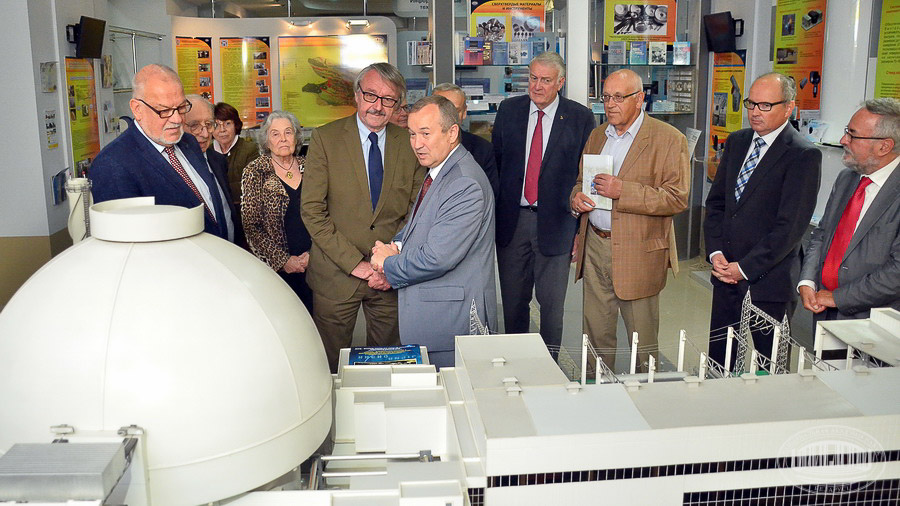
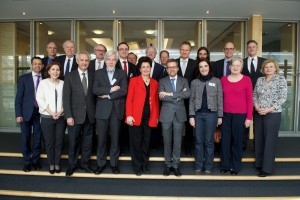
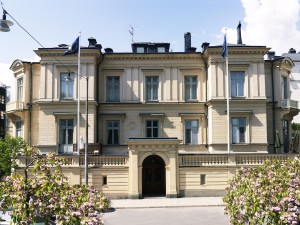
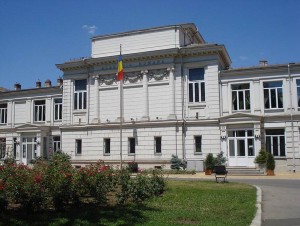
Picture credit: National Academy of Sciences of Belarus
The focus of the meeting on the first day was on the implementation of issues which were agreed upon during the ALLEA General Assembly in Vienna as well as other recent, on-going and future activities of ALLEA and partners.
The second day of the meeting primarily dealt with ALLEA’s role in the SAPEA project, in which ALLEA as a consortium partner together with Academia Europaea, EASAC, Euro-CASE and FEAM will be providing science advice to policy makers in the European Commission. As such, possible avenues for ALLEA member academies to get involved in the project were discussed and followed-up from the General Assembly.
Additionally, the Presidency was pleased to report on active working groups, with the Permanent Working Group on Intellectual Property Rights finalizing a statement on CRISPR-Cas technology, the Permanent Working Group on Science & Ethics working on a revision of the European Code of Conduct of Research Integrity and the Working Group Science Education preparing the third AEMASE conference in Malta.
The meeting was concluded with an exquisite cultural programme organized by the National Academy of Sciences of Belarus and discussions on ways to foster cooperation between NASB and sister academies in Europe under the umbrella of ALLEA.
The ALLEA Board was accompanied during its visit by NASB Chief Scientific Secretary Alexander Kilchevski and the Head of the Department for International Cooperation, Vladimir Podkopaev.
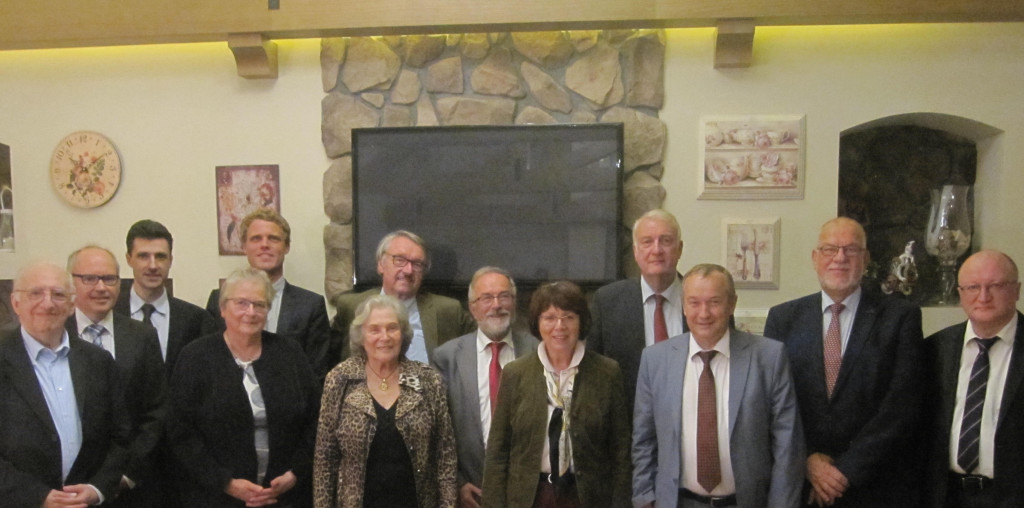
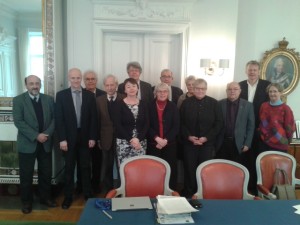
Picture: The ALLEA Board, absent: Daniela Jezova, Nikolay Miloshev
The National Academy of Sciences of Belarus (NAS of Belarus, or NASB) is the highest
state scientific organization of the Republic of Belarus, which carries out the organization and
coordination of fundamental and applied research performed by all subjects of scientific
activities, provides fundamental and applied research and developments in the main directions of
natural, engineering, social sciences, the humanities and arts with the purpose of obtaining new
knowledge about human, society, nature and artificial objects and increasing the scientific and
technical, intellectual and spiritual potential of the Republic of Belarus. The National Academy
of Sciences carries out the organization, conduction and coordination of the state of scientific
expertise, pursues common state policy, coordination and state regulation of activities of
organizations in the exploration and use of outer space for peaceful purposes, serves as an
umbrella organization of Belarus on scientific and methodological support of informatisation
development, and also carries out some functions of a republican body of state management in
the field of science
For pictures and a report (in English) of the meeting by the National Academy of Sciences of Belarus please click here.