Registrations Open for ALLEA General Assembly 2026 in Warsaw

ALLEA has officially opened registrations for its General Assembly 2026, taking place from 26–29 May in Warsaw, hosted by the Polish Academy of Sciences. Bringing together leading voices from across the European research community, this year’s Assembly comes at a critical moment marked by geopolitical tensions, economic uncertainty, and increasing pressure on scientific institutions and academic freedom.

Under the theme “Towards a Futureproof European Research Area: Boosting Trust, Integrity, and Resilience,” the event will focus on how Europe can strengthen its research systems while safeguarding the core values of scientific independence, collaboration, and integrity.

As Europe navigates a complex landscape of global challenges and prepares for key policy developments such as the anticipated European Research Area (ERA) Act, the Assembly will provide a platform for essential dialogue among academies, researchers, policymakers, and other stakeholders. Discussions will explore not only policy solutions but also the role of the research community itself in reinforcing trust in science and sustaining cross-border collaboration.

Public Conference and Programme Highlights

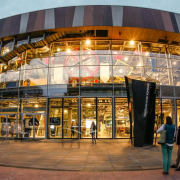
A central highlight of the Assembly will be the ALLEA Public Conference on 27 May, held at the Copernicus Science Centre. The conference will open with a keynote address by Robbert Dijkgraaf, President-Elect of the International Science Council, followed by a high-level panel featuring perspectives from academia, research funders, publishers, and policy representatives.

The programme will also include:

  • A lecture by Professor Maria Leptin, President of the European Research Council (ERC) and 2025 ALLEA Madame de Staël Prize Laureate
  • Satellite events organised with CoARA and SAPEA, focusing on research assessment reform and inclusive science advice
  • Collaboration with the European National Young Academies (ENYA), fostering intergenerational dialogue between early-career researchers and senior scholars

All public-facing sessions are open to a broad audience, encouraging wide participation in shaping the future of the European Research Area.

Join the Conversation

With mounting challenges facing science and society, ALLEA invites participants from across Europe and beyond to take part in this timely exchange and contribute to building a more resilient and future-ready research ecosystem.

Registration is now open: https://forms.gle/m4TqrEEmS1KN4BVX6
Full programme and details: https://www.alleageneralassembly.org/

ALLEA looks forward to welcoming participants to Warsaw this May for what promises to be a vital and engaging gathering.

Webinar: How Far Should We Trust AI in a Crisis Situation?

Academies Encourage the European Commission to Adopt a Careful and Ethical Approach to AI in European Crisis Management

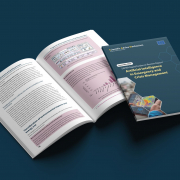
A group of leading scientists nominated by the Academy Networks of SAPEA has provided advice to the European Commission on artificial intelligence in emergency and crisis management, through the Scientific Advice Mechanism. This advice underscores that artificial intelligence can significantly enhance emergency and crisis management across Europe through applications like early warning systems, damage assessment, and decision support, but requires careful ethical oversight, human control, standardized data frameworks, and recognition of its limitations in novel or morally complex situations.

Published on 11 December 2025, the Rapid Evidence Review Report was coordinated by ALLEA, on behalf of SAPEA.

“Over the past decade, the development and deployment of Artificial Intelligence have accelerated significantly. What was once confined largely to some research and industry sectors has now entered almost every aspect of our lives, thus becoming a societal, economic and political priority. Important debates and questions accompany the growing use of AI. One of those most pressing questions is how we can benefit from the full potential of these technologies, while also understanding and managing the risks that come with them”, said Prof. Paweł Rowiński, President of ALLEA, and Prof. Donald Dingwell, Chair of the SAPEA board.

Evidence suggests that AI performs best on standardised, data-intensive tasks typical in frequent disasters such as floods, wildfires, and droughts. It excels at repetitive monitoring tasks important for early warning systems and can process social media and assess damage at scales and speeds beyond the reach of human analysts. However, AI is not well suited to interpreting highly heterogeneous contexts or new situations where appropriate training data is lacking. Moreover, morally challenging decisions and trade-offs should not be referred to an AI tool.

The development and implementation of benchmarks, practical guidelines, codes of conduct and sandbox environments for AI in crisis management would allow the testing of AI under supervision and with ethical oversight, before full deployment. A new European crisis management data preparedness framework, with common standards and agreed sharing protocols, could help fill data gaps and promote data harmonisation between Member States, enabling the training of EU-wide AI for relevant EU contexts, and helping deliver better EU crisis management tools.

“Crises cross borders, but data is managed at the national level, leading to different standards. This diversity can lead to fragmentation in the data landscape that AI cannot easily bridge. Data preparedness is an important step to connecting these data systems that provide the necessary foundation for AI to provide effective decision support in European crisis management,” explained Professor Tina Comes, chair of the SAPEA working group on Artificial Intelligence in Emergency and Crisis Management.

The Scientific Advice Mechanism provides independent scientific evidence and policy recommendations to the European institutions by request of the College of Commissioners. It includes the Science Advice for Policy by European Academies (SAPEA) consortium, which gathers expertise from more than 100 institutions across Europe, and the Group of Chief Scientific Advisors (GSCA), who provide independent guidance informed by the evidence.

More information

Artificial Intelligence in Emergency and Crisis Management


Top Scientists Advise European Commission on Solar Radiation Modification Technologies

A group of leading scientists nominated by academies has provided advice to the European Commission about solar radiation modification technologies through the Scientific Advice Mechanism. This advice underscores that solar radiation modification technologies are not yet mature and deploying them could have many effects, both intended and unintended.

The Scientific Advice Mechanism provides independent scientific evidence and policy recommendations to the European institutions.

For decades, technologies have been proposed that would reduce or counteract global warming by reflecting sunlight away from the Earth. These proposals, known as “solar radiation modification” technologies, include stratospheric aerosol injection, cloud brightening, and others.

However, none of the technologies is mature and deploying them could have many effects, both intended and unintended. They could have negative impacts on ecosystems, change rainfall patterns, and hamper food production. Moreover, they would not address the direct impacts of greenhouse gases.

The benefits and risks of these proposals are also highly uncertain. Member of the Group of Chief Scientific Advisors, Prof. Nebojsa Nakicenovic, adds that “Deploying them could have effects on the climate in different parts of the world which would be difficult to predict and difficult to manage in practice.”

These climate interventions could present grave risks if they are ever deployed, or come to be relied upon to protect critical habitats—coral reeds, Arctic and Antarctic ice sheets, farmland key to food security—by lowering temperatures in a world of global warming,” says Prof. Benjamin Sovacool, co-chair of the SAPEA working group. “Our Evidence Review Report synthesises the vast evidence on these controversial options, with a wonderful inclusion of work in the social sciences, arts, and humanities,” he adds.

Some solar radiation modification applications would need to run for generations-long timescales and have impacts across the entire planet. A strong global governance framework would be needed for this, with adequate representation for all affected parties, and with compensation mechanisms for those potentially harmed. No such framework exists, and it is not clear how one could be created.

More information

Scientific Advice Mechanism, Group of Chief Scientific Advisors, Solar Radiation Modification, Scientific Opinion No. 17.

Scientific Advice Mechanism, Science Advice for Policy by European Academies, Solar Radiation Modification, Evidence Review Report.

European Group on Ethics in Science and New Technologies, Solar Radiation Modification, Ethical perspectives, Opinion No. 34.

Online events.


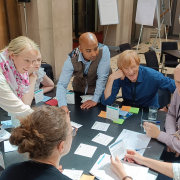
SAPEA Workshops Highlight Academy Interactions for Better Policy Advice

On 23 May 2024, SAPEA organised two engaging workshops in Berlin aiming to address key aspects of scientific collaboration among European academies and to promote the involvement of early and mid-career researchers in science advice. This event brought together 90 representatives from various European academies and was included as part of the ALLEA General Assembly.

We Need a New European Institute for AI in Science, Academies Advise European Commission

A group of renowned scientists, nominated by academies through the European Commission’s Scientific Advice Mechanism, have advised Commissioners on the use of AI in science. 

The advice comes in response to a request from Margrethe Vestager, Executive Vice-President for a Europe Fit for the Digital Age, to guide and support the overall European Commission’s strategy for AI in research and innovation. These recommendations were handed over to Commissioners Ivanova and EVC Vestager, today in Brussels. The Scientific Advice Mechanism provides independent scientific evidence and policy recommendations to the European institutions.

By bringing together experts from various scientific backgrounds, we have crafted comprehensive scientific advice on artificial intelligence that informs top EU policymakers” – says Professor Stefan Constantinescu, Chair of the SAPEA Board.

According to the advice, artificial intelligence has the potential to revolutionise scientific discovery, accelerate research progress, boost innovation and improve researchers’ productivity.  

Professor Anna Fabijańska, the co-chair of the SAPEA working group that reviewed the scientific evidence to inform these recommendations, says we need to rebalance the situation and boost public research across all disciplines and member states.

 “That means giving universities and research institutes across Europe fair access to state-of-the-art AI facilities.” – Professor Andrea Emilio Rizzoli, co-chair of the SAPEA working group added.

As part of the new advice, the Group of Chief Scientific Advisors to the European Commission recommends forming a new European institute for AI in science that would provide massive high-performing computational power, a sustainable cloud infrastructure, and AI training programmes for scientists.

Alongside these services, a European AI in Science Council would provide dedicated funding for researchers in all disciplines to explore and adopt AI in their sciences. These would also ensure that AI in research aligns with EU core values.

AI-powered scientific research requires a vast amount of data. That data should be high quality, responsibly collected and well curated, with fair access for European researchers and innovators.

Finally, scientists highlighted that the technologies of the future must be driven by people and communities, not only by profit. The EU should promote research on the philosophical, legal, and ethical issues that arise when AI is used in science, and the impact of these issues on fundamental human rights, transparency and accountability.

The evidence report by SAPEA and the recommendations by the Advisors are available here.

Europe Needs More Strategic Crisis Management, Academies Advise European Commission

Europe’s academies and networks played a central role in the scientific advice on crisis management handed to European Commissioners today in the European Parliament in Strasbourg.

At the Commission’s request, independent experts from SAPEA, which is part of the Commission’s Scientific Advice Mechanism, presented an Evidence Review Report to Commissioners Gabriel and Lenarčič. This report contains the latest scientific evidence and evidence-based policy options on how the EU can improve its strategic crisis management which informed the Scientific Opinion of the European Commission’s Group of Chief Scientific Advisors.

ALLEA President and Chair of the SAPEA Board, Antonio Loprieno, says that “we gathered the best scientists from around Europe to provide an interdisciplinary report on crisis management“. This report will be the basis not only for quality policy proposals, but also for much further academic work on the topic, Loprieno added.

The Evidence Review Report by SAPEA, which draft was coordinated by ALLEA, highlights that strategic crisis management needs to be aligned with broader policy objectives: “Crises are becoming the norm, not the exception. The strategic decisions we make during crises shape our society in the long run” says the Chair of the SAPEA working group, Prof. Tina Comes.

The report also stresses that crises are changing in nature, crossing borders and sectors, and having cascading and overlapping effects on society, the economy, and the environment. They amplify inequalities and hit the most vulnerable the hardest. Therefore, the EU needs to rethink approaches to risk and crisis management.

The Group of Chief Scientific Advisors are seven eminent scientists who advise European Commissioners on big societal challenges informed by SAPEA’s scientific evidence. Among others, the advisors make the following recommendations:

  • The EU should plan and prepare for the entire timescale of crises, from preparedness to response and recovery.
  • The EU should create stronger synergies across European institutions and between European Institutions and Member States; the Emergency Response and Coordination Centre could play a larger role in facilitating the exchange of information and needs.
  • To increase the EU’s resilience, the Advisors advocate for more scalable, rapidly deployable, and efficient EU financial tools.
  • Decision-makers at all levels should also work closely with civil society and the private sector. 

Alongside scientific reports, the European Group on Ethics in Science and New Technologies published a statement that highlights that the fundamental European value of solidarity is essential. Solidarity can be a guiding principle for overcoming crises and strengthening societal resilience.

The launch of these publications is followed by the webinar Entangled Crisis: How Can the EU Help? on Thursday 24 November, 10:00 CET. Registrations are still open here.

Download all publications here

ALLEA Leads New SAPEA Project on Strategic Crisis Management in the EU

ALLEA is taking the lead on a new SAPEA project on the topic “Strategic Crisis Management in the EU”, to address a question raised by European Commissioners to the Scientific Advice Mechanism: Based on a broad and multidisciplinary understanding, how can the EU improve its strategic crisis management?

The project will deliver an Evidence Review Report, informing policy advice to be given by the Group of Chief Scientific Advisors to the Commission in response to this question.

In the Scoping Paper that defines the project, it is observed that, after the shock of the Covid-19 pandemic, the EU and European societies need to prepare themselves better for future natural or human-made shocks: “Improving EU crisis management has thus become an essential issue for protecting and enhancing the present and future wellbeing of EU citizens”, according to the Scoping Paper.

“Supporting that policy ambition with evidence-based advice implies an urgent need to investigate – based on the best available cross-disciplinary expertise – improvements to the overarching EU crisis management framework. Such a framework must be able effectively to anticipate various major threats, risks and crises, help to prevent them by addressing their root causes which make the EU and citizens vulnerable to emergencies, respond to them effectively when they do occur, as well as to absorb and recover from major shocks, based on robust, future-proof policies. The framework must be able to integrate Commission-internal and external crisis management actions effectively.”

The Scientific Opinion is expected to be delivered by the end of second quarter of 2022.

How SAPEA Works

ALLEA is one of the five networks that compose SAPEA and will work together with its Member Academies and other European Academy networks to lead the project.

To ensure the delivery of a report of the highest standard in a transparent way, SAPEA’s work is guided by a set of principles and procedures which can be found in its Quality Assurance Guidelines.

SAPEA is part of the European Commission’s Scientific Advice Mechanism. Together with the Group of Chief Scientific Advisors, it provides independent scientific advice to European Commissioners to support their decision-making.

Jointly with its networks, it brings together outstanding expertise from natural, applied, and social sciences and humanities, from over a hundred academies, young academies and learned societies in more than 40 countries across Europe.

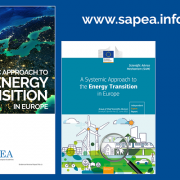
Energy Transition Needs to Accelerate Urgently, Says EU’s Scientific Advice Mechanism

There are many possible pathways towards a carbon-neutral future — and achieving it by 2050 is possible but requires urgent action. This is the conclusion of a group of top scientists tasked by the European Commission with advising on how to facilitate the energy transition in Europe.

The European Commission’s Scientific Advice Mechanism published two major documents on a systemic approach to the energy transition in Europe yesterday:

In these documents, the experts underline that the energy transition is far from a purely technical challenge. To make the transition a reality, we need to solve a huge systemic problem, coordinating countless individual voluntary decisions on investment, consumption and behaviour across Europe.

This means transforming the entire European energy system — a change which will affect every part of our society and require huge investment during the transition. It must be done in a socially equitable way. And we already need to accelerate progress if we want to achieve the EU’s target of net zero emissions by 2050.

Professor Peter Lund, chair of the SAPEA working group that wrote the report, said:

“The SAPEA report does not recommend an unequivocal policy package for Europe, but rather a set of policy options addressing various important facets of the overall challenge of the energy transition to reach carbon neutrality.

“However, as a central conclusion, any successful policy must involve a carbon pricing mechanism, in both the EU Emissions Trading System and Effort Sharing Regulation sectors, that delivers a sufficiently high carbon price while putting the pricing in a socially just frame.”

Professor Antonio Loprieno, the chair of the SAPEA Board and President of ALLEA, added:

“The transition of the energy system to tackle climate change is a key challenge and priority for the European Union, and its implications will impact on all parts of our societies, including a range of technical, economic, and social aspects. It is particularly important, that policymakers are well informed by science while making decisions on such complex issues.

“This report takes a multidisciplinary and systemic approach and provides evidence-based observations for achieving the EU’s emission targets by 2050 from an energy system transition perspective, thus brings the best and newest scientific knowledge into policymaking.”


SAPEA is part of the European Commission’s Scientific Advice Mechanism. Together with the Group of Chief Scientific Advisors, it provides independent scientific advice to European Commissioners to support their decision-making. SAPEA brings together outstanding expertise from natural, applied, and social sciences and humanities, from over a hundred academies, young academies and learned societies in more than 40 countries across Europe. ALLEA is involved in SAPEA as one of its European academy networks.

Learn more about SAPEA and their Evidence Review Reports here