
A CoARA Event
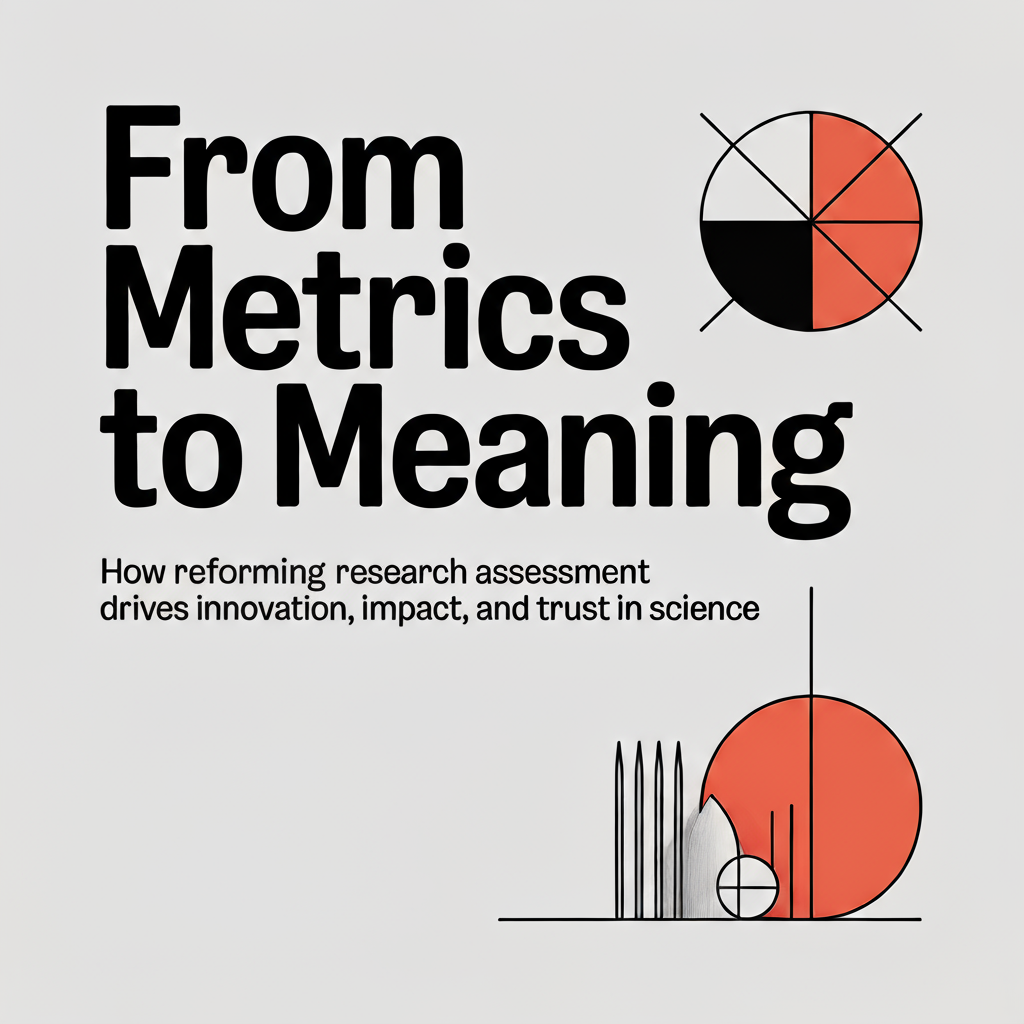
On 8 December, ALLEA is hosting a side event at the 2025 Triennial Conference and General Assembly of the InterAcademy Partnership (IAP), titled, “From Metrics to Meaning: How Reforming Research Assessment Drives Innovation, Impact, and Trust in Science”, in collaboration with the Global Young Academy, as part of the CoARA Boost project.
The 90-minute session will be moderated by ALLEA President, Paweł Rowiński, and Co-Chair of the Global Young Academy, Yensi Flores Bueso, and includes speaker presentations, a panel discussion, and audience Q&A on such questions as, “How can research assessment systems be reformed for more inclusive science?” “How can evaluation criteria be expanded to encourage socially impactful research, while maintaining research excellence?” and “How do we mitigate biases in qualitative research assessment models?”.
This side event is open to the public via the registration link below. There will also be a livestream.
Event Abstract
Traditional research assessment systems, dominated by publication metrics such as h-index and journal impact factor, risk narrowing the definition of excellence and undervaluing legitimate contributions from the research community that advance science and society. This over-reliance on bibliometrics creates a perverse system of academic incentives, and has fuelled questionable research ethics, paper mills, and a reproducibility crisis – all of which not only impact the quality of research, but, perhaps more importantly, undermine the credibility and social relevance of science.
In recognition of the need for reform, emerging initiatives such as the Coalition for Advancing Research Assessment (CoARA) are driving a bottom-up transformation of research cultures by promoting more holistic, responsible, and qualitative evaluation criteria that go beyond publication counts and recognise the wide range of activities undertaken by the researchers, including teaching, science communication, peer reviewing, etc. The objective of CoARA is to (re)build evaluation systems that reward transparency, integrity, and impact in science.
In this session, panellists will explore how research assessment can be redesigned and reformed to incentivise research excellence and socially impactful research – and thereby foster greater public trust in science.
Speakers
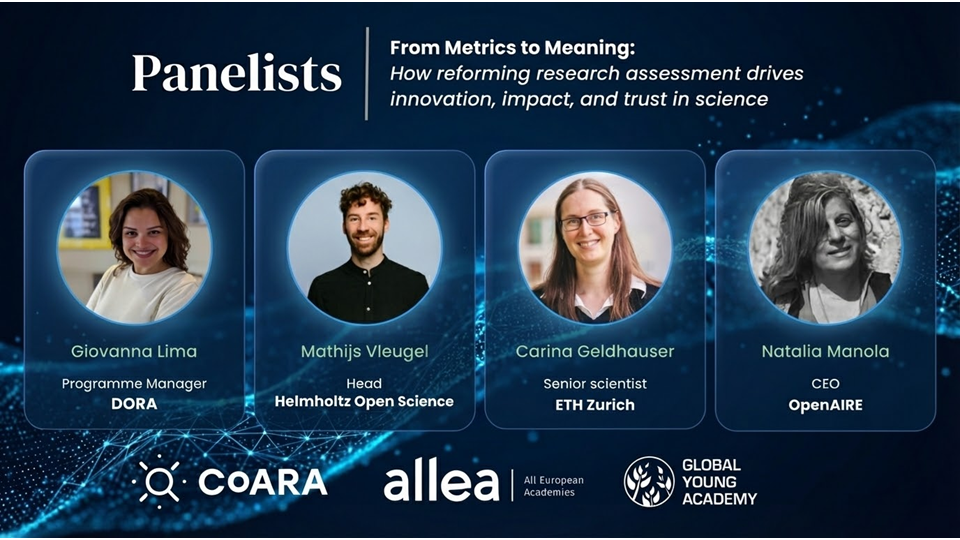
Giovanna Lima, Program Manager, DORA
Dr Giovanna Lima currently serves as the Program Manager for the Declaration on Research Assessment (DORA), a global initiative that campaigns for and supports the reform of research(er) assessment practices. Prior to joining DORA, Dr Lima served as Senior Project Officer for Societal Impact and Recognition & Rewards at Erasmus University Rotterdam (Netherlands). Earlier, as the first Research Impact Officer at Trinity College Dublin (Ireland), she developed the Researcher Impact Framework, which has been translated into French, Portuguese, and Spanish. With a PhD and master’s in public administration, she was also
research consultant for The Economist Impact and held a number of senior public management roles in Brazil.
Mathijs Vleugel, Chair, CoARA National Chapter Germany
Mathijs Vleugel holds a PhD in biophysics/cell biology and became head of the Helmholtz Open Science Office in September 2024. In this role, he supports the Helmholtz Association, its 18 research centers, and the wider research community in shaping the cultural change towards Open Science. Mathijs currently also serves as the chair of the German National Chapter of CoARA
Carina Geldhauser, Executive Committee Member, Global Young Academy
Carina Geldhauser is a senior scientist (Associate Professor) at ETH Zurich and member of the executive committee of the Global Young Academy. She conducts fundamental research on mathematical models for phenomena in physics and biology and cross-disciplinary research in machine learning.
Dr Geldhauser also contributes to science policy and diplomacy, serving in CoARA. She is an expert advisor to the UN Secretary General’s Scientific Advisory Board (UNSAB). She is a passionate science communicator and editor of the Oberwolfach Snapshots series. Her engagement for diversity in science was awarded several prizes.
Natalia Manola, CEO, OpenAIRE AMKE
Natalia Manola is the CEO of OpenAIRE, a European non-profit infrastructure supporting open scholarly communication and responsible research assessment. She co-chairs the COARA Working Group on Open Infrastructures for RRA and is deeply involved in European Open Science and EOSC strategies. With a background in computer science and deep experience in policy, infrastructure, and stakeholder engagement, she works to align openness, trust, and innovation across the research lifecycle.
You can join the event online here.
EVENT DATE
8 December 2025
09:00-10:30 am EEST (08:00-09:30 CET)
TYPE OF EVENT
Hybrid; Join online here
Registration required
The St. Regis New Capital, Cairo
ORGANISERS
CONTACT PERSON
Maria Ronald
Project Manager (CoARA)
ronald@allea.org