Registrations Open for ALLEA General Assembly 2026 in Warsaw

ALLEA has officially opened registrations for its General Assembly 2026, taking place from 26–29 May in Warsaw, hosted by the Polish Academy of Sciences. Bringing together leading voices from across the European research community, this year’s Assembly comes at a critical moment marked by geopolitical tensions, economic uncertainty, and increasing pressure on scientific institutions and academic freedom.

Under the theme “Towards a Futureproof European Research Area: Boosting Trust, Integrity, and Resilience,” the event will focus on how Europe can strengthen its research systems while safeguarding the core values of scientific independence, collaboration, and integrity.

As Europe navigates a complex landscape of global challenges and prepares for key policy developments such as the anticipated European Research Area (ERA) Act, the Assembly will provide a platform for essential dialogue among academies, researchers, policymakers, and other stakeholders. Discussions will explore not only policy solutions but also the role of the research community itself in reinforcing trust in science and sustaining cross-border collaboration.

Public Conference and Programme Highlights

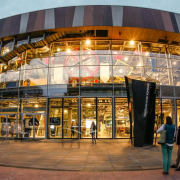
A central highlight of the Assembly will be the ALLEA Public Conference on 27 May, held at the Copernicus Science Centre. The conference will open with a keynote address by Robbert Dijkgraaf, President-Elect of the International Science Council, followed by a high-level panel featuring perspectives from academia, research funders, publishers, and policy representatives.

The programme will also include:

  • A lecture by Professor Maria Leptin, President of the European Research Council (ERC) and 2025 ALLEA Madame de Staël Prize Laureate
  • Satellite events organised with CoARA and SAPEA, focusing on research assessment reform and inclusive science advice
  • Collaboration with the European National Young Academies (ENYA), fostering intergenerational dialogue between early-career researchers and senior scholars

All public-facing sessions are open to a broad audience, encouraging wide participation in shaping the future of the European Research Area.

Join the Conversation

With mounting challenges facing science and society, ALLEA invites participants from across Europe and beyond to take part in this timely exchange and contribute to building a more resilient and future-ready research ecosystem.

Registration is now open: https://forms.gle/m4TqrEEmS1KN4BVX6
Full programme and details: https://www.alleageneralassembly.org/

ALLEA looks forward to welcoming participants to Warsaw this May for what promises to be a vital and engaging gathering.
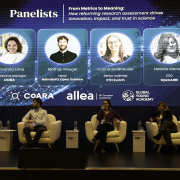
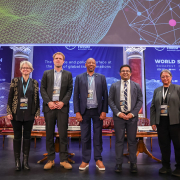
ALLEA Joins the Global Research Community in Cairo to Discuss Bridging Science, Policy, and Society in an Era of Transformation

From 8-11 December, ALLEA, represented by its President, Pawel Rowiński, joined members of the global research community at the 2025 IAP Triennial Conference and General Assembly in Cairo, Egypt to debate a wide range of issues concerning science and society, from research assessment reform to the role of science diplomacy in times of geopolitical volatility.

Event Report: ALLEA at the World Science Forum 2024 in Budapest

ALLEA was honored to participate in the 11th World Science Forum (WSF) 2024, contributing to critical discussions on research assessment, academic freedom, and the intersection of science, policy, and society as a driver of change in a rapidly evolving geopolitical landscape.

ALLEA Participates in EU-Funded Project to Support Reforms in Research Assessment 

Research assessment has the aim of making well-informed decisions about funding, hiring, and promotion, and remains a core pillar of our research system. However, while current assessment practices provide an important means to support the advancement of knowledge and recognise and reward excellence, they rely heavily on quantitative approaches rather than qualitative evaluation. Likewise, they often fail to acknowledge the diversity of the research outputs and skills that are needed for a thriving research ecosystem. 

In October 2023, a consortium of European research stakeholder organisations embarked on a Horizon Europe-funded project in order to bring research assessment beyond its simplistic reliance on quantitative indicators. The three-year-long project has a budget of €5 million and aims to enact a systemic reform of research assessment following the principles and commitments agreed upon by the Coalition for Advancing Research Assessment (CoARA). ALLEA has been actively involved in the drafting of this European agreement, and was one of the early signatories and members of the coalition.  

The “CoARA Boost” project is led by the European Science Foundation (ESF), and includes, alongside ALLEA, leading European network organisations for (early career) researchers, research funders, and universities committed to promoting change. The key objectives of the CoARA Boost Project are to i) strengthen CoARA’s operational capacity, ii) catalyse knowledge development, policy evolution, and institutional change in research assessment, iii) facilitate the collection and exchange of information, and iv) widen the Coalition’s membership in Europe and beyond. 

The consortium will convene for a kick-off meeting in Brussels on 7-8 December 2023 to delve into the specifics of the collaboration, which will play a pivotal role in advancing CoARA’s mission. 

ALLEA approaches the topic of research assessment through its various working groups and task forces. A complete overview of these activities can be found here.

Reforming Research Assessment: ALLEA Announces Further Support to Its Academies

ALLEA signed today the European Agreement on Reforming Research Assessment and announced in a new statement to further support its Member Academies with developing assessment criteria based on principles of quality, integrity, diversity, and openness. Read the ALLEA Statement here.

The European Agreement was published on 20 July, following a six-month collaborative process involving more than 350 European organisations, and opened for signature to organisations from across the world during the recent European Research and Innovation Days. The Agreement includes the principles, commitments and timeframe for reforms and lays out the framework for a Coalition of organisations willing to work together in implementing the changes.

ALLEA first contributed to the Agreement as part of a core group of 20 research organisations and reemphasizes today its commitment to a more diverse and inclusive academic system by publicly signing the agreement, joining the Coalition, and announcing in a new statement its support to its Member Academies.

ALLEA President Antonio Loprieno says “Rewarding and promoting excellence is a core value of academies. This Agreement is an important step forward towards the equitable and objective assessment of both early career researchers and established researchers, which is of utmost importance in a very highly competitive research landscape.

ALLEA is committed to using the momentum to explore, jointly with its Member Academies, what can be done to further develop the selection criteria and procedures for academy fellows in line with our shared overarching European values. ALLEA will therefore establish a dedicated task force with the aim to collect, exchange and promote best practices for admitting new Academy fellows, and to contribute to a meaningful cultural change of the research assessment system.

Read the ALLEA Statement here

ALLEA Joins the European Commission Coalition on Research Assessment Reform

ALLEA has joined the European Commission’s core group working on reforming research assessment. The group will support the drafting of an agreement led by the European University Association, Science Europe and the European Commission on key issues and timelines for implementing changes.

The coalition is composed by funding organisations, research performing organisations, national/regional assessment authorities or agencies, associations of research funders, of research performers, of researchers, as well as learned societies and other relevant organisations.

ALLEA is represented by Deborah Oughton, member of the ALLEA Permanent Group Science and Ethics and representative of the Norwegian Academy of Science and Letters. She is a Professor at the Environmental Sciences and Natural Resource Management Faculty of the Norwegian University of Life Sciences.

Towards a Research Assessment Reform

In 2021, the European Commission published the scoping report ‘Towards a reform of the research assessment system’. The publication presents the findings from a consultation with European research stakeholders and identifies the goals that should be pursued with a reform of research assessment. The report proposes a coordinated approach based on principles and actions that could be agreed upon by a coalition of research funding and research performing organisations committed to implement changes.

Research assessment reform is one of the topics ALLEA has worked jointly with its Member Academies and partners in recent years. In July 2021, ALLEA and the Global Young Academy (GYA) published a report covering the key takeaways of their webinar ‘Research Assessments that Promote Scholarly Progress and Reinforce the Contract with Society’. The event brought together science and policy stakeholders to rethink current research assessment models.

The key areas for research assessment identified by the stakeholders were how to strike a balance between funding of research to advance scientific progress and public accountability, how to assess the societal relevance of research and who defines the criteria, and how research assessment should be done.

In 2020, ALLEA, the Global Young Academy and STM (International Association of Scientific, Technical and Medical Publishers) organised a series of workshops about the future of peer review in scholarly communications. A short summary report is available here.

Shaping the Future of Peer Review

ALLEA, the Global Young Academy (GYA), and STM (International Association of Scientific, Technical and Medical Publishers) published today the summary of a series of cross-sectoral workshops on the future of peer review in an open, digital world.

Experts from across the world, representing different cultural and disciplinary traditions of peer review, convened virtually in November 2020 to discuss the future of peer review in an Open Science environment. Participants explored which models can best serve and reward the research community in both an enhanced and sustainable way.

Peer review is an essential element of scholarly communication and documentation processes and contributes to ensuring the quality and trustworthiness of modern research. The traditional models of peer review are, however, challenged by new digital modes of publication, and the wider range of research outputs envisaged as part of the move towards Open Science.

The workshops comprised a broad array of experts and actors including researchers, research funders, universities, publishers, libraries, the Open Science community and trade bodies. Main themes and areas for further consideration that emerged during the discussions included:

  1. Clarifying peer review and the roles of different actors in the system
  2. Building capacity for peer review: training, mentoring, inclusion and diversity
  3. Leveraging technology to deliver enhanced peer review
  4. Changes should be motivated by a strong evidence-base, collected through research, pilots and experimentation

Read the full summary.