The Board of ALLEA has released a statement on the suspension of the Russian Academy of Sciences and the National Academy of Sciences of Belarus. The statement reads:
In light of the unprovoked invasion of Ukraine initiated by the Russian government and supported by the Belarusian government, ALLEA, the European Federation of Academies of Sciences and Humanities, has decided to suspend the membership of the Russian Academy of Sciences and the National Academy of Sciences of Belarus.
ALLEA restates the European Academies’ commitment to academic freedom and human rights and hopes that efforts to defend democracy and the rule of law will eventually prevail. Conscious of its duty to uphold these fundamental values and giving practical expression to the moral outrage of the academic community, the ALLEA Board decided to enact this extraordinary measure, in line with international sanctions against institutions in the two states.
The Board is aware that this step might have an unintended impact on individual scientists and international scientific collaboration, but it concludes that the ability of these academies to act autonomously and independently from their governments has come into question – and therefore warrants this decision targeting only the institutional level. This suspension will be reconsidered by ALLEA member academies in their upcoming General Assembly on 11 May 2022.
The full statement is available here. ALLEA released an initial statement in support of Ukraine, its citizens and academics on 25 February. A list of resources, including funding and hosting tools aimed at helping Ukrainian scientists, can be found on this webpage.
https://allea.org/wp-content/uploads/2022/03/Statement-pic.jpg539941alleaadminhttps://allea.org/wp-content/uploads/2019/04/allealogo-1-300x83.pngalleaadmin2022-03-04 10:57:152022-03-04 10:57:15Statement by the ALLEA Board on the Suspension of the Russian Academy of Sciences and the National Academy of Sciences of Belarus
Today, the ALLEA Presidency has released a statement in support of Ukraine, its citizens and academics. The statement is a response to the ongoing military incursion by Russia into the country. ALLEA expresses its deep concern for the safety of our academic colleagues.
ALLEA, the European Federation of Academies of Sciences and Humanities, reacts with shock and deep regret to the military incursion by Russia into Ukraine. We call on the Russian government to respect the international conventions on the protection of civilians and cultural artefacts and express our deep concern for the safety of our academic colleagues.
https://allea.org/wp-content/uploads/2022/02/Statement-Ukraine.jpg7311317alleaadminhttps://allea.org/wp-content/uploads/2019/04/allealogo-1-300x83.pngalleaadmin2022-02-25 17:46:322025-12-01 12:59:36Statement in Support of Ukraine, its Citizens and Academics
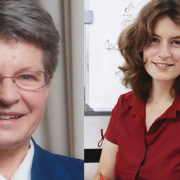
“Because I was a girl, I was not expected to do science. I was expected to learn cookery and needlework”, says the woman who discovered radio pulsars and changed the way we look at the universe, astrophysicist Jocelyn Bell Burnell (Royal Society, Royal Society of Edinburgh).
She is one of the two interviewees that we brought together on today’s International Day of Women and Girls in Science. Valérie Domcke (Die Junge Akademie), theoretical physicist and cosmologist who works at CERN and was awarded the L’Oréal-Unesco “Génération Jeune Chercheuse” Prize as a young post-doc, provides us the perspective of a young researcher navigating through today’s scientific system.
We invite you to watch the two interviews for a reflection on the disparities and commonalities of being a woman in science across different decades in physics. Happy Women in Science Day!
https://allea.org/wp-content/uploads/2022/02/womeninscience.png4001200alleaadminhttps://allea.org/wp-content/uploads/2019/04/allealogo-1-300x83.pngalleaadmin2022-02-11 14:12:382022-02-14 13:46:25Two Generations on Women in Science Day: Jocelyn Bell Burnell and Valerie Domcke
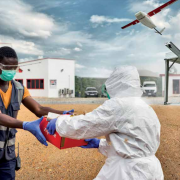
What is the current state of global research? How has the scientific community evolved over the past five years? What are the emerging trends in national and regional policy agendas for science, innovation and technology? These and many related issues are addressed every five years in a systematic and data-driven analysis by UNESCO.
The latest 758-page UNESCO Science Report “The race against time for smarter development” provides an inventory of global efforts to move towards a digital and sustainable society. On 9 February 2022, UNESCO and the European Commission hosted an online event that discussed key conclusions of the report and its implications for the European Research and Innovation agenda.
Global Trends
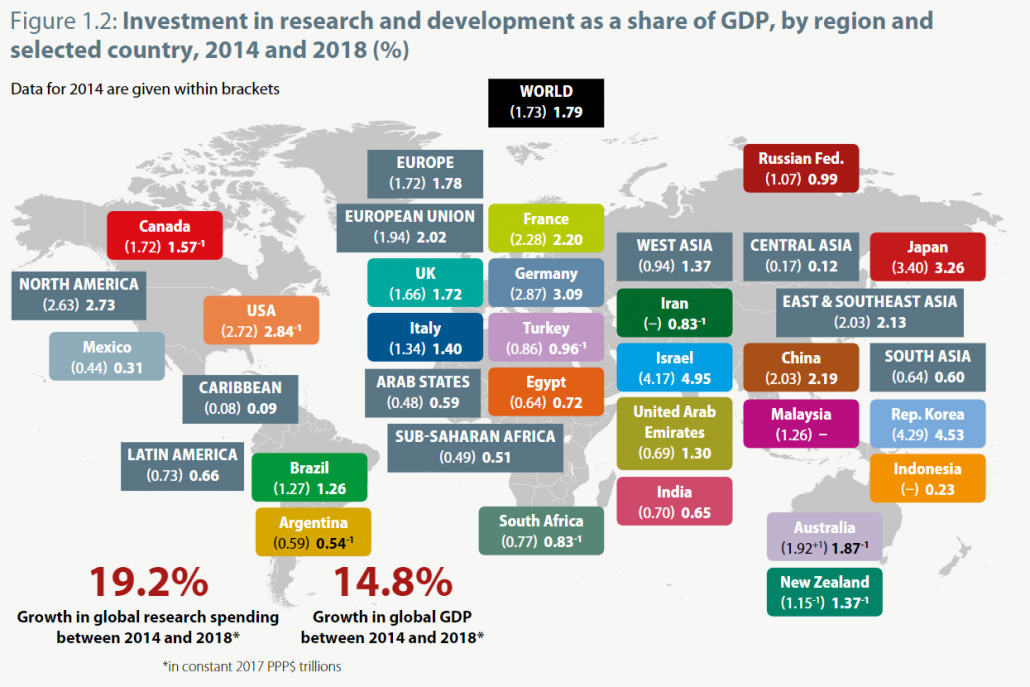
Between 2014 and 2018, global research spending has increased by 19.2% (compared to a 14.8% growth in GDP) and the number of researchers has grown by 13.7%. In spite of these promising figures, however, large inequalities can be found around the globe: four out of five countries are still only investing less than 1% of their GDP on research and the G20 continues to account for more than90%of the global research spending, publications and patents.
Source: global and regional estimates based on country-level data from the UNESCO Institute for Statistics, August 2020, without extrapolation
A striking trend identified in the report is that countries of all income levels are prioritizing their research efforts to support the transition to digital and green economies. This can be partially explained by the countries’ commitment to reaching the United Nations’ 17 Sustainable Development Goals (SDGs) by 2030. At the same time, there seems to be a strong realisation that rapid transition to a digital society is key to maintaining global economic competitiveness in the future.
“science is at the heart of our future and should form the basis for public policies that support the entire continuum from society to economy”
Importantly, the UNESCO report urges all countries to further increase their spending on science in order to address global issues such as climate change, food security and pandemics more effectively. During the event, Jean-Eric Paquet, Director-General for Research and Innovation of the European Commission, emphasized that “science is at the heart of our future and should form the basis for public policies that support the entire continuum from society to economy.”
The European Perspective
Although the EU remains one of the main players when it comes to producing knowledge, lower and middle-income countries are showing the strongest growth in research investments and output. The playing fields for fundamental research and commercialisation of knowledge are rapidly changing and the pandemic has exposed both strengths and weaknesses of European research and innovation.
Luc Soete, Dean of the Brussels School of Governance at the Free University of Brussels, commented that the global pandemic had a strong influence on how we perform and communicate science in Europe: “The crisis has fostered the green and digital transition across the globe, and promoted further involvement, investment and implementation of science.” On the other hand, Sylvia Schwaag Serger, Professor of Research Policy at Lund University, noted “there is still much uncertainty on how Europe’s massive investments [as part of the European Green Deal and NextGenerationEU stimulus package] will be able to make far-reaching change”, and warned against the effects of a possible economic backlash of the pandemic.
“we need to invest in changing our research culture and start approaching science as a global endeavour, rather than approaching it from the national level”
European and global collaboration will be instrumental in our race against time for a sustainable and digital transition and to fight current and future crises. A truly collaborative international research community can only be accomplished when global equity and solidarity are at the essence of our research policy agendas. As stated by Lidia Borrell-Damián, Secretary General of Science Europe, “[w]e need to invest in changing our research culture and start approaching science as a global endeavour, rather than approaching it from the national level.”
Gender Equality
Source: WEF (2018) The Global Gender Gap Report 2018. World Economic Forum: Geneva.
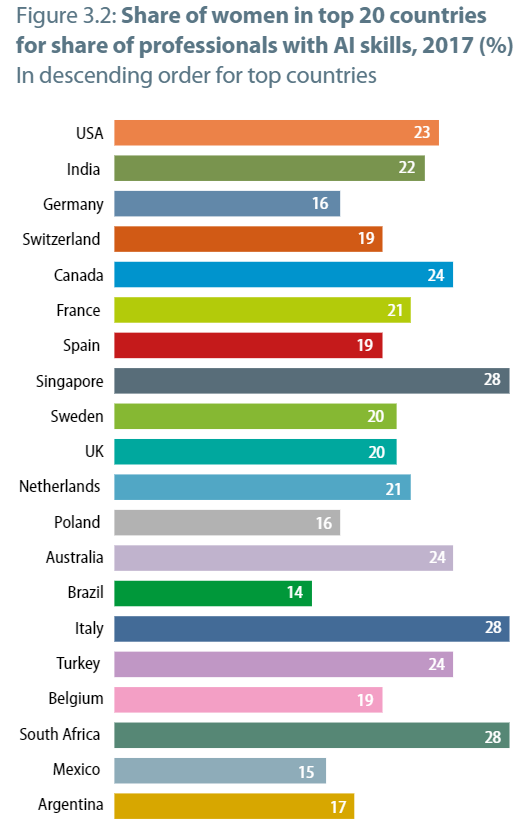
Strikingly absent from the discussion organised by the European Commission werethe report’s alarming conclusions on gender imbalanceas one of the major obstacles in realising Europe’s ambitious sustainability and digitalisation goals. Also in Europe, women still accounted for only one in three researchers in 2018, occupied only 24% of the highest positions, and make up a mere 12% of the national science academies’ memberships.
Particularly in areas relevant to the digital revolution (such as digital information technology, computing, artificial intelligence (AI), robotics, physics, mathematics and engineering) women remain underrepresented, meaning that they risk missing out on jobs in a future that becomes increasingly digital. “[…] progress towards righting the gender imbalance could be compromised, unless strenuous efforts are made at the government, academic and corporate levels not only to attract girls and women to these fields but, above all, to retain them”, the report urges.
The Covid-19 pandemic has disproportionally affected women in science and engineering. Women in the USA and Europe have reported a 5% larger decline in research time compared to their male peers (and even 17% for women with at least one child five years old or younger), resulting in the publication of fewer preprints and peer-reviewed articles, starting fewer research projects, etc.
The report concludes that “[s]ome of the radical changes to the work–family balance induced by the pandemic may be here to stay. It will be important for these changes to be converted into policies which ensure that women do not spend a disproportionate amount of time as unpaid carers, homemakers and educators but, rather, have the time and the energy to make their mark on the science and innovation of tomorrow.”
https://allea.org/wp-content/uploads/2022/02/Screenshot_3-1.png8541237Dino Tramontanihttps://allea.org/wp-content/uploads/2019/04/allealogo-1-300x83.pngDino Tramontani2022-02-10 11:28:042022-02-10 11:49:13The Race against Time for Smarter Development – A European Perspective
ALLEA has joined the movement ‘Stick to Science’ calling for open and barrier-free collaboration among Europe’s research and innovation (R&I) actors. The initiative is a response to the delayed progress in the EU research association agreements with Switzerland and the United Kingdom.
The campaign was launched during the event ‘Science without borders: Why European trusted partnerships matter more than ever’ on 8 February. The initiators of the campaign are collecting signatures online and calling on European institutions and governments to not interfere in long-standing European research partnerships with these countries.
“Allowing political differences to prevent scientific collaboration is contrary to the interests of society at large. (…) The signatories urge the EU, the UK and Switzerland to rapidly reach association agreements so that the two countries can contribute scientifically and financially to the strength of Horizon Europe and to a truly open, inclusive and excellence-driven European Research Area”, the statement reads.
The signatories request that the European Council, Parliament, Commission, as well as European Union (EU) Member States, and the governments of the UK and Switzerland, recognise that advancement in R&I is best achieved when all actors in science and innovation work together across geographic boundaries.
On social media, the campaign can be followed under the hashtag #StickToScience and supporters can join the movement by signing the call, inviting others to sign and sharing their ideas. All information can be found here.
At the moment of the launch, 12 Nobel Prize winners, over 250 leaders from industry, research organisations and institutes, charities, health organisations, universities and foundations, more than 45 supporting organisations including umbrella bodies, trade associations, and research funders had joined the call. More than 1500 individual signatures have been collected so far.
The EU’s flagship programme for research and innovation Horizon Europe is already in course with the first grants being signed. A number of association agreements with non-EU countries were finalised at the end of 2021, but the ones with the UK and Switzerland continue to be delayed.
On several occasions, ALLEA has reaffirmed the need for securing the highest degree of participation of both countries in the European Research Area. “The scientific endeavour inherently does not have a passport, it is a truly global citizen and it would be a shame to restrict its abilities for the purposes of political negotiations”, said ALLEA President in a recent statement.
https://allea.org/wp-content/uploads/2022/02/Stick-to-Science-Logo-Slogan2.jpg4001134alleaadminhttps://allea.org/wp-content/uploads/2019/04/allealogo-1-300x83.pngalleaadmin2022-02-10 10:05:092022-02-10 12:35:34ALLEA Supports the #StickToScience Movement
ALLEA has joined the European Commission’s core group working on reforming research assessment. The group will support the drafting of an agreement led by the European University Association, Science Europe and the European Commission on key issues and timelines for implementing changes.
The coalition is composed by funding organisations, research performing organisations, national/regional assessment authorities or agencies, associations of research funders, of research performers, of researchers, as well as learned societies and other relevant organisations.
ALLEA is represented by Deborah Oughton, member of the ALLEA Permanent Group Science and Ethics and representative of the Norwegian Academy of Science and Letters. She is a Professor at the Environmental Sciences and Natural Resource Management Faculty of the Norwegian University of Life Sciences.
Towards a Research Assessment Reform
In 2021, the European Commission published the scoping report ‘Towards a reform of the research assessment system’. The publication presents the findings from a consultation with European research stakeholders and identifies the goals that should be pursued with a reform of research assessment. The report proposes a coordinated approach based on principles and actions that could be agreed upon by a coalition of research funding and research performing organisations committed to implement changes.
Research assessment reform is one of the topics ALLEA has worked jointly with its Member Academies and partners in recent years. In July 2021, ALLEA and the Global Young Academy (GYA) published a report covering the key takeaways of their webinar ‘Research Assessments that Promote Scholarly Progress and Reinforce the Contract with Society’. The event brought together science and policy stakeholders to rethink current research assessment models.
The key areas for research assessment identified by the stakeholders were how to strike a balance between funding of research to advance scientific progress and public accountability, how to assess the societal relevance of research and who defines the criteria, and how research assessment should be done.
In 2020, ALLEA, the Global Young Academy and STM (International Association of Scientific, Technical and Medical Publishers) organised a series of workshops about the future of peer review in scholarly communications. A short summary report is available here.
https://allea.org/wp-content/uploads/2021/07/Research_Assessment.jpg9771500alleaadminhttps://allea.org/wp-content/uploads/2019/04/allealogo-1-300x83.pngalleaadmin2022-02-09 11:58:122023-11-16 13:14:31ALLEA Joins the European Commission Coalition on Research Assessment Reform
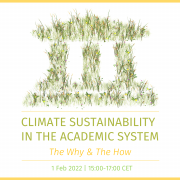
The ALLEA online panel ‘Climate Sustainability in the Academic System – the Why and the How’ provided a platform for discussion on the climate impact of the academic system and potential pathways towards more sustainable practices.
Panelists offered an overview of the current levels of CO2-equivalent emissions that can be tied to specific academic work. The discussion focused on the steps that universities, research centres, funding institutions as well as individual students and researchers can take to reduce their climate impact.
The online event, held on 1 February, was opened with a presentation by Professor Astrid Eichhorn, speaker of Die Junge Akademie and Chair of the ALLEA Working Group Climate Sustainability in the Academic System. Professor Eichhorn introduced the topic drawing from available research data as well as on some of the preliminary results from the upcoming report by the ALLEA Working Group.
LimitingResearchers’ CO2 budget
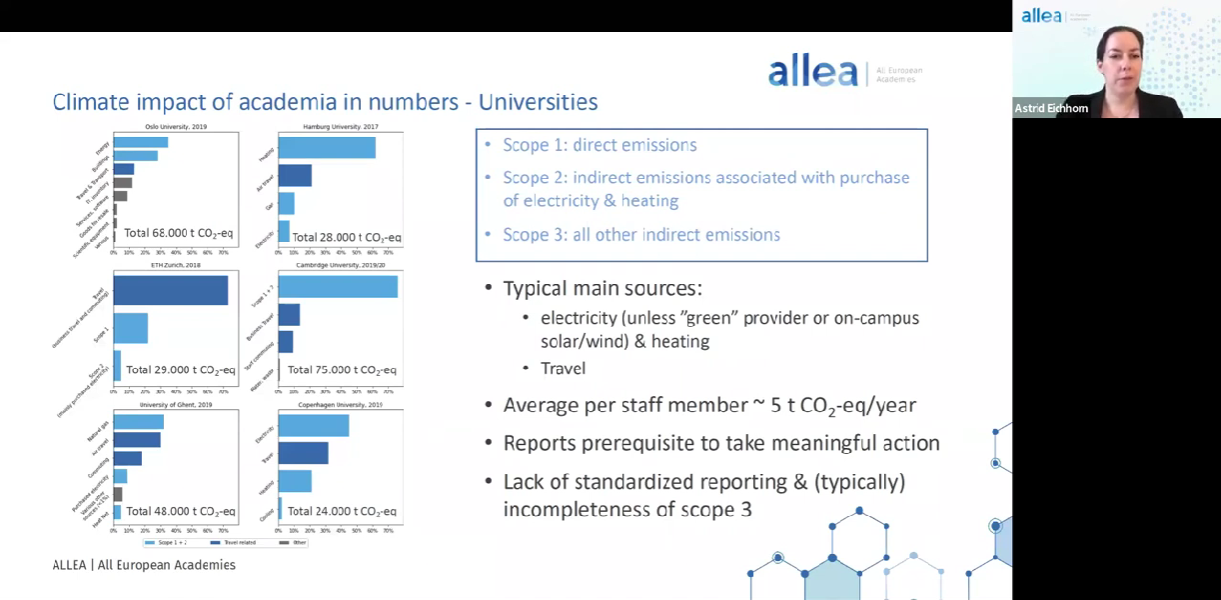
Professor Eichhorn set the stage to the discussion with an introduction to the data presented in the 2018 IPCC report, which estimated that there is a “remaining budget” of 420 gigatons of CO2-equivalent emissions for a 66% chance to stay below the 1.5°C of global warming stipulated in the Paris Agreement. This translates to a “budget” of 1.5 tons of CO2-equivalent emission per person per year. Data presented on the impact levels of universities, research institutes, and conference travels show that researchers from across scientific fields far exceed the yearly “budget” necessary to remain under 1.5°C of global warming.
Universities
Some universities have managed to reduce their GHG emissions in electricity and heating by turning to “green” providers or by installing on-campus solar/wind energy sources
In regards to universities, Professor Eichhorn pointed out that the main sources of greenhouse gas (GHG) emissions include electricity and heating, although some universities have managed to reduce their GHG emissions in electricity and heating by turning to “green” providers or by installing on-campus solar/wind energy sources. She also underlined that many universities are now starting to estimate and report their GHG emissions, which is a necessary first step to be able to take meaningful and tailored action against climate impact. However, comparing the different reports from universities reveals that there is still a lack of standardisation in reporting (i.e. different categories are being used and reported), which makes it difficult to compare across institutions.
Research Institutes
The main sources of GHG emissions at these institutions are very strongly tied to the research activities they perform
As an example for the level of GHG emissions from research institutes, Professor Eichhorn introduced the findings of a study from the Max Planck Institute of Astronomy in Germany, which estimates the CO2-equivalent emissions per researcher per year within the institute at 18.1 tons. In Australia, this number goes up to 41.8 tons per researcher per year, both digits being significantly above the previously mentioned “yearly budget” of 1.5 tons. A considerable fraction of emissions comes from flights, but also from electricity, of which a significant amount derive from the electricity used in scientific computing. The main sources of GHG emissions at these institutions are very strongly tied to the research activities they perform, which makes it challenging to reduce these emissions in ways that do not compromise the research quality.
Conference Travels
In-person conferences can reduce their GHG emissions by up to 20% by optimising the conference location.
Speaking on the climate impact of conference travels, Professor Eichhorn presented data estimating that the CO2-equivalent emissions per conference participant from air travel alone can be as high as 1 ton, with participants taking long-haul flights contributing to the larger share of emissions. She highlighted that switching to virtual meetings has the potential to bring about a reduction between 94% and 98% in GHG emissions compared to in-person meetings. In-person conferences can also reduce their GHG emissions by up to 20% by optimising the conference location. An additional co-benefit of virtual and hybrid events is the higher participation from students and researchers from traditionally underrepresented parts of the world, who usually cannot attend such conferences due to the distance or costs that this would incur. This higher inclusivity can also result in the increase of research quality.
Professor Eichhorn concluded by presenting data that show that an increasing number of individual actors within the academic system are taking a look at their climate impact and taking meaningful steps to reduce it. For instance, more than a 1,000 universities and colleges have made a net-zero pledge across different scopes. The Alliance of Science Organisations in Germany, comprising several research institutions, has pledged to reach climate neutrality by 2035, and there are also numerous initiatives to reduce flying in academia. However, Professor Eichhorn points out that it is necessary to go beyond initiatives by individual actors, but rather start thinking more systemically and initiate a broader dialogue with all of the stakeholders in academia to think about ways to make the academic system more climate sustainable.
Power Structures, Mobility and Academic Freedom
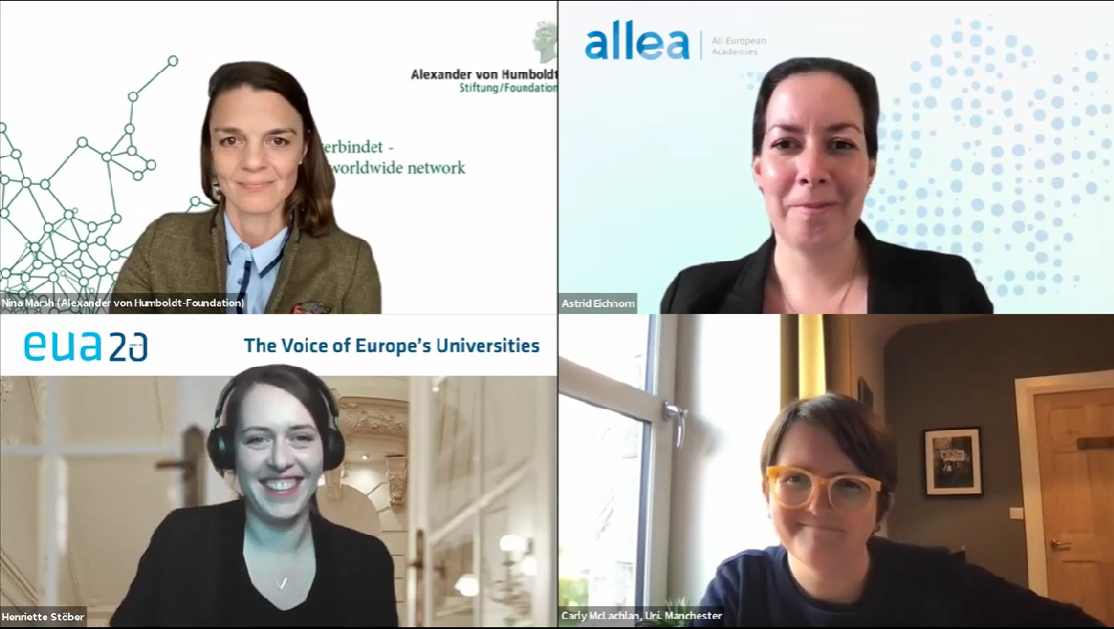
Following her presentation, Professor Eichhorn was joined by a panel of three experts: Dr Nina Marsh, Head of the staff unit Internal Audit & Sustainability Management at the Alexander von Humboldt-Foundation; Professor Carly McLachlan, Director of Tyndall Manchester and Associate Director of the ESRC Centre for Climate Change and Social Transformation; and Henriette Stoeber, Policy Analyst at the European University Association’s Higher Education Policy Unit.
(Top-bottom, left-right) The panel was comprised by Dr Nina Marsh, Professor Astrid Eichhorn, Henriette Stoeber, and Professor Carly McLachlan.
Asked about one specific change urgently needed to make the academic system more sustainable, Professor Carly McLachlan spoke of the need for academics with more influence and power within the system to recognise and use their influence to change the current state of affairs within academia. This would entail, for example, a push to include climate sustainability in the requirements for academic promotions, research proposals, and other elements that are embedded within the academic career ladder.
There is a need for establishing criteria to make meetings in person or virtual and allowing for more flexibility for the mobility of researchers.
Speaking on the role of funding organisations in steering the academic system towards a more sustainable path, Dr Nina Marsh emphasised the changes that can be implemented in the area of mobility, particularly for globally-operating research networks that seek to facilitate inter-cultural exchanges. She pointed out alternatives being explored within the Alexander von Humboldt-Foundation, including having criteria as to which meetings are required to be in person and which can be virtual, combining virtual and in-person meetings, and allowing for more flexibility in regards to mobility of research fellows. She also spoke on the need for such organisations to adopt ways to assess their environmental footprint in order to take more tailored steps to reduce their climate impact. Other stakeholders like service providers and organisational partners must also be taken into consideration when analysing the organisation’s climate impact.
Regarding the role of European higher education institutions in advancing climate sustainability in the academic system, Henriette Stoeber introduced a 2021 survey by the European University Association which comprised around 400 European universities. The survey revealed that an area where universities have been particularly active is the area of learning and teaching, for example by revising their curricula and including the topic of sustainability into their courses. In terms of net-zero targets, such as greening university campuses, infrastructure, and research activities, the data shows that universities’ strategies remain much less clear.
Asked about the impact of imposing more climate sustainable regulations on research and academic freedom, all panellists agreed that requiring research to be more climate-sustainable would not negatively impact the outcome of the research findings. Professor McLachlan asserted that academic freedom is about freedom of thought and freedom to explore the conclusions drawn based on the evidence. She emphasised that there are already restrictions and regulations in place to protect colleagues, research subjects and institutions. Protecting the environment and the people around the world, she argued, would be an extension of those regulations that are already in place.
The panelists concluded that it is not important to get everything right from the beginning, but what is important is that organisations and individuals commit to doing what they can to move towards climate sustainability. As individuals start to reassemble and move away from the pandemic restrictions, there is an opportunity to do things differently.
The panel was followed by an interactive session in which participants were able to join different thematic groups to continue the discussion. The thematic breakout sessions included Universities & University Networks, Students & Individual Researchers, and Funding Organisations. The breakout sessions were led by members of the ALLEA Working Group on Climate Sustainability in the Academic System.
https://allea.org/wp-content/uploads/2022/02/Slide2-2.png11252000Dino Tramontanihttps://allea.org/wp-content/uploads/2019/04/allealogo-1-300x83.pngDino Tramontani2022-02-03 16:04:102022-02-15 12:06:02Online Panel: Climate Sustainability in the Academic System
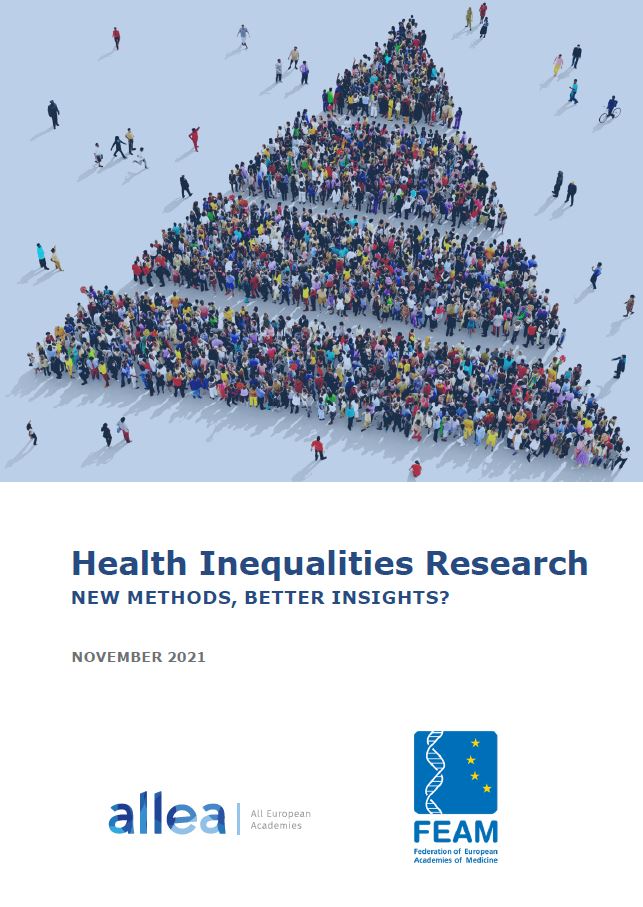
Reducing health inequalities is very much a matter of “swimming against the current”, says Professor Johan Mackenbach, Chair of the scientific committee of the ALLEA-FEAM report Health Inequalities Research: New Methods, Better Insights? “When societies become more unequal, as they do in many European countries, it is very hard to stop the health consequences of these inequalities from widening”, he explains in this interview with the ALLEA Digital Salon.
As one of the leading experts in public health in Europe, Mackenbach has dedicated a career to understanding the underlying causes of what makes some sicker than others. He has (co-)authored more than 700 papers in international, peer-reviewed scientific journals, as well as a number of books, and is a former editor-in-chief of the European Journal of Public Health. Over the course of his prolific career, he has come to recognise that there are no quick fixes to close the health inequalities gap, but points out that with more advanced research methods now available to understand causal mechanisms, perhaps more effective policy interventions can be developed.
“Only a few countries in Europe have taken serious action to translate scientific insights into policies and interventions to reduce health inequalities.”
Question: In the presentation of the report Health Inequalities Research: New Methods, Better Insights?, you said that health inequalities have no clear tendency to decline, and persist in even the most advanced welfare states. What are some first steps that we can take to narrow this gap?
Johan Mackenbach: It is indeed disappointing that, despite the growth of scientific knowledge on health inequalities, European countries have not been successful in narrowing the gap in morbidity and mortality between socioeconomically disadvantaged people and their richer or better educated counterparts. This is partly due to lack of effort: unfortunately, only a few countries have taken serious action to translate scientific insights into policies and interventions to reduce health inequalities. However, it is also partly due to the fact that trying to reduce health inequalities is very much a matter of “swimming against the current”: when societies become more unequal, as they do in many European countries, it is very hard to stop the health consequences of these inequalities from widening. While this shows that there is no “quick fix”, a lot can be done to reduce health inequalities. Let me give a few examples: Improve working conditions for people in physically or mentally hazardous jobs. Tackle socio-economic inequalities in smoking by raising the price of cigarettes and by offering free smoking cessation support to disadvantaged smokers. Alleviate poverty, particularly among children. Remove barriers to health care, including primary and preventive health care services, in disadvantaged areas.
“In many European countries, smoking is number 1 among the many factors contributing to health inequalities.”
Q.: The study underlines that there is reasonably strong evidence for a causal effect of the number of years of education on mortality in mid-life. Could you elaborate on why this causal effect happens?
J.M.: This is probably due to a cumulation of various beneficial effects of longer, or more, education. Education in large part determines people’s occupational opportunities, and thereby people’s living conditions throughout life. Education also helps people deal with complex problems, such as coping with financial stress or choosing a balanced diet. In addition to these indirect effects, there is also the more direct effect of education on people’s “health literacy”, which is important for understanding health risks and finding your way in the health system. More highly educated people also tend to marry a highly educated partner, which acts as a flywheel for all these beneficial effects.
“If smoking would not be more prevalent among the low educated than among the high educated, inequalities in life expectancy would be reduced by a quarter to a third.”
Q.: What is it not widely known about the causes of health inequalities that we should make people more aware of?
J.M.: In many European countries, smoking is number 1 among the many factors contributing to health inequalities. If smoking would not be more prevalent among the low educated than among the high educated, inequalities in life expectancy would be reduced by a quarter to a third, particularly in North-western Europe where smoking has become highly concentrated in socioeconomically disadvantaged groups. However, what people need to be made more aware of is not this simple fact, but the brutal reality underlying these numbers. The reality of going to school in a poor neighbourhood, where social norms are often pro-smoking and where the likelihood of starting smoking at a young age and thereby getting addicted to nicotine, is much higher. The reality of living in socioeconomic disadvantage makes smoking cessation as an adult much more difficult. And the brutal reality of a tobacco industry which continues to sell its deadly products to people who already have a lower expectancy and deserve to be better protected. If you do not understand these underlying factors, you could be misled to think that health inequalities are mainly a matter of individual responsibility.
“New methods can take advantage of “natural experiments” in which socioeconomic conditions change as a result of non-health-related changes in legislation.”
Q.: The ALLEA-FEAM report provides a review of a new generation of quantitative methods and assesses their contributions in comparison with “conventional” methods. What are the most important takeaways of this evaluation?
J.M.: These new methods can help us answer a number of unanswered questions on the explanation of health inequalities. Scientists are pretty sure that smoking causes lung cancer and other health problems, but they are less certain about causality in the case of education and income versus health, because conventional research methods are more suitable for investigating the health effects of easily identifiable factors like smoking, than for investigating the health effects of socioeconomic conditions. These new methods can help to fill some of these gaps in knowledge, for example by taking advantage of “natural experiments” in which socioeconomic conditions change as a result of non-health-related changes in legislation. This is nicely illustrated by studies looking at the long-term mortality experience of people going to school before and after a change in legislation, which increased compulsory school leaving age by one year. Those who, in this “natural experiment”, went to school longer, simply because they were born later, turned out to live longer as well.
“While there can be no doubt that people living in poverty on average live shorter lives, and suffer from more illnesses during their lives, it is less clear whether this reflects a causal effect of low income on health, or perhaps has other explanations, such as differences in cognitive ability or personality characteristics.”
Q.: As these new methods are being applied, to what extent are they contradicting or shedding light on previous findings regarding the causes of heath inequalities? Could you give an example?
J.M.: An important “contradictory” finding relates to the health effects of low income. While there can be no doubt that people living in poverty on average live shorter lives, and suffer from more illnesses during their lives, it is less clear whether this reflects a causal effect of low income on health, or perhaps has other explanations, such as differences in cognitive ability or personality characteristics. Ideally, one would like to study this by conducting a true experiment in which people are randomized into groups with a higher and a lower monthly income. However, this is only rarely feasible, and these new methods now help scientists take advantage of “natural experiments” in which people receive a higher or lower income as a result of, e.g., a sudden change in welfare benefits or winning a prize in a lottery. Results from these studies have found some evidence for a causal effect of higher or lower income on children’s health and on mental health in adulthood, but surprisingly little evidence for a causal effect of higher or lower income on physical health in adulthood. Because of its policy relevance, this is clearly an area for further research.
“It is essential to include an inequalities perspective in climate change mitigation and adaptation policies, and to make sure that these policies duly protect those who need it most.”
Q.: In your book A History of Population Health: Rise and Fall of Disease in Europe, you argue that the rise of so many diseases indicates that their ultimate cause is not to be sought within the body, but in the interaction between humans and their environment. What does the increasing degradation of the environment and the worsening climate crisis mean for the emergence of new diseases?
J.M.: I am very concerned about the effect of climate change, biodiversity loss, wide-spread chemical pollution and other environmental changes on human health. New health problems are emerging on the horizon before we have solved the problems of the past, such as the tobacco epidemic or, indeed, health inequalities. Unfortunately, health inequalities are likely to become even wider in the future if we do not take effective countermeasures. Climate change is already affecting the health of people in many low-income countries, and when serious effects of climate change reach high-income countries, they will certainly also affect disadvantaged groups more than the rich and high educated. It is therefore essential to include an inequalities perspective in climate change mitigation and adaptation policies, and to make sure that these policies duly protect those who need it most.
About Johan Mackenbach
Johan Mackenbach is Professor Emeritus of Public Health and former chair of the Department of Public Health at Erasmus MC, University Medical Center Rotterdam, the Netherlands. His research interests are in social epidemiology, medical demography, and health policy. He has (co-)authored more than 700 papers in international, peer-reviewed scientific journals, as well as a number of books, including Health inequalities: persistence and change in European welfare states (Oxford University Press, 2019). He is a former editor-in-chief of the European Journal of Public Health, and has been actively engaged in exchanges between research and policy, among others as a member of the Health Council of the Netherlands and the Council for Public Health and Health Care. He is also a member of the Royal Netherlands Academy of Arts and Sciences and the Academia Europaea.
https://allea.org/wp-content/uploads/2022/01/health-inequalities.png4271242alleaadminhttps://allea.org/wp-content/uploads/2019/04/allealogo-1-300x83.pngalleaadmin2022-01-31 15:15:472022-02-18 11:54:38Reducing Health Inequalities Is a Matter of Swimming against the Current
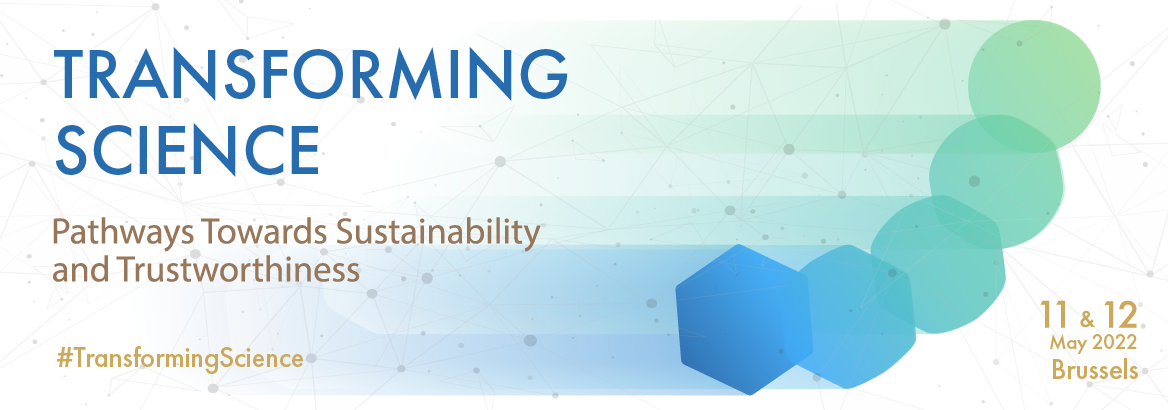
We are pleased to announce that the registration for the symposium ‘Transforming Science: Pathways Towards Sustainability and Trustworthiness’ is now open. The event will take place in Brussels and online on 11-12 May 2022. Scientists, policymakers and professionals from across Europe will join to discuss current trends pressing science in light of the transformations occurred during the Covid-19 pandemic.
The symposium is part of the ALLEA General Assembly and hosted by ALLEA’s Member Academies, the Royal Academy of Sciences, Letters and Arts of Belgium and the Royal Flemish Academy of Belgium for Science and the Arts. Speakers include Mariya Gabriel, European Commissioner for Innovation, Research, Culture, Education and Youth, Marion Koopmans, Director of the WHO Collaborating Centre for Emerging Infectious Diseases at Erasmus MC, and Maria Leptin, President of the European Research Council, among others.
The event will explore how scientific institutions can transform research cultures, trust-building strategies and science advice mechanisms. The consequences of this transformation can be seen as two-sided: from an inspiration to tackle complex global emergencies such as climate change or future pandemics, to a rise of societal expectations and demands towards research. The symposium will tackle the central question: Are we ready to transform science for the future?
The full programme and further details can be found on our symposium website. The symposium is expected to be held in person. The organisers will fully implement the official Covid-19 measures and follow current best practices for public events and international travel. The symposium will also be livestreamed for those who wish to participate digitally. Register now to not miss your spot!
About the ALLEA General Assembly
The General Assembly annually convenes academies of sciences and humanities from 40 countries across the Council of Europe region. General Assemblies are hosted by ALLEA Member Academies and the programme typically consists of the internal business meeting of academy delegates, and a scientific symposium open to the public.
The symposium explores pressing topics from the fields of science, society and policy, and provides a platform for international, interdisciplinary and cross-sectoral debate.
The business meeting addresses governance, strategy and policy matters and is restricted to Member Academies’ delegates.
https://allea.org/wp-content/uploads/2022/01/Artboard-41-1.png3991201alleaadminhttps://allea.org/wp-content/uploads/2019/04/allealogo-1-300x83.pngalleaadmin2022-01-27 16:28:122022-01-27 16:51:10Registration for the Symposium ‘Transforming Science’ Is Now Open
The European Crucible is a leadership and development programme for early/mid-career researchers from Scotland and Europe. The call for applications to participate in the 2022 European Crucible is now open to applicants from European institutions until 21st February 2022.
The European Crucible was established to stimulate new international opportunities for early/mid-career researchers. Developed from the national ‘Scottish Crucible’ programme and working with the Scottish Research Pools, European Crucible seeks to establish new networks for aspiring research leaders, and to facilitate international collaborations for interdisciplinary research initiatives and innovations.
Who should apply
The call is open to early/mid-career researchers employed in Scotland or Europe, and carrying out research in science, engineering, technology, medicine, healthcare, arts, design, humanities, business, or social and political science. Ambitious university lecturers and readers (i.e. assistant and associate professors), research fellows and equivalents in research institutes and industry with experience of managing their own research, are encouraged to apply.
How it works
The Crucible is an intensive, interactive, programme comprising four virtual workshops, or ‘labs’, held over three weeks. The labs will be facilitated by experienced science journalists, Vivienne Parry and Quentin Cooper, and will include contributions from a range of experts from research-related sectors. Crucible participants will be asked to present a mini-poster of their research areas and interests, and there will be networking sessions and pitching practice before a mock panel of real funding experts.
The 2022 European Crucible is a virtual programme supported by the Scottish Government via the Scottish Funding Council. Once awarded a place on the European Crucible Event, all training, networking and administration costs for participants will be covered.
For more information on how to apply, please refer to the programme’s website.
https://allea.org/wp-content/uploads/2022/01/European-Crucible-logo.png634985maria ronaldhttps://allea.org/wp-content/uploads/2019/04/allealogo-1-300x83.pngmaria ronald2022-01-20 16:11:342022-02-01 11:54:50Call for Early/Mid-Career Researchers: European Crucible 2022