
RESEARCH INTEGRITY AND RESEARCH ETHICS

Ethics in science requires researchers to pay due attention to the effects on their subject group, including also animals, as well as to wider society and to minimise harmful effects on their research subjects. Therefore, ensuring that research ethics are abided by serves to put science on track to be trustworthy, reproducible and sustainable. In research ethics conflicts of values and interests between stakeholders are identified, analysed – and proposals for solution of such conflicts are described (in empirical research ethics), or are made and argued for (in normative research ethics). The stakeholders involve other researchers, users, research subjects, including animals, funding agencies as well as society at large, including future generations.
Research integrity touches on the ethos of science and is guided by the rules imposed on the research community by itself. As such, research integrity aims at providing a comprehensive framework for scientists as to how to carry out their work within accepted ethical frameworks as well as following good scientific practice.
ALLEA has been a long-standing voice in the fields of research ethics and research integrity via its Permanent Working Group Science and Ethics (PWGSE), which has covered a wide range of issues relating to ethics and integrity. Since 2025, the PWGSE has been discontinued, and its work has been continued in the newly established Research Ethics and Integrity Council (REIC).
Research Ethics and Integrity Council (REIC)
The REIC serves as ALLEA’s expert body on matters of research ethics, integrity, and responsible conduct of research. Building on the long-standing work of the PWGSE, the Council safeguards and advances ALLEA’s leadership in promoting trustworthy, ethical, and transparent research practices across Europe. It ensures that ethical reflection remains integral to scientific progress.
By monitoring emerging challenges in areas such as artificial intelligence, research assessment, and academic freedom, the REIC provides strategic advice to the ALLEA Board, Member Academies, and partners, strengthening public trust in science and embedding integrity principles throughout ALLEA’s science-policy work.

European Code of Conduct for Research Integrity (ECoC)
One of the central responsibilities of the REIC is the publication of the European Code of Conduct for Research Integrity, which was revised in 2023 and is regarded as one of the most comprehensive guides outlining how researchers should conduct their work.
The 2023 Revised Edition of the European Code of Conduct for Research Integrity has been updated to ensure that the European Code of Conduct remains fit for purpose and relevant to all disciplines, emerging areas of research, and new research practices. The European Commission recognises the European Code of Conduct as the primary standard for upholding research integrity across all research projects funded by the EU.
In addition, it increasingly serves as a model for national and institutional codes of conduct, funding guidelines, training initiatives, and discipline-specific standards. For example, the European Code of Conduct forms the foundation for detailed guidelines for responsible Open Science, developed by the Horizon-funded ROSiE project. Similarly, it underpins the living guidelines for promoting the responsible use of generative AI in research, developed by the European Research Area Forum.
Related Projects
TECHETHOS
TechEthos is an EU-funded project on the ethics of new and emerging technologies with high socio-economic impact. The project aims to facilitate “ethics by design”, in other words, to bring ethical and societal values into the design and development of technology from the very beginning of the process.
ENERI
The group’s work on research integrity has been taken further in the EU-funded ENERI (European Network of Research Ethics and Research Integrity) project, which seeks to harmonise research ethics and integrity committees across Europe by providing an online platform as well as best practice guidelines.
Related Publications
 https://allea.org/wp-content/uploads/2025/02/ALLEA-STATEMENT-ETHICAL-PROBLEMS-FOR-RESEARCH-INSTITUTIONS-COLLABORATING-WITH-COMMERCIAL-ENTITIES.png 912 645 *alleaadmin https://allea.org/wp-content/uploads/2019/04/allealogo-1-300x83.png *alleaadmin2025-02-05 11:52:272025-02-10 08:27:05ALLEA Statement on Ethical Problems in Research Collaborations with Commercial Entities
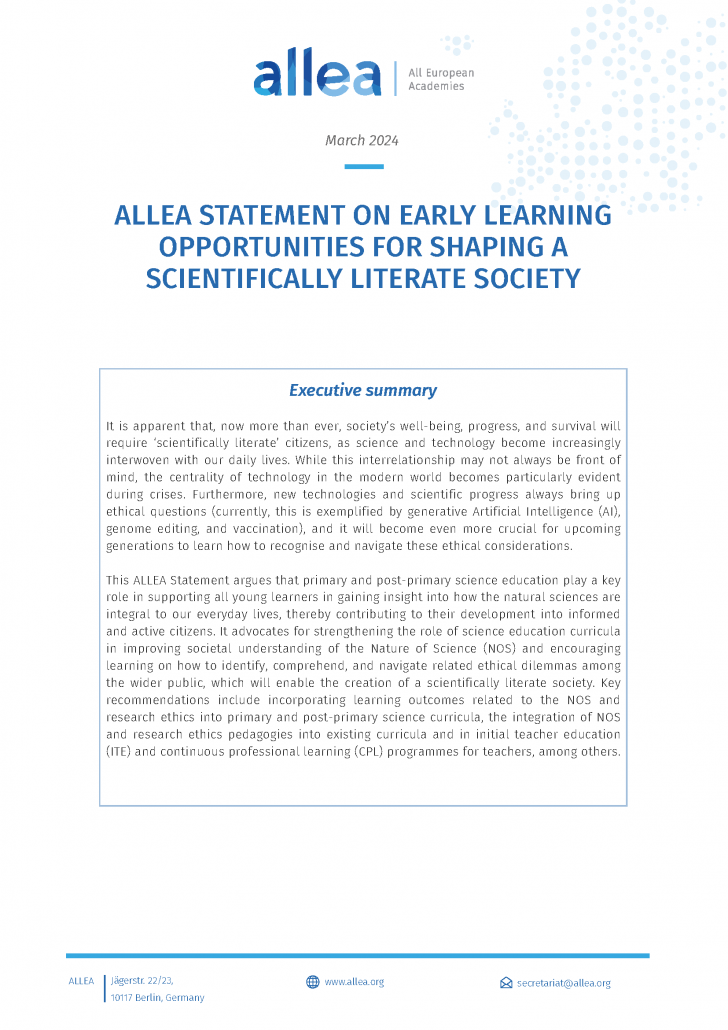 https://allea.org/wp-content/uploads/2024/03/ALLEA-science-education-statement-cover-page_image.png 2339 1654 maria ronald https://allea.org/wp-content/uploads/2019/04/allealogo-1-300x83.png maria ronald2024-03-13 18:19:032024-03-13 21:21:55ALLEA Statement on Early Learning Opportunities for Shaping a Scientifically Literate Society
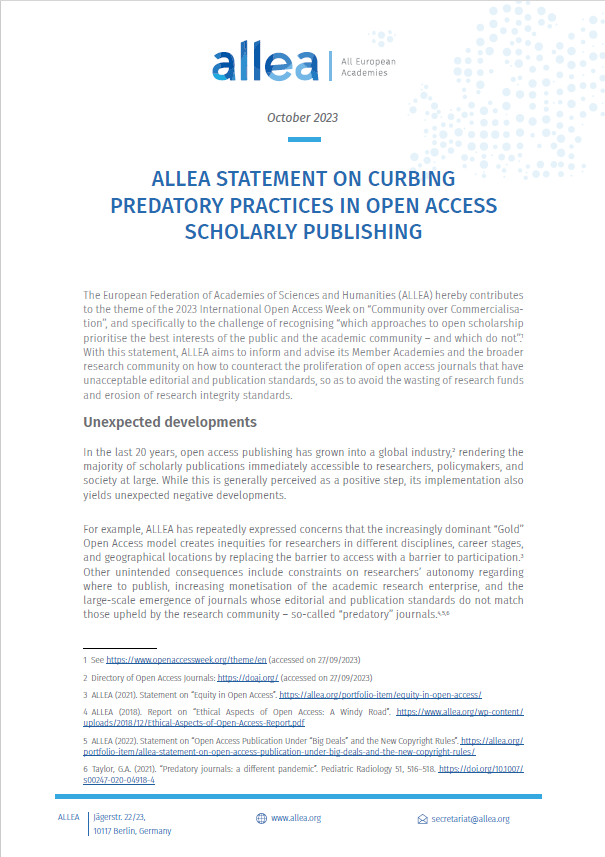 https://allea.org/wp-content/uploads/2023/10/cover-1.png 857 605 *alleaadmin https://allea.org/wp-content/uploads/2019/04/allealogo-1-300x83.png *alleaadmin2023-10-23 03:50:082024-07-29 10:06:11ALLEA Statement on Curbing Predatory Practices in Open Access Scholarly Publishing
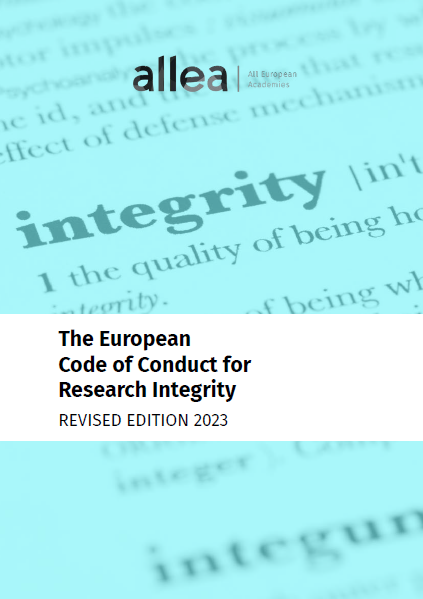 https://allea.org/wp-content/uploads/2023/06/European_code_of_conduct_for_research_integrity_COVER.png 599 423 *alleaadmin https://allea.org/wp-content/uploads/2019/04/allealogo-1-300x83.png *alleaadmin2023-06-23 03:16:292025-12-01 17:36:09European Code of Conduct 2023
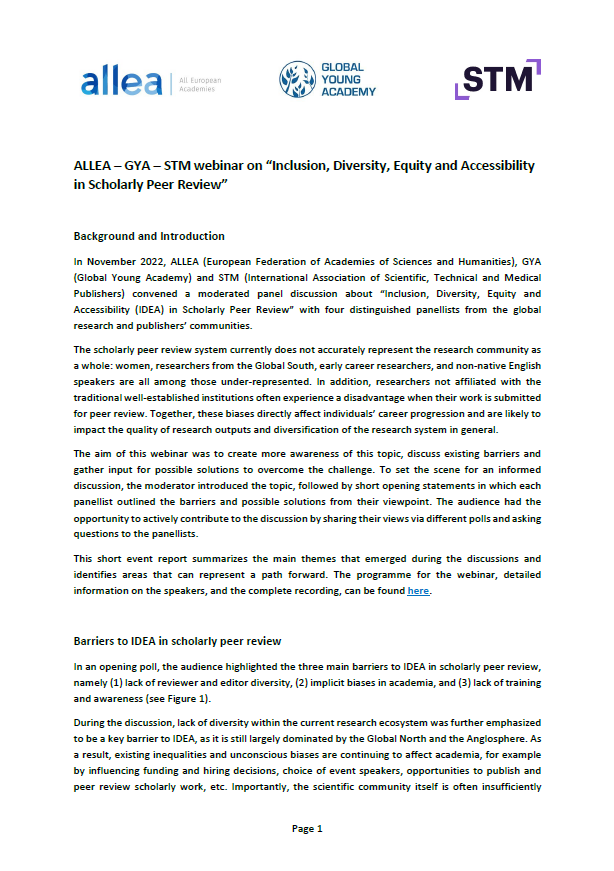 https://allea.org/wp-content/uploads/2022/12/Screenshot_2.png 871 614 Dino Tramontani https://allea.org/wp-content/uploads/2019/04/allealogo-1-300x83.png Dino Tramontani2022-12-19 14:51:222025-12-01 17:36:48Event Report – ALLEA-GYA-STM webinar on IDEA in Scholarly Peer Review
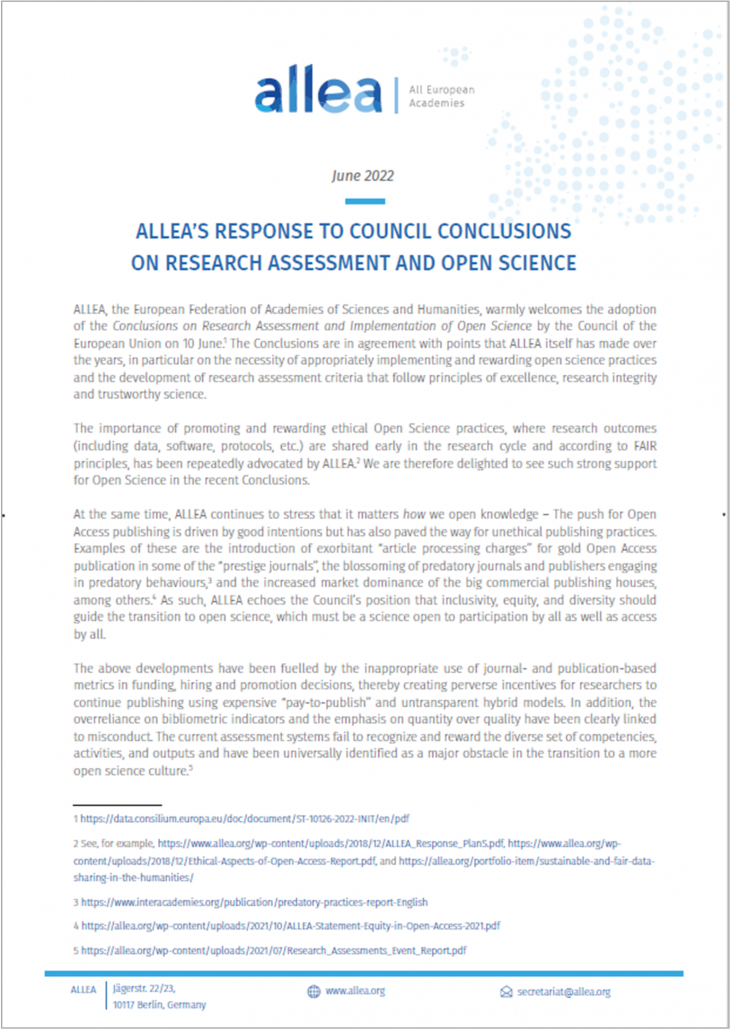 https://allea.org/wp-content/uploads/2022/06/Cover.png 2178 1545 Dino Tramontani https://allea.org/wp-content/uploads/2019/04/allealogo-1-300x83.png Dino Tramontani2022-06-14 12:08:592025-12-01 17:37:55ALLEA’s Response to Council Conclusions on Research Assessment and Open Science
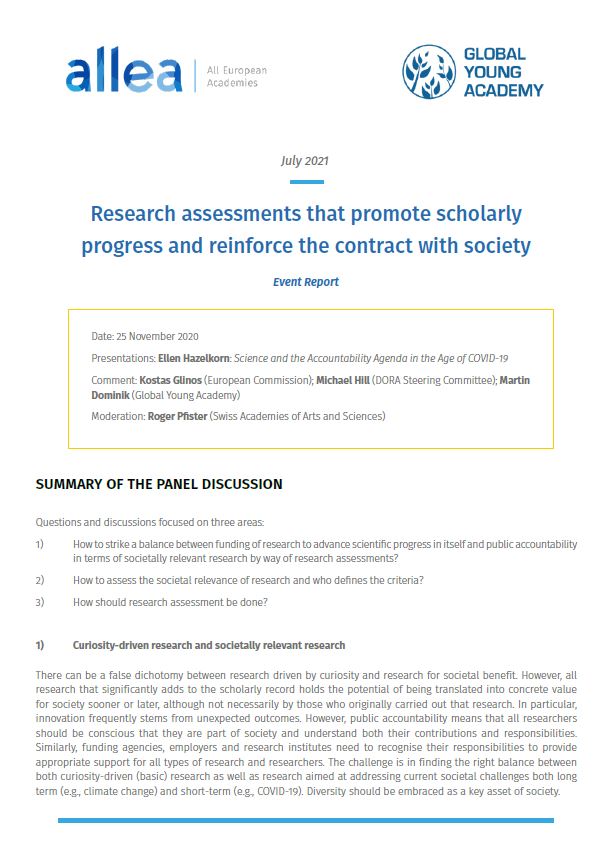 https://allea.org/wp-content/uploads/2021/07/Cover.jpg 867 613 *alleaadmin https://allea.org/wp-content/uploads/2019/04/allealogo-1-300x83.png *alleaadmin2021-07-21 13:56:302025-12-01 17:38:58Research Assessments that Promote Scholarly Progress and Reinforce the Contract with Society
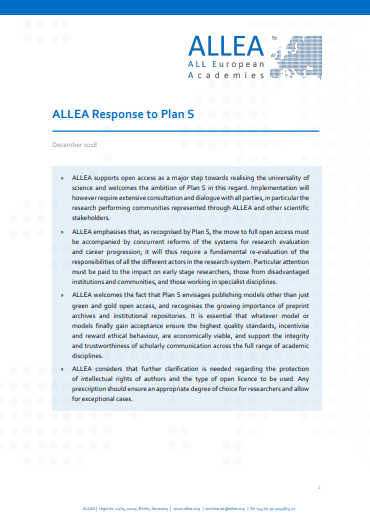 https://allea.org/wp-content/uploads/2019/06/Cover_Response-to-Plan-S.png 524 370 *alleaadmin https://allea.org/wp-content/uploads/2019/04/allealogo-1-300x83.png *alleaadmin2018-12-06 16:18:162025-12-01 17:40:07ALLEA Response to Plan S
 https://allea.org/wp-content/uploads/2019/06/Cover_Ethical-aspects-of-Open-Access.png 571 405 *alleaadmin https://allea.org/wp-content/uploads/2019/04/allealogo-1-300x83.png *alleaadmin2018-12-05 15:56:332021-04-08 12:16:02Ethical Aspects of Open Access: A Windy Road
 https://allea.org/wp-content/uploads/2019/06/English-Cover.png 593 418 *alleaadmin https://allea.org/wp-content/uploads/2019/04/allealogo-1-300x83.png *alleaadmin2017-03-24 16:50:432023-11-10 13:16:32The European Code of Conduct for Research Integrity
 https://allea.org/wp-content/uploads/2019/06/Cover_Education-a-lethique.png 594 419 *alleaadmin https://allea.org/wp-content/uploads/2019/04/allealogo-1-300x83.png *alleaadmin2013-09-06 14:01:082021-04-08 12:19:51Education à l’Èthique des Sciences
 https://allea.org/wp-content/uploads/2019/06/Ethics-Education-in-Science.jpg 814 579 *alleaadmin https://allea.org/wp-content/uploads/2019/04/allealogo-1-300x83.png *alleaadmin2013-09-01 14:12:042021-04-08 12:20:03Ethics Education in Science
 https://allea.org/wp-content/uploads/2019/06/coc-cover.jpg 738 520 *alleaadmin https://allea.org/wp-content/uploads/2019/04/allealogo-1-300x83.png *alleaadmin2011-03-01 09:54:222021-04-08 12:22:55The European Code of Conduct for Research Integrity
Related Events
 https://allea.org/wp-content/uploads/2023/11/Thumbnail_Event_November-17.png 628 1200 Dino Tramontani https://allea.org/wp-content/uploads/2019/04/allealogo-1-300x83.png Dino Tramontani2022-11-17 09:43:382024-03-26 14:41:38Permanent Working Group on Science and Ethics Meeting
 https://allea.org/wp-content/uploads/2023/11/Thumbnail_Event_September-15.png 628 1200 maria ronald https://allea.org/wp-content/uploads/2019/04/allealogo-1-300x83.png maria ronald2022-09-15 00:00:452024-03-26 14:44:07Permanent Working Group on Science and Ethics Meeting
 https://allea.org/wp-content/uploads/2023/11/Thumbnail_Event_May-26.png 628 1200 Dino Tramontani https://allea.org/wp-content/uploads/2019/04/allealogo-1-300x83.png Dino Tramontani2022-05-26 15:05:472024-03-26 14:47:28UK RIO Annual Conference 2022