Research Integrity and Research Ethics
Ethics in science requires researchers to pay due attention to the effects on their subject group, including also animals, as well as to wider society and to minimise harmful effects on their research subjects. Therefore, ensuring that research ethics are abided by serves to put science on track to be trustworthy, reproducible and sustainable. In research ethics conflicts of values and interests between stakeholders are identified, analysed – and proposals for solution of such conflicts are described (in empirical research ethics), or are made and argued for (in normative research ethics). The stakeholders involve other researchers, users, research subjects, including animals, funding agencies as well as society at large, including future generations.
Research integrity touches on the ethos of science and is guided by the rules imposed on the research community by itself. As such, research integrity aims at providing a comprehensive framework for scientists as to how to carry out their work within accepted ethical frameworks as well as following good scientific practice.
ALLEA has been a long-standing voice in the fields of research ethics and research integrity via its Permanent Working Group Science and Ethics (PWGSE), which has covered a wide range of issues relating to ethics and integrity. Since 2025, the PWGSE has been discontinued, and its work has been continued in the established Research Ethics and Integrity Council (REIC).
The Research Ethics and Integrity Council
The REIC serves as ALLEA’s expert body on matters of research ethics, integrity, and responsible conduct of research. Building on the long-standing work of the PWGSE, the Council safeguards and advances ALLEA’s leadership in promoting trustworthy, ethical, and transparent research practices across Europe. It ensures that ethical reflection remains integral to scientific progress.
By monitoring emerging challenges in areas such as artificial intelligence, research assessment, and academic freedom, the REIC provides strategic advice to the ALLEA Board, Member Academies, and partners, strengthening public trust in science and embedding integrity principles throughout ALLEA’s science-policy work.
Read more →The European Code of Conduct for Research Integrity
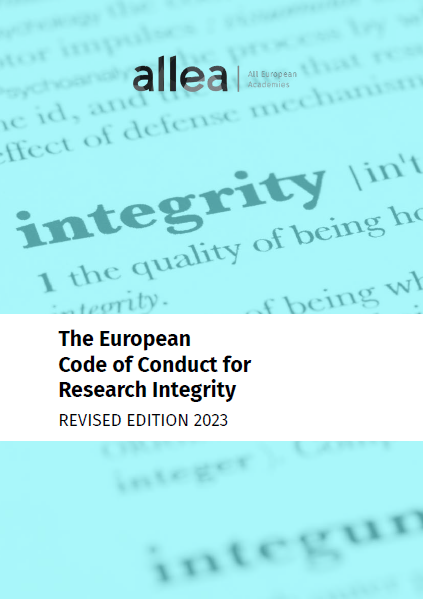
One of the central responsibilities of the REIC is the publication of the European Code of Conduct for Research Integrity, which was revised in 2023 and is regarded as one of the most comprehensive guides outlining how researchers should conduct their work.
The 2023 Revised Edition of the European Code of Conduct for Research Integrity has been updated to ensure that the European Code of Conduct remains fit for purpose and relevant to all disciplines, emerging areas of research, and new research practices. The European Commission recognises the European Code of Conduct as the primary standard for upholding research integrity across all research projects funded by the EU.
In addition, it increasingly serves as a model for national and institutional codes of conduct, funding guidelines, training initiatives, and discipline-specific standards. For example, the European Code of Conduct forms the foundation for detailed guidelines for responsible Open Science, developed by the Horizon-funded ROSiE project. Similarly, it underpins the living guidelines for promoting the responsible use of generative AI in research, developed by the European Research Area Forum.
Read more →