ALLEA Provides Expert Advice to the European Commission’s Public Consultation on Plants Produced by New Genomic Techniques

Today ALLEA, the European Federation of Academies of Sciences and Humanities, responded to the European Commission’s public consultation on plants produced by certain new genomic techniques (NGTs).

After providing feedback on the Commission’s roadmap in October 2021, ALLEA welcomes the opportunity to share more detailed input from the scientific community on the challenges related to the current regulatory system, as well as our vision for possible ways forward.

In its response, ALLEA stresses that the 2018 European Court of Justice decision “is a major setback for the development of useful new crops, including those with optimised traits to mitigate climate change and provide high-quality food for a growing population. The length and cost of the current authorisation process for NGTs is disproportional to the potential risks and makes it, except for major industrial players, de facto impossible to bring NGT seeds to our farmers”.

ALLEA states that “any future risk assessment framework should be science-based, considering not only potential risks but also the full spectrum of expected benefits to environment and society” and shares the Commission’s view that plants obtained by NGTs have the potential to contribute to the objectives of the European Green Deal and in particular to the Farm to Fork and Biodiversity Strategies. 

“We must take into account the unique challenges farmers are faced with in different regions and different sectors, as well as how our food systems continue to be affected by societal and geopolitical developments. Ultimately, farmers are best positioned to respond to these challenges, and they should be provided with broadest possible spectrum of technologies and seeds to support them”.

ALLEA also acknowledges the importance of providing clarity on when seeds and products are created using NGTs. “[…] farmers, producers and consumers should have a free choice to decide if they use or buy seeds and products created using NGTs. Transparent documentation will be important to guarantee autonomy and trust throughout our food systems.”

The response to the European Commission’s consultation reemphasizes key elements from the 2020 ALLEA report Genome Editing for Crop Improvement, which is based on expert discussions during the joint ALLEA and Royal Flemish Academy of Belgium for Science and the Arts (KVAB) symposium on the topic, as well as further work together with Re-Imagine Europa.

The Ukraine Crisis: Responses from the European Higher Education and Research Sectors

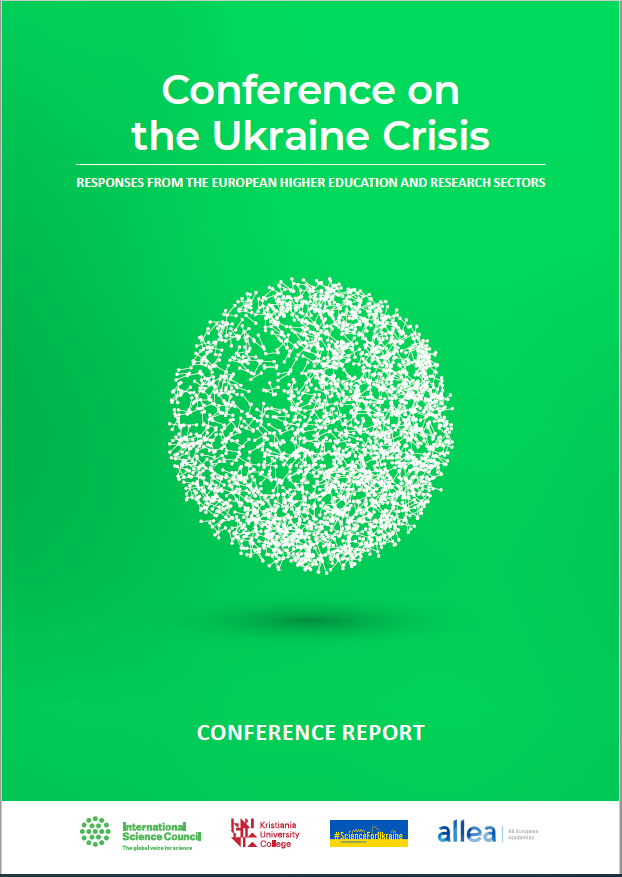
On 15 June 2022, ALLEA co-organised the online conferenceThe Ukraine Crisis: Responses from the European Higher Education and Research Sectors.’ The event brought together key stakeholders in Europe to address the impact of the war in Ukraine to the country’s academic and scientific sectors.

The conference was organised jointly by ALLEA and Science for UkraineKristiania University College and the International Science Council (ISC). Invited guests included members of the higher education and research sectors, relevant government bodies, funding and donor agencies, and humanitarian organisations. The event also sought to serve as a platform for Ukrainian voices, with many Ukrainian scientists and institutions participating actively throughout the conference and in the subsequent breakout sessions.

The conference was opened with a presentation from the Ukrainian Minister of Education and Science, Serhiy Shkarlet, who outlined the current challenges and prospects facing the Ukrainian academic sector. Minister Shkarlet emphasised the importance of renovating the Ukrainian higher education system and preventing a brain-drain, which could have a long-term detrimental impact on Ukrainian science.

Minister Shkarlet’s presentation was followed by a roundtable discussion composed of Ukrainian displaced scholars who remained in the country, as well as early-career Ukrainian scientists, European and global scientific institutions, NGOs, and the international humanitarian sector. The main topics of discussion included how to best support scientists who stayed in Ukraine, and the importance of finding a balance between short- and long-term strategies. Also covered in the discussion were the immediate needs of Ukraine’s higher education sector, which include critical equipment to continue operations, and technical support to digitalise the education system and transition to an online presence with opportunities for distance learning, joint degrees and affiliations, all of which are needed to remain active through the war.

ALLEA was represented by its Vice President, Professor Luke Drury, who introduced ALLEA’s response to support Ukraine. These include the newly established European Fund for Displaced Scientists (EFDS), which recently launched its call for applications for Funding Line 1, and ALLEA’s participation in drafting a 10-point Action Plan to support the Ukrainian academic system.

The round table was followed by four breakout sessions which aimed to identify solutions and recommendations pertaining to ongoing support and rebuilding of Ukraine, including existing support initiatives, short- and long-term interventions, and lessons learned to respond to similar situations in other regions of the world.

ALLEA Welcomes Council Conclusions on Research Assessment and Open Science

ALLEA welcomes the adoption of the Conclusions on Research Assessment and Implementation of Open Science by the Council of the European Union on 10 June. See ALLEA’s full response here.

The Conclusions are in agreement with points that ALLEA has made over the years, in particular on the necessity of appropriately implementing and rewarding open science practices and the development of research assessment criteria that follow principles of excellence, research integrity and trustworthy science.

At the same time, ALLEA continues to stress that it matters how we open knowledge, as the push for Open Access publishing has also paved the way for various unethical publishing practices. The inappropriate use of journal- and publication-based metrics in funding, hiring and promotion decisions has been one of the obstacles in the transition to a more open science, and furthermore fails to recognize and reward the diverse set of competencies, activities, and outputs needed for our research ecosystem to flourish.

ALLEA therefore welcomes the principles set out in the Conclusion for designing novel approaches to research assessment, with particular weight on recognizing (1) the critical role for peer review in research assessment and (2) the importance of integrity and ethics in developing criteria focused on quality and impact. 

ALLEA underscores that the described reforms are urgently needed and require concerted efforts from the international academic community, supported by infrastructures for exchanging best practices as well as the necessary financial resources to implement these. 

Read ALLEA’s full response

ALLEA Signs 10-Point Action Plan to Support Ukrainian Academic System

Following a meeting of representatives from various scientific institutions on 2 June 2022 at the Polish Academy of Sciences in Warsaw, a 10-point Action Plan has been unveiled to help Ukrainian science, both during and after the war.

The main goal of the meeting was to inform relevant stakeholders about ongoing schemes to support the Ukrainian academic system and the members of the scientific community that have been impacted by the war, as well as to coordinate the use of resources in order to allocate them more efficiently.

The Action Plan takes into consideration means to maintain the Ukrainian academic system operating throughout the duration of the war, as well as provisions for the recovery of a post-war Ukraine.

The Action Plan was signed by ALLEA President Antonio Loprieno, and by representatives from the the Polish Academy of Sciences, the National Academy of Sciences of Ukraine, the US Academy of Sciences, the German National Academy of Sciences Leopoldina, the Royal Danish Academy of Sciences and Letters, and the Royal Society of the United Kingdom.

Read the 10-point Action Plan

ALLEA Launches Call for Applications for the European Fund for Displaced Scientists

ALLEA is officially launching the call for applications for the European Fund for Displaced Scientists (EFDS). This call pertains to Funding Line 1 of the EFDS, set up to support academic institutions in Europe that are accepting Ukrainian scholars displaced by the war.

ALLEA, the European Federation of Academies of Sciences and Humanities, is launching the call for applications for Funding Line 1 of the European Fund for Displaced Scientists (EFDS). Funding Line 1 provides funds to academic institutions (including universities, academies, and other research-performing organisations) within the Council of Europe region that are willing and able to host displaced Ukrainian scholars.

Hosting institutions will integrate Ukrainian scholars into existing or new research projects and departments, and commit to supporting them by providing the required infrastructure for scholars to continue their research work in a safe environment. The EFDS programme will offer a monthly stipend for up to 12 months. Applications may only be submitted by the prospective host institutions, and the maximum amount should not exceed €25,000 per hosting arrangement. There is no limit as to how many scholars an institution can apply funding for.

Applications will be received in two different rounds. To be considered for the first round, complete applications must be submitted by 1 July 2022. The application form and all the relevant information regarding the application process can be found in our dedicated page for Funding Line 1. All queries regarding the EFDS programme can be sent via email to efds@allea.org.

A separate call for Funding Line 2 will be launched soon, which will provide funds to affected Ukrainian institutions to help them maintain and rebuild their research operations and networks.


About the EFDS programme

The European Fund for Displaced Scientists (EFDS) has been established through a partnership between ALLEA and the Breakthrough Prize Foundation to support scholars and scientific institutions impacted by the war in Ukraine. The programme, endowed with $1.5 million, will provide funding to academic institutions in Europe to host displaced scholars, as well as to affected Ukrainian research institutions to help them maintain their operations and rebuild their scientific facilities and research collaborations. Learn more

Transforming Science: Pathways Towards Sustainability and Trustworthiness

The ALLEA symposium ‘Transforming Science: Pathways Towards Sustainability and Trustworthiness’ brought together leading scientists, policymakers and research managers in Brussels to discuss the transformations the scientific system must address to be ready for future crisis after the Covid-19 pandemic.

The event took place on 11-12 May, hosted by the Royal Academy of Sciences, Letters and Arts of Belgium and the Royal Flemish Academy of Belgium for Science and the Arts at the Academy Palace, in the heart of the Belgian capital. The symposium was part of the annual meeting of ALLEA member academies, more than 50 academies from about 40 countries in Europe.

In two days of keynotes and panel discussions, more than 400 online and in-person participants joined four sessions addressing 3 main themes: Science-Policy Relations in an Age of Complexity, Transforming Research Cultures and Towards Climate Sustainability in the Academic System.

Speakers included political representatives such as Mariya Gabriel, European Commissioner for Innovation, Research, Culture, Education and Youth, and Thomas Dermine, Belgian Secretary for Economic Recovery and Strategic Investment with responsibility for Science Policy. Marion Koopmans, Director of the WHO Collaborating Centre for Emerging Infectious Diseases at Erasmus MC, delivered the scientific keynote.

All videos and photos of the event are available on the media room.

11 May | Opening Session

Speakers
  • Prof Didier Viviers
    Permanent Secretary of the Royal Academy of Sciences, Letters and Fine Arts of Belgium (ARB)
  • Prof Antonio Loprieno
    President of ALLEA
  • Thomas Dermine
    Belgian State Secretary for Scientific Policy, Recovery Program and Strategic Investments
  • Mariya Gabriel
    European Commissioner for Innovation, Research, Culture, Education and Youth


11 May | Keynote ‘Building the Ship while Sailing: The Challenges of Scientific Advice during an Emerging Crisis’

Keynote

Prof Marion Koopmans
Director of the WHO Collaborating Centre for Emerging Infectious Diseases at Erasmus MC


12 May | Session 1: Science-Policy Relations in Times of Complexity

Keynote
Prof Christiane Woopen, Professor at Center for Life Ethics, University Bonn
Being Caught between All Stools? Sciences and Policy Advice

Presentations

  • Prof Michael Bang Petersen, Professor at Aarhus University
    Using Social Science to Uphold Trust during a Crisis: Lessons from the COVID-19 Pandemic
  • Prof Tina Comes, Professor at Delft University of Technology & Maastricht University
    Science under pressure. Transforming crises
  • Prof Eric Lambin, Member of the European Commission’s Group of Chief Scientific Advisors.
    Engaged scholarship, system thinking, and partnerships
12 May | Session 2: Transforming Research Cultures

Keynote

Prof Maria Leptin, President of the European Research Council
Science communication for an age without gatekeepers

Discussion panel

  • Prof Maria Leptin, President of the European Research Council
  • Prof Antonio Loprieno, President of ALLEA
  • Dr Marc Schiltz, President of Science Europe
  • Dr Magdalena Skipper, Editor In Chief of Nature
  • Prof Andrea Pető, Professor at Central European University

The Future of Science Communication Conference: Bringing Science Communicators and Researchers Together

ALLEA and Wissenschaft im Dialog hosted the second Future of Science Communication Conference (FSCC 2.0) in Brussels, which was attended by academics, policymakers, and practitioners to learn from renowned experts in the burgeoning field.

On 26 April, academics, policymakers, and practitioners gathered for the second Future of Science Communication Conference (FSCC 2.0), co-organised by ALLEA and Wissenschaft im Dialog, the organisation for science communication in Germany and funded by the German Federal Ministry of Education and Research, in Brussels to discuss the latest ideas and questions on how to effectively communicate science in the age of social media and the increased access to information and knowledge, no longer mediated by experts in Academia and the Media.

FSCC 2.0 was designed as a follow-up event to the Future of Science Communication Conference that was held virtually in June 2021 and attended by over 1,000 participants. It brought together the science communication community in Europe to discuss relevant topics such as communicating science in the presence of uncertainty, dealing with disinformation, creating open dialogue with the public, and developing institutions and structures for a strategic (re-)orientation of Science Communication in Europe, among others.

Welcome remarks by Birte Fähnrich (German Federal Ministry of Education and Research) Photo© 2022 HorstWagner.eu

Welcome remarks by Birte Fähnrich from the German Federal Ministry of Education and Research, Antonio Loprieno, President of ALLEA, and Markus Weißkopf, managing director of Wissenschaft im Dialog, were followed by three impulse talks, parallel workshops, and a final panel discussion..

Lessons from the pandemic

Virologist and head of the committee of experts advising the Belgian Government on its Covid-19 strategy, Erika Vlieghe (University of Antwerp) presented some lessons learned about effective science advice during the pandemic, and shared her insights on the future of communicating science during a crisis. “We need to ensure that science and politics remain separate; and we need to communicate the science in a way that doesn’t allow for misunderstanding or misuse,” cautioned Dr Vlieghe.

Erika Vlieghe presents lessons for science communicators from the pandemic  Photo © 2022 HorstWagner.eu

Massimiano Bucchi (University of Trento) then went on to share his insights into the (inaccurate) stereotypes of the public found in the minds and discourse of policymakers and experts, and their consequences for effective science communication. “Unfortunately, a representation of the public as hostile, sceptical, and ignorant is still widespread among policy makers and experts, supporting a paternalistic and ultimately authoritarian vision of science communication and of science in society. As the literature from the past two decades clearly shows, this representation largely reflects unfounded prejudices,” said Prof Bucchi, one of the leading scholars researching science communication and director of the International Master programme SCICOMM.

In his virtual address to the Brussels audience, Prof Bucchi called for the shift of focus from fighting misinformation and “fake news” to the “quality” of science communication; in particular how to improve, incentivise, reward, and distinguish it from low-quality, ad-hoc, and poorly focused science communication.

The final impulse talk by Uwe Steger, head of public relations at the University of Innsbruck, focused on the future challenges for science communication. Mr Steger called for the incorporation of science mediation work into curricula and the early stages of academics’ careers. Among other suggestions, Mr Steger emphasised the need for increased and systematic funding for research on and training in science communication.

Interactive Workshops

The talks sparked lively discussions and were followed by interactive workshops on four important issues: Communicating Global Challenges: Learning from COVID-Communication and Climate Change; Fake News & Disinformation and the Consequences for the Science-(Communication)-Community; Evidence-based Practice, Impact and Evaluation of SciComm; and Networks and Institutional Structures of European SciComm.

Among others, the workshops debated such questions as “How can we embed science communication within curricula to broaden the scope for the field?” “How to clarify responsibilities for science communicators?” “What is the role of transparency in effective science communication?” “Can we create a common language when discussing the “impact” and “quality” of science communication that we can share across borders?”.

Photo © 2022 HorstWagner.eu


Institutionalising Science Communication

FSCC 2.0 concluded with a hybrid panel discussion on “How to Institutionalise SciComm in Europe?”, which can be watched on YouTube. The panel included David Lodder, communications officer at the European Commission for Research & Innovation, Ionica Smeets, chair of Leiden University’s research group Science Communication and Society, Svetla Tanova, coordinator of the European Science Media Hub, and Markus Weißkopf. It was moderated by Maria Lindholm (Sweden’s Research and Innovation Office in Brussels),

The panel discussed issues such as future challenges for SciComm at the European level, innovative projects in the field today, the question of funding, and ideal institutional landscapes for the field and the paths to get there. Some insights from the panel are highlighted below:

  • David Lodder discussed the challenge of communicating complex ideas in a strategic way to a target audience: “I think there are three challenges – trust, strategy, and cooperation – which have to work together. The Eurobarometer survey shows that the public trusts scientists more than policymakers or journalists when it comes to science, so it is very important to empower researchers to communicate. But there needs to be strategy behind the communication. And finally, cooperation with experts in communication to know how best to reach the right audience is crucial.”
  • Markus Weißkopf reiterated the need for recognition of science communication work by the scientific community as it could be a powerful motivator for scientists to engage in this essential activity. Elaborating on how to achieve such recognition, he added that “Role models are important. Senior scientists can be influential in motivating younger peers to pursue science communication. And we can initiate prizes for science communication, but we also need to recognise science communication activities as valid work experience when hiring candidates so that it is valued as a skill.”
  • Ionica Smeets emphasised that science communication does not need to be performed by every scientist. “I think it is dangerous to talk about broadening careers and ask all scientists to do all aspects; what we see is that young researchers are very motivated to do science communication but there is very little support,” said Dr Smeets. She added that training and funding young researchers to engage in science communication would be relatively inexpensive and would have a big impact.
  • Svetla Tanova called for greater exchange of ideas and best-practices between actors, and across borders, in particular with countries and communities who are less privileged. She added that rather than the top-down imposition of standards by EU institutions, science communication conduct and convention should be built from the bottom up by the scientific community.


Photo © 2022 HorstWagner.eu


Watch the full discussion by clicking on the link below.

How to Institutionalise SciComm in Europe?

More documentation of FSCC 2.0 will be published in the coming months, including a report on the policy recommendations from the conference. If you want to receive future updates, please subscribe to the ALLEA newsletter.

New ALLEA Board Elected

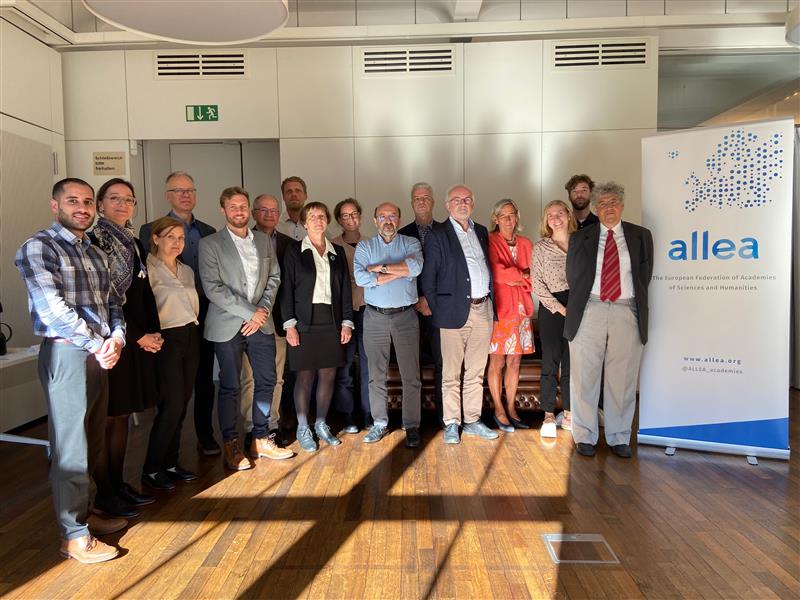
The new ALLEA Board was announced during the annual business meeting held as part of the ALLEA General Assembly on 11 May 2022 in Brussels.

ALLEA Member Academies have elected a new board for the period 2022-2024. Academies were invited to cast up to 8 votes for the board members. The new ALLEA Board is comprised by:

  • Neri Salvadori​ (National Academy of Sciences of the Lincei​)
  • Maarten Prak​ (Royal Netherlands Academy of Arts and Sciences​)
  • Paweł Rowiński (Polish Academy of Sciences)
  • Pere Puigdomenech (​Royal Academy of Sciences and Arts of Barcelona​)
  • Ylva Engström​​ (Royal Swedish Academy of Sciences​)
  • Lara Keuck​ (German Young Academy)​
  • Eriks Jekabsons​ (Latvian Academy of Sciences​)
  • Camilla Serck-Hanssen (Norwegian Academy of Science and Letters​)

The ALLEA Board is elected biennially by the General Assembly and includes ALLEA’s Vice-Presidents and President, who chairs the Board. The president and vice-presidents follow a different electoral cycle. The announcement was made on 11 May during ALLEA’s business meeting, which is held annually as part of the ALLEA General Assembly. This year, the General Assembly is celebrated in Brussels and hosted by the Royal Academy of Sciences, Letters and Fine Arts of Belgium (ARB), and the Royal Flemish Academy of Belgium for Science and the Arts (KVAB).


The Academic System Is Not Exempt from Imperatives to Transition to Climate Sustainability

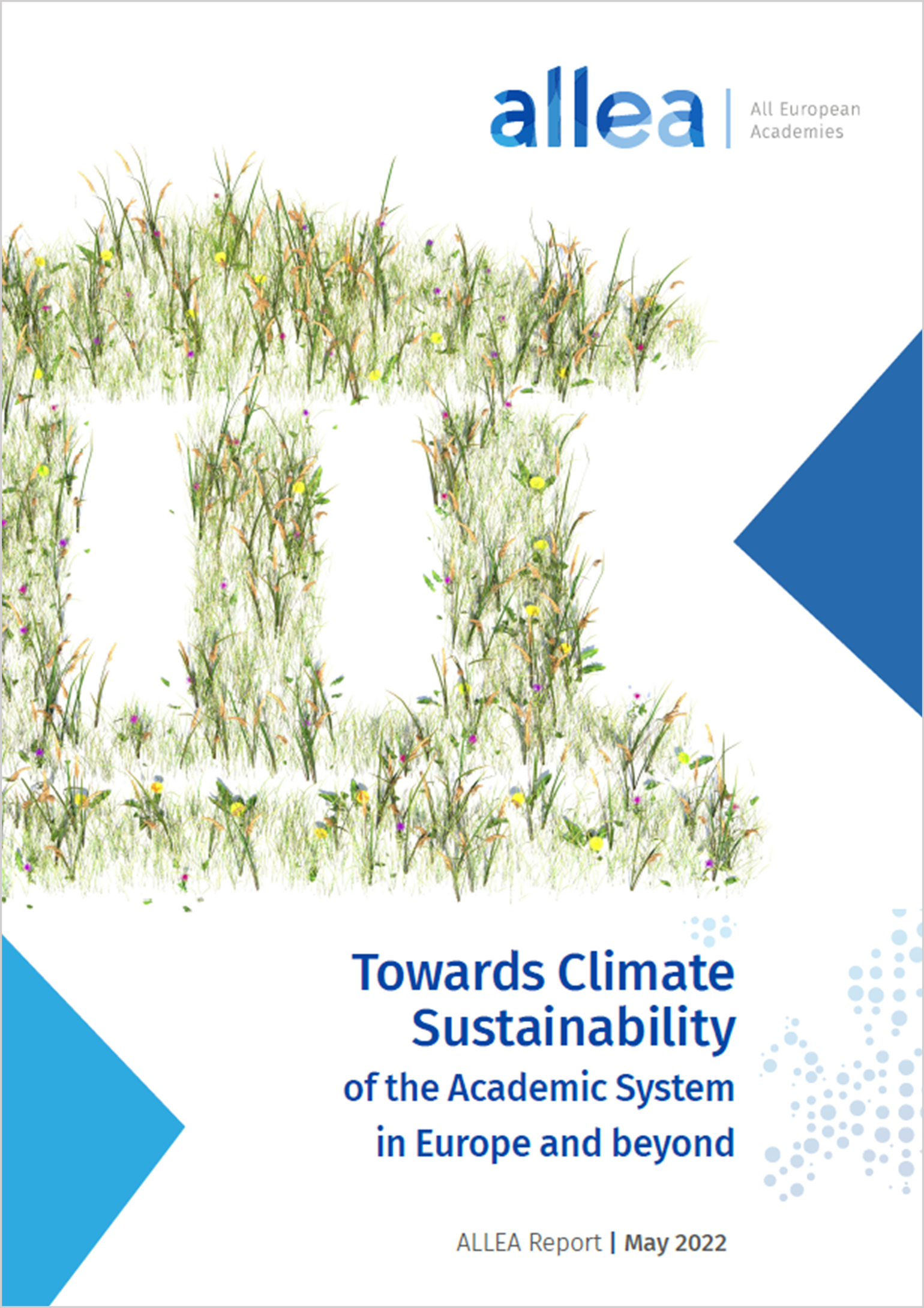
A new ALLEA report delves into academia’s impact on the climate through its own operations from the perspective of various stakeholders that play a key role in shaping the academic system. The report goes on to make a series of tailored recommendations to mitigate detrimental effects.

In a new report published today, ALLEA, the European Federation of Academies of Sciences and Humanities, examines the academic system’s negative impact on the climate through its own activities. The report takes a comprehensive outlook on the operations of various stakeholders and suggests that significant changes are necessary for the academic system to reach climate sustainability.

The report, prepared by ALLEA’s Working Group Climate Sustainability in the Academic System, stresses that in order for the academic system to transition to climate sustainability, “a change in culture is required, where individuals and institutions become aware of their climate impact and act to reduce it.

The authors evaluate the operations of different actors that jointly set the standards and framework conditions of the academic system, namely Universities; Research Institutes; Students; Individual Academics; Funding Organisations; Conference Organisers; Ranking Agencies; Policy Makers; and Academies, Learned Societies and Professional Bodies.

By analysing available data on greenhouse gas (GHG) emissions, the report shows that air travel is one of the major GHG contributors within academia, and therefore virtual interactions will be critical for the academic system to become more sustainable.

We envision in-person, hybrid, hub-based and fully virtual events to coexist in the future, with a careful choice of format depending on the goals and participants of a given event,” the authors conclude.

The report also emphasises that other sources, such as supercomputing, buildings, electricity, and supply-chain emissions, may be equally or sometimes even more important emission sources than air travel, depending on the sector.

Finally, the report provides a series of best-practice examples and concrete recommendations that could lead to a significant reduction in the levels of GHG emissions that the academic system produces every year.

The report will be presented and discussed at the ALLEA General Assembly on 12 May 2022 in Brussels. Registration for onsite or online attendance is still open.


Download the report here


About this Report

This report has been prepared by ALLEA’s Working Group Climate Sustainability in the Academic System. Led by its member Die Junge Akademie (German Young Academy), the project lays out a proposal for a sustainable transformation of academia that is deliberated, balanced and accounts for all relevant perspectives such as to meet the challenge of a climate sustainable academia without leaving excellence in research behind and without diminishing international exchange and collaboration in academia.

Through its Working and Expert Groups, ALLEA provides input on behalf of European academies to pressing societal, scientific and science-policy debates and their underlying legislations. With its work, ALLEA seeks to ensure that science and research in Europe can excel and serve the interests of society.

Science with Society: The SCISO Project

While some studies report that people tend to have a largely positive outlook on science and scientists in a general sense, public opinion appears increasingly polarised on some specific issues that tend to be more global in nature, ranging from public health to climate change. Misinformation, conspiracy theories, and fake news play a key role in deepening the gap between science and society, and their ability to spread is intensified thanks to the widespread use of social media.

What measures can scientists take to make their work more trustworthy? What tools are available to increase and improve the dialogue between science and society? These are the type of questions that the SCISO Project seeks to answer. Launched by the Global Young Academy’s Working Group Trust in (Young) Scientists, the ‘Science with Society’ or ‘SCISO’ Project aims at improving the relationship between science and society through a series of freely available video tutorials that intend to “enable scientists to reflect about the role of science in society, and to communicate with broader audiences.” The project provides two sets of video tutorials (and quite a bit of bonus material!): Ethics and Scientific Integrity, and Science Communication, for which the GYA partnered with the German National Institute for Science Communication (NaWik).

In this interview, Professor Lisa Herzog, co-lead of the Trust in (Young) Scientists Working Group, explains the vision and mission of the SCISO Project.


“Our first impulse was to ask: ‘What can we do to increase trust in science?’, but this quickly led us to the question: ‘How can science be trustworthy?'”


Question: Why is the SCISO Project necessary in our current social context?

Lisa Herzog: Our starting point was the fact that in certain areas, there’s quite some public distrust in science. Vaccine hesitancy and climate change scepticism are the most prominent examples. In our working group at the Global Young Academy we realised that you find versions of this phenomenon in almost all countries from which our members come. At the same time, being early-career researchers, we were all very much aware that the institutional contexts of science have a logic of their own. That’s of course necessary, up to a point, but it can also make science a kind of “black box” for outsiders.

Our first impulse was to ask: “What can we do to increase trust in science?”, but this quickly led us to the question: “How can science be trustworthy, what does that take?” When we started looking for answers, we realized that there’s a lot of research being done on these topics, for example by sociologists or philosophers of science, but researchers in other fields such as engineering are hardly exposed to it.

SCISO – Introduction to the project


Q.: One of the aims of the SCISO Project is to address the “perceived gap between science and society.” How does this gap manifest itself in practical terms, and why is it so detrimental?

L.H.: Well, take vaccine hesitancy: It can literally cost people their lives! But that’s just the tip of the iceberg. The more general question is this: Is science organised in ways that allow it to make its contributions to society? Oftentimes the answer is yes, but sometimes, due to a lack of communication, this fact does not become clear to the public.

Indeed, sometimes there are vested interest groups that actually work to maintain this gap between science and society. Here we can think of the historical example of the tobacco industry working to obscure the facts that their products were either addictive or potentially detrimental to one’s health.  A more current example is when the fossil fuel industry tries to obscure or muddle the messages of climate scientists to create uncertainty around the issue.

Let me add, however, that this is not meant as a call for doing only “applied” research with an immediate payoff. Citizens are also interested in many questions of fundamental research, e.g., in astronomy or history. And of course, the history of science has shown time and again that fundamental research can generate new insights that turn out to be hugely impactful. But that is also something that needs to be explained to a broader public; we cannot simply assume, as scientists, that everyone is as enthusiastic about research as we are!


“..if more young scientists communicate about their work, it also offers a counterweight to the stereotype of scientists as old white men in lab coats.”


Q.: How do you think young scientists in particular can contribute to narrowing the gap between science and society?

L.H.: We think that young scientists are in a very good position for communicating with non-scientists, for a number of reasons. First, being relatively new to science means that you still remember what it was like to not know certain things, and how you had your first moments of insight and understanding – and that can be quite useful for talking to people outside your own field.

Second, many young researchers are familiar with social media and can use these tools to communicate their research. And last but not least, if more young scientists communicate about their work, it also offers a counterweight to the stereotype of scientists as old white men in lab coats; science is in fact much more diverse (even though it could and should become even more diverse) and this should also be visible to society overall.


Q.: The SCISO Project focuses on two sets of tutorials: Ethics and Scientific Integrity, and Science Communication. Why these two?

L.H.: The first set offers tools and arguments for reflecting about the role of science in society, and also about some of the problematic practices within science that we have recently seen and that scientists need to be aware of – without ethical awareness, how can you tell others that they should trust you? The second set is more practical: it’s about concrete strategies for science communication that you can start using immediately. We also have a third set of tutorials in the making that we’re currently finalising: interviews with people who work at the interface of science and society, e.g. in policy advice, and who have agreed to share some of their insights and experiences.


Q.: The SCISO Project kicked off before Covid-19 became a global health crisis, but the ongoing pandemic undoubtedly increased the need to strengthen the links between science and society. Has the pandemic redirected the aims/course of the project in any significant way?

L.H.: It has made even clearer to us how important the topics of the project are!

Of course, during the pandemic the spotlight was very much on the need for science communication and science-policy-advice. But take the topic we cover in tutorial 8, which explores the relation between scientific and other forms of knowledge. This is something that researchers in science-and-technology studies have pointed out for a long time: that scientific knowledge, important as it is, is not the only form of knowledge. There is also experiential knowledge, and indigenous knowledge, and many other forms.

What you saw in the pandemic, at least in the first phase, was a very strong focus on just one type of knowledge: medical knowledge from virologists and epidemiologists. But to make decisions about policy measures, you need different forms of knowledge as well, e.g. about the living conditions of families and how this affects both parents and children forced into home-schooling situations. We hope that by raising awareness about the need for taking multiple perspectives into account, we can also contribute, in the long run, towards better decision-making.


“..sometimes simply saying: ‘That’s a good question, thanks for it. I don’t know the answer now, but I’ll look into it’, is much more important and leads to much better conversations.”


Q.: A topic covered in one of the SCISO tutorials is on improving the relationship between experts and “lay people” and moving away from the so-called “deficit model”, taking into account that we are all lay people in most fields of research. With this in mind, what attitudinal changes are necessary from both experts and lay people to reach more fruitful interactions?

L.H.: What we emphasise in this video is the need for a certain attitude: one that takes seriously that all forms of knowledge are limited, and that, as you say, we’re all lay people in most areas.

I can confirm from my own experience that you don’t have to pretend you know everything; sometimes simply saying: “That’s a good question, thanks for it. I don’t know the answer now, but I’ll look into it,” is much more important and leads to much better conversations with others.

But for many of us, doing outreach work is still something we do as a kind of hobby, in addition to all the other tasks we have. The dialogue with non-scientists needs to be institutionalised, there need to be established formats, which also allow for longer-term collaborations between scientists, citizens, and policy-makers. Of course, these will have to look differently, and include different sets of people, for different fields of knowledge; we can learn from the formats that already exist, e.g. between medical researchers and patient advocacy groups, and see what works for other fields.

SCISO – Interacting with “lay people”


Q.: The Russian invasion of Ukraine earlier this year has highlighted a conflict from a quite different nature to Covid-19 that can equally disrupt the relationship between science and society. How is this relationship specifically affected in times of war, and how does the SCISO Project see the role of science in the face of such conflicts?

L.H.: Well, some of our GYA colleagues had to flee Ukraine under quite dramatic circumstances. What was noteworthy, though, was that the feelings of outrage and dismay about this war by many GYA members in Western countries (and I’m including myself here) were much stronger than about other conflicts in other parts of the world.

It almost seemed as if people realised for the first time that scientists can be victims of war or political suppression – but this is of course not true, this is a much older problem – look at the situations in Yemen or Afghanistan. Science is a global endeavour and flourishes on peaceful, constructive collaboration. Many Ukrainian scientists now see it as their responsibility to try to help their country, e.g., by putting their medical knowledge into the service of medical institutions. As scientists and scholars in other countries, we should try to support them, but we should of course try to do the same for scientists all over the world.


Watch all the SCISO tutorials

Visit the SCISO Project webpage


About Lisa Herzog

Professor Lisa Herzog, co-lead of the ‘Trust in Young Scientists’ Working Group at the Global Young Academy © Sylvia Germes

Lisa Herzog is an Associate Professor at the Faculty of Philosophy and the Center for Philosophy, Politics and Economics of the University of Groningen, the Netherlands. She studied philosophy, economics, political science and modern history at the universities of Munich (LMU) and Oxford.

Lisa works at the intersection of political philosophy and economics, focusing on the history of political and economic ideas, normative questions around markets, ethics in organizations, and political epistemology. She also writes for a broader public and participates in public debates about the ethics of finance, social justice, and workplace democracy. Since 2019 she has worked at the Faculty of Philosophy and the Center for Philosophy, Politics and Economics of the University of Groningen.

Lisa has been a member of the Global Young Academy since 2017 and she has served as co-lead of the ‘Trust in Young Scientists’ Working Group since 2018.