Europe: From Old Narratives to Today’s Politics

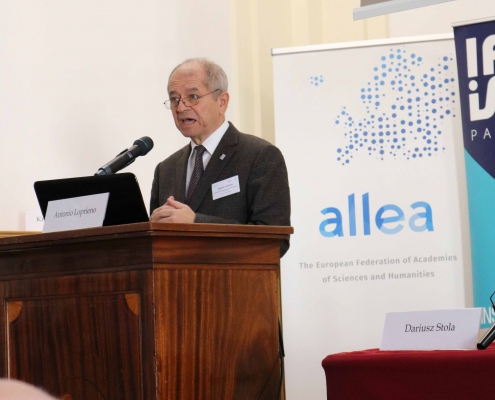
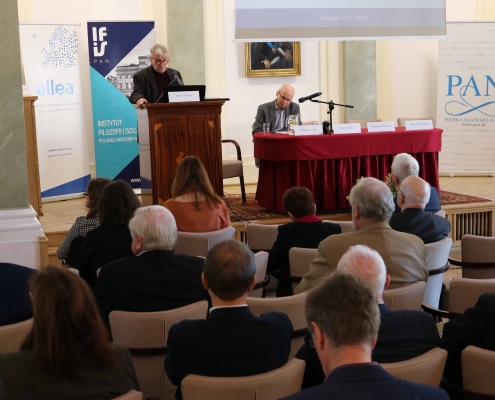
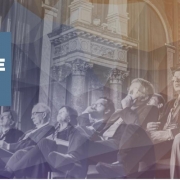
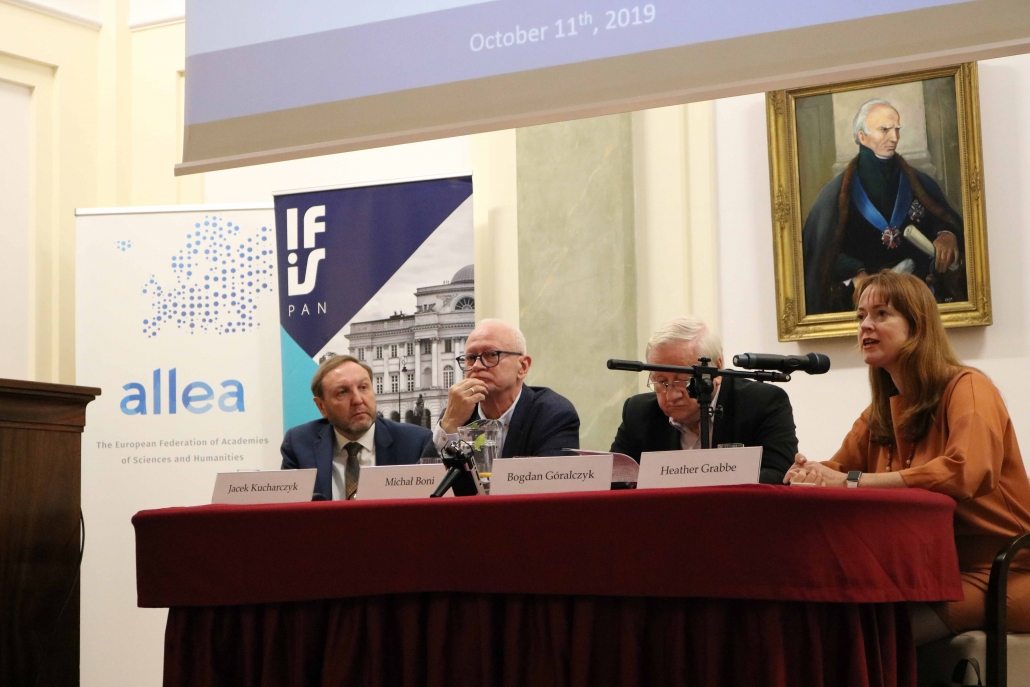
ALLEA and the Polish Academy of Sciences convened the conference ‘Europe on Test: The Onus of the Past – and the Necessities of the Future’ at the Staszic Palace in Warsaw on 11 October 2019. Local as well as international scholars and experts addressed how different collective memories in European societies impact today’s politics in Europe. Discussants explored which role concepts such as ‘European Identity’ and ‘European Solidarity’ can play in overcoming historical tensions as well as current and future challenges.

Different conceptions of Europe and democracy have evolved in Western and Central Europe. This division evolved in line with collective memories in societies of ‘old’ and ‘new’ EU member states.  In most cases, historical framings persist in current political narratives and thus also in conceptions of democracy. In the case of Central European countries such as Poland the concept of national sovereignty is closely linked to the arrival of democracy and the integration into the EU, whereas Western countries predominantly focus on the rule of law and the protection of individual rights, based on collective memories of the end of the Second World War.

The conference explored how such collective memories of nations evolve and how they affect processes such as European integration and recent political developments such as a move towards so called ‘illiberal democracy’, thereby showing that both narratives of European union and disunion can easily be exploited by political leaders in order to mobilize their electorates.

“The era of ideologies has been replaced by an era of identities. This is accompanied by a transformation of our modes of communication that tends to favour emotional and easily transmittable messages on complex issues over a rational and deliberative debate” – Antonio Loprieno, ALLEA President

An Era of Emotions and Identities?

In his opening address, ALLEA President Antonio Loprieno expressed his gratitude to the Polish Academy of Sciences for organising such a high-class event and shared his observation that “the era of ideologies has been replaced by an era of identities. This is accompanied by a transformation of our modes of communication that tends to favour emotional and easily transmittable messages on complex issues over a rational and deliberative debate.

The opening session included a lecture by Professor Anton Pelinka from Austria and a panel discussion on the role of history and collective memories of the past in the making of European polity, whilst the second panel, starting with a lecture by Professor Krzysztof Pomian from Poland, discussed European identity as a potential key to overcoming historical tensions.

Professor Claus Offe from Germany opened the third session, which focused on European interests as a shared responsibility. The event concluded with a talk by Virginie Guiraudon from France and a subsequent panel discussion on how to achieve European solidarity by meeting the challenges of today and shaping the future of Europe.

Europe on Test Series

The event was part of ALLEA’s ‘Europe on Test: Narratives of Union and Disunion’ series, which seeks to address historical trajectories as well as recent cultural, social, economic and political developments relevant for the future of the European community.

The next conference will be held at the Accademia delle Scienze di Torino on 7-8 November, where renowned Italian and international scholars will join to discuss ‘The Role of Academies in Sustaining European Knowledge Societies in Times of Crisis’.


Visit the conference website for more information on the programme and speakers.


ALLEA discusses Plan S at the Open Science Fair 2019

The 2019 Open Science Fair in Porto held on 16 to 18 September, featured a panel discussion on Plan S, the open access plan initiated by coalition of European funders to make all publicly funded-research open access from 2021.

On behalf of European academies and the academic community, ALLEA Board Member Luke Drury provided some insights on the current status of the project and underlined some of the key points introduced by the ALLEA statement on this matter.

The lively debate, chaired and facilitated by Inge van Nieuwerburgh (Ghent University), brought together various perspectives from national funding agencies, the so-called “Coalition S” and young researchers represented by Koen Vermeir, Chair of the Global Young Academy. The discussion focused on the need to include repositories and new publications models in order to avoid a continuation of the existing journal system.

The current status of Plan S was presented by Neil Jacobs, the interim programme manager for Plan S, who emphasised that there are, and always have been, multiple routes to compliance for Plan S and not only Gold Open Access. This model requires authors to publish their articles in an online open access journal in contrast to Green Open Access which allows for publishing in an a repository at the same time than releasing the research in non-open access journal.

The presentations from the event are available here.

Picture Credit: OSF

The Future of Science Advice in Europe

SAPEA is organising “The Future of Science Advice in Europe”, a series of panel discussions and workshops to be held in Helsinki on 13 November. The one-day symposium will address current experiences and models for providing expertise to policymakers in Europe.

The event will take place at the National Museum of Finland (Kansallismuseo) and counts with the participation of international scholars and practioners. The event will focus on emerging trends, weak signals, and promising opportunities for developing next-generation science advice capabilities for Finland and across Europe.

ALLEA is part of SAPEA (Science Advice for Policy by European Academies) as one of its five networks. The project aims to provide independent and excellent scientific advice to the European Commission’s Group of Chief Scientific Advisors. As such, SAPEA is part of the broader European Commission’s Science Advice Mechanism.

Learn more

150th Anniversary of the Bulgarian Academy of Sciences

The Bulgarian Academy of Sciences (BAS) celebrated its 150th anniversary on 11-13 October in Sofia. ALLEA, represented by its Vice-President Graham Caie (Royal Society of Edinburgh), joined the commemorative event, which was attended by prominent national and international policy and research-related representatives.


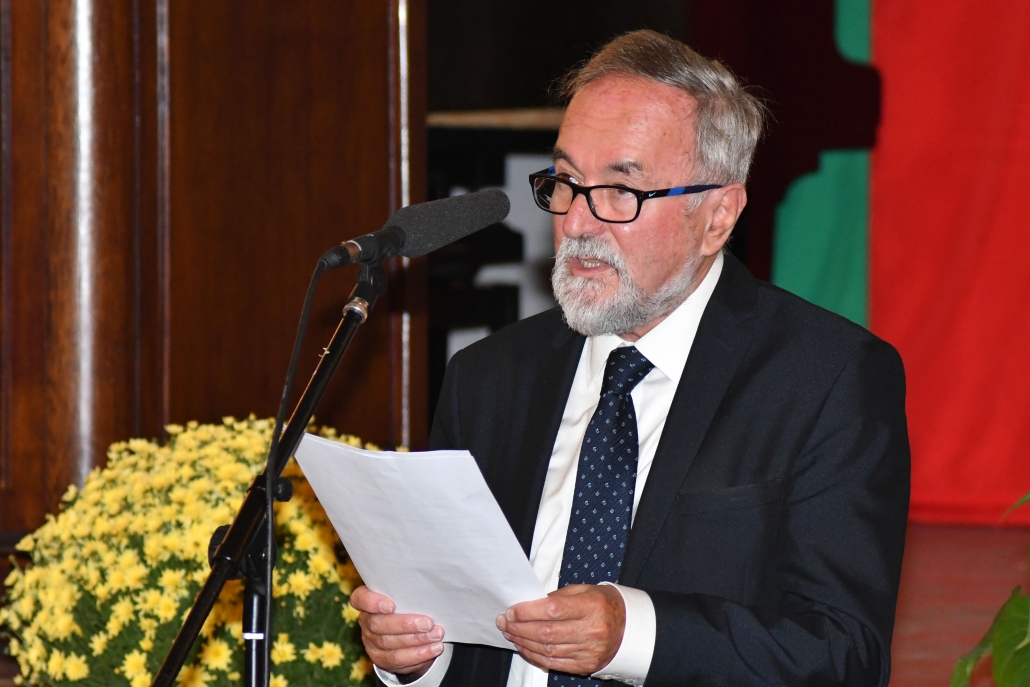
In his speech, ALLEA Vice-President remarked that “the history of this academy is testament to how evidence-based science as a common good, transgresses natural borders, to deliver knowledge not only at national and regional levels, but also to the global community.”

“The academy has proven its excellence in providing policy for the development of science and research, for instance, by accounting for about half of the scientific output in Bulgaria, by establishing c. 50 research units, as well as through its active participation in the European Research Area. […] The academy’s importance for advancements in scientific research and policy for Bulgaria, the Balkans, for Europe and globally, is therefore evident and highly admirable”, he said.

BAS has been an active member of ALLEA as one of its founding academies and hosted the 2018 General Assembly.  ALLEA warmly congratulates the academy on reaching this milestone and wish them continuing success in upholding scientific integrity and research.

Vice-President Graham Caie (Royal Society of Edinburgh) giving his speech. Photo by courtesy of the Bulgarian Academy of Sciences (BAS).

European Academies call for Excellence, Fairness and Openness in the Implementation of Horizon Europe

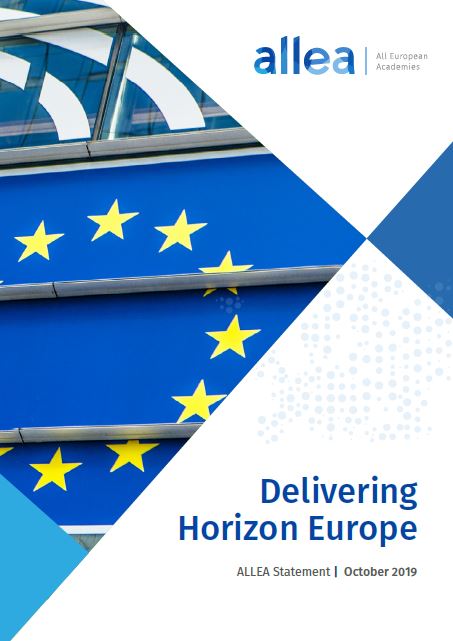
ALLEA submitted a statement to the European Commission calling for a strong and well-resourced framework programme guided by principles of excellence, fairness and openness, and making concrete suggestions on their implementation in the current draft of the Commission’s Strategic Plan on Horizon Europe.

Within the frame of open consultations on the EU’s next Research and Innovation Framework Programme Horizon Europe, ALLEA, through its Working Group Horizon Europe, has produced the statement “Delivering Horizon Europe”. Considering the European Commission’s Orientations towards the Strategic Plan implementing the research and innovation framework programme Horizon Europe as well as discussions during the recent Research and Innovation Days, ALLEA reiterates its priorities and provides concrete suggestions for amendments to the programme.

In order to achieve better conditions for research and innovation in the EU in the coming decades, and to position European research successfully in a competitive global environment, ALLEA believes it is of vital importance to consider the following points in the implementation process of Horizon Europe:

  • Focus on funding excellence and ‘blue sky thinking’ through successful instruments like the European Research Council (ERC);
  • Continue and intensify support for research mobility through programmes like Marie Skłodowska-Curie Actions (MSCA) or ERASMUS;
  • Arrange for fair and equal distribution of funds on the different clusters of Pillar 2 “Global Challenges and Industrial Competitiveness” in Horizon Europe;
  • Follow a broad understanding of innovation which goes beyond technological innovation and hence supports interdisciplinarity, and which recognizes the value of humanities and social sciences in a less technocratic and instrumental way;
  • Establish an independent, critical and continuous assessment of “Missions” in Horizon Europe;
  • Continue “Institutional Partnerships” from Horizon 2020;
  • Ensure Horizon Europe is ‘open to the world’ and allows for broad participation of Associated Countries.


In Memoriam: Professor Giancarlo Vecchio

It is with great sadness that we inform about the passing of long-standing member and immediate past chair of ALLEA’s Science Education Working Group, Professor Giancarlo Vecchio, who deceased on 1 October 2019 in Naples. Professor Vecchio, representing the Accademia Nazionale dei Lincei, has contributed to the activities in the Working Group over many years, and has been highly recognised by his colleagues as an engaged and knowledgeable promoter of science education whose experience and expertise was second to none. His efforts and engagement for science education in general, and for the work of ALLEA in this field in particular, give true testimony to his dedication towards the next generation, who he felt should benefit from science and research in the best possible way.

Professor Vecchio will be sorely missed and our thoughts are with his family and loved ones.

World Science Forum 2019 – Budapest

Through the ALLEA Permanent Working Group Science and Ethics, as well as its recent publication “The European Code of Conduct for Research Integrity”, ALLEA has reaffirmed its commitment to work on research integrity and ethics. To that end, we would like to highlight this year’s World Science Forum that takes place under the theme “Science, Ethics and Responsibility”.

Survey on Climate Education Activities in Europe

One key mission of the ALLEA Working Group Science Education is to support educational activities in science at all levels. A timely scientific topic that begs our attention as societies and individuals is climate change.

ALLEA Awarded H2020 Project on Public Trust in Expertise

PERITIA (Policy, Expertise and Trust in Action) will explore the conditions under which people trust science and expertise used by governments and other societal decision-makers to inform their policies.

The multi-disciplinary Horizon 2020-funded project will be coordinated by University College Dublin (UCD) and co-led by ALLEA. It is a follow up of the ALLEA Truth, Trust and Expertise Working Group and the UCD project When Experts Disagree (WEXD).

Its main goal is to test how emotions and values influence the process of placing or refusing trust in expertise that shapes public policies. In a coordinated action of various qualitative and quantitative investigations, it will assess its conceptual and empirical framework with the exemplary case of climate science. Its final aim is to help building trustworthy and trust-enhancing narratives about the role of science in governance.

The initiative is funded by the EU research and innovation programme H2020 with €3 million for 3 years, starting in February 2020.

Policy, Expertise and Trust

Public trust in expertise plays a central role in democracy, but the rise of anti-elitist narratives and populist politics, among other factors, have put the credibility of experts into question.

In its discussion paper series, ALLEA examines different aspects of this topic including the alleged loss of trust in science and expertise, the role of the changing landscape of communication, and trust within science itself. PERITIA will take a further step and explore some unanswered questions derived from this work.

“Given the central role assigned to expert bodies and organisations in social and political governance, (justified) trust in the information provided by scientific bodies and advisory organisations, by both the general public and policy makers, is a fundamental condition of good governance,” said Project Coordinator Maria Baghramian on UCD’s website, who has been an active part of the ALLEA Working Group Truth, Trust and Expertise and member of the Royal Irish Academy.

“Our aim, in this project, is to better understand the nature and conditions of trust in the public domain and to discover indicators which can be used in measuring and establishing the trustworthiness of those involved in social and political decision making,” she added.

Engaging the public in a cross-cutting collaboration

PERITIA will bring together philosophers, social and natural scientists, policy experts, ethicists, psychologists, media specialists and civil society organisations to carry on a comprehensive multi-disciplinary research.

The collaboration will use innovative formats to conduct and disseminate its research including podcasts, citizens’ and experts’ fora across Europe and an essay competition addressed to young students.

In addition to ALLEA and UCD, the consortium consists of various partners from across Europe including University of Oslo (Norway), Institut Jean Nicod (France), Vita-Salute San Raffaele University (Italy), American University of Armenia (Armenia), Sense About Science (UK), King’s College London (UK), Polish Academy of Sciences (PAN), Utrecht University (The Netherlands) and Strane Innovation (France).

Introducing ALLEA’s New Image and Website

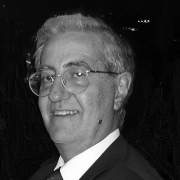
Profesor Antonio Loprieno, President of ALLEA.

Dear ALLEA members and friends,

As you are well aware, the year 2019 marks the 25th anniversary of ALLEA. This is a good moment to not only reflect on our history and celebrate our past achievements, but also to map out the path we want to follow. To that end, we determined that our 25th anniversary would be a great opportunity to revitalise our look, refurbish our online presence, and to set our future priorities.

We are therefore thrilled to announce that ALLEA is officially launching a brand-new corporate image which, we feel, better reflects ALLEA’s evolution, values and vision for the future as outlined in ALLEA’s Strategic Priorities 2019-2024.

We are particularly excited to present the new ALLEA website to you. The redesign process was carried out by making you, the members and visitors, our primary consideration. We want to make ALLEA’s virtual space as user-friendly, informative and accessible as possible. The result is for you to judge. Please peruse it at your leisure!

We would also like to introduce the latest issue of ALLEA’s newsletter. This issue focuses on the celebrations and outcomes of our 25th anniversary in Bern last May, and features our latest discussion paper, upcoming events, and new SAPEA reports, among other issues.

Enjoy the read!

Kind regards,

Antonio Loprieno
President of ALLEA


To the ALLEA Newsletter