ALLEA has officially opened registrations for its General Assembly 2026, taking place from 26–29 May in Warsaw, hosted by the Polish Academy of Sciences. Bringing together leading voices from across the European research community, this year’s Assembly comes at a critical moment marked by geopolitical tensions, economic uncertainty, and increasing pressure on scientific institutions and academic freedom.
Under the theme “Towards a Futureproof European Research Area: Boosting Trust, Integrity, and Resilience,” the event will focus on how Europe can strengthen its research systems while safeguarding the core values of scientific independence, collaboration, and integrity.
As Europe navigates a complex landscape of global challenges and prepares for key policy developments such as the anticipated European Research Area (ERA) Act, the Assembly will provide a platform for essential dialogue among academies, researchers, policymakers, and other stakeholders. Discussions will explore not only policy solutions but also the role of the research community itself in reinforcing trust in science and sustaining cross-border collaboration.
Public Conference and Programme Highlights
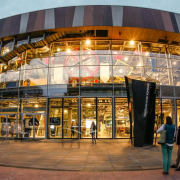
A central highlight of the Assembly will be the ALLEA Public Conference on 27 May, held at the Copernicus Science Centre. The conference will open with a keynote address by Robbert Dijkgraaf, President-Elect of the International Science Council, followed by a high-level panel featuring perspectives from academia, research funders, publishers, and policy representatives.
The programme will also include:
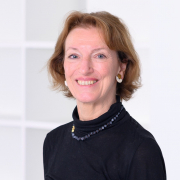
A lecture by Professor Maria Leptin, President of the European Research Council (ERC) and 2025 ALLEA Madame de Staël Prize Laureate
Satellite events organised with CoARA and SAPEA, focusing on research assessment reform and inclusive science advice
Collaboration with the European National Young Academies (ENYA), fostering intergenerational dialogue between early-career researchers and senior scholars
All public-facing sessions are open to a broad audience, encouraging wide participation in shaping the future of the European Research Area.
Join the Conversation
With mounting challenges facing science and society, ALLEA invites participants from across Europe and beyond to take part in this timely exchange and contribute to building a more resilient and future-ready research ecosystem.
ALLEA looks forward to welcoming participants to Warsaw this May for what promises to be a vital and engaging gathering.
https://allea.org/wp-content/uploads/2026/03/1773395991752.jpg6091280Daniel Kaiserhttps://allea.org/wp-content/uploads/2019/04/allealogo-1-300x83.pngDaniel Kaiser2026-03-06 15:43:512026-03-24 15:54:50 Registrations Open for ALLEA General Assembly 2026 in Warsaw
ALLEA is proud to announce that Maria Leptin, President of the European Research Council (ERC) and chair of the ERC governing body, the Scientific Council, has been awarded the 2025 ALLEA Madame de Staël Prize in recognition of her outstanding contributions to European research leadership, and the advancement of frontier science across Europe.
“It is a great honour to receive this prize, and I would like to express my gratitude to ALLEA, an organisation I hold in the highest regard. The values celebrated by this award, such as scientific curiosity, European intellectual engagement, and academic freedom – embodied by Madame de Staël – are ones I deeply share, as does the European Research Council”, said Professor Leptin about her nomination.
Her research has advanced understanding of how individual cells give rise to complex multicellular organisms, including the processes and proteins that determine embryonic shape and form. She has gained recognition for her work on the fruit fly Drosophila, investigating complex cell shapes in the respiratory system and the formation of the tracheal network, and for studying pathogen resistance in zebrafish. Beyond her scientific achievements, Maria Leptin has held multiple leading roles in the European and international research community, including as the first woman Director of the European Molecular Biology Organisation (EMBO) and, since November 2021, as President of the European Research Council (ERC), combining her scientific expertise with extensive experience in research policy and management.
“The jury has unanimously decided to award Maria Leptin the 2025 ALLEA Madame de Staël Prize in recognition of her pioneering contributions to developmental biology and her outstanding leadership in European research. As Director of the European Molecular Biology Organisation and as President of the European Research Council, Professor Leptin has demonstrated exceptional dedication to advancing science and fostering collaboration within the European scientific community. Her work embodies the very values honoured by this Prize – promoting scientific excellence, supporting collaboration across borders, and strengthening the impact of research on society,” said Professor Paweł Rowiński, President of ALLEA and chair of the ALLEA Madame de Staël Prize Jury.
About Maria Leptin
Maria Leptin has been the President of the European Research Council (ERC) since November 2021 and chairs the ERC governing body, the Scientific Council. She is a biologist best known for her work on the mechanisms that allow a developing body to take on its correct shape.
After her studies in mathematics and biology at the University of Bonn and the University of Heidelberg, Germany, Maria Leptin carried out her PhD research at the Basel Institute for Immunology, Switzerland. She then moved to the Laboratory of Molecular Biology in Cambridge, UK, after which she became a group leader at the Max Planck Institute for Developmental Biology in Tübingen, Germany, and then professor at the Institute of Genetics, University of Cologne, Germany. She spent extended research periods and sabbaticals at the University of California, San Francisco, USA, the École Normale Supérieure, Paris, France, and at the Wellcome Trust Sanger Institute, Hinxton, UK.
Before her appointment as ERC President, Maria Leptin was the Director of the European Molecular Biology Organisation (EMBO) in Heidelberg, and a research group leader at the European Molecular Biology Laboratory.
She is an elected member of EMBO, the Academia Europaea, the German National Academy of Sciences (Leopoldina), the Nordrhein-Westfälische Akademie der Wissenschaften und der Künste, the Berlin-Brandenburgische Akademie der Wissenschaften and the European Academy of Sciences. She is an Honorary Fellow of the Academy of Medical Sciences, a Foreign Member of the Royal Society and an international member of the US National Academy of Sciences. She holds the title of Doctor Honoris Causa from École Polytechnique Fédérale de Lausanne (EFPL), Federal Institute of Technology Zurich (ETH), Nova University Lisbon and the University of Cambridge. She was awarded the lifetime achievement award by the Latin American Society for Developmental Biology, the De Sanctis Award for Europe and the De Sanctis Award for Research.
https://allea.org/wp-content/uploads/2025/12/Maria-LEPTIN-Portrait-photo-5-Credits-Michael-Wodak-Medizin-Foto-Koln.jpg8531280alleaadminhttps://allea.org/wp-content/uploads/2019/04/allealogo-1-300x83.pngalleaadmin2025-12-15 08:39:522025-12-15 08:39:522025 ALLEA Madame de Staël Prize awarded to President of the European Research Council (ERC) Maria Leptin
The nomination process for the ALLEA Madame de Staël Prize 2025 has concluded. We would like to thank all ALLEA member academies for nominating their candidates!
Nominations were received by 30 September 2025. In October and November of the same year, the Prize Jury will evaluate the nominations and select the laureate. The laureate’s name will be announced in December, with a Prize handover ceremony planned for the upcoming ALLEA General Assembly in Warsaw, Poland on 27–28 May 2026.
The ALLEA Madame de Staël Prize is awarded annually. It is a part of the larger mission of ALLEA to promote the rich and diverse intellectual, scientific, and cultural heritage of Europe. It is awarded to eminent individuals whose work represents a significant contribution to integrity and development of Europe, thereby promoting and strengthening an understanding of Europe as multifaceted, intellectual, open, and vibrant.
https://allea.org/wp-content/uploads/2025/09/madame-de-stael-91248c-copy.jpg6801504alleaadminhttps://allea.org/wp-content/uploads/2019/04/allealogo-1-300x83.pngalleaadmin2025-10-01 13:46:542025-10-01 13:46:54ALLEA Madame de Staël Prize 2025 – Thank You for Your Nominations!
ALLEA is proud to announce that German physicist and Board Member of the German Young Academy (“Die Junge Akademie”), Viola Priesemann, has been awarded the 2024 Madame de Staël Prize for European Values in recognition of her remarkable scientific achievements in the field of physics, her exceptional leadership, and her profound commitment to fostering a coordinated European response during the pandemic.
Prof Dr Viola Priesemann is a Board Member of “Die Junge Akademie”, professor of Physics at the Georg-August University and group leader at the Max-Planck-Institute for Dynamics and Self-Organisation in Göttingen. She is a member of the Board of the Campus Institute for Data Science, the Cluster of Excellence ‘Multiscale Bioimaging’, the Göttingen Academy of Sciences and Humanities. Her research focuses on living and artificial neural networks, carving out the basic mechanisms of self-organisation, learning, and efficient coding.
During the Covid-19 pandemic, she brought together and coordinated a transdisciplinary team of researchers to develop coordinated mitigation strategies. This team published several papers in The Lancet, including a practicable, transdisciplinary ‘Action Plan for Pan-European Defense against new SARS-CoV-2 variants.’ Within integrating researchers from small countries and disciplines this endeavor reflects the very values of European unity, transdisciplinary research, and the promotion of an open and inclusive science advancement in Europe.
The selection committee felt that Priesemann’s unwavering dedication to fostering an environment in which interdisciplinary research can flourish and the advancement pan-European cooperation in science, policy, and public health during a global crisis were both outstanding in their own right, as well as complementary to ALLEA’s own mission of facilitating scientific collaboration across borders and disciplines.
“The jury wholeheartedly agreed to award Viola Priesemann with the 2024 Madame de Staël Prize in recognition of her exceptional scientific leadership and dedication to fostering European collaboration. During the Covid-19 pandemic, Prof Priesemann brought together a team of researchers, from various countries and diverse disciplines, to coordinate mitigation strategies, resulting in several papers, including a practicable‘Action Plan for Pan-European Defense against new SARS-CoV-2 variants.’ Her work reflects the very values embodied in the Prize – of promoting science as a global public good, facilitating scientific collaboration across borders and disciplines, and strengthening the impact of science in society,” said Paweł Rowiński, President of ALLEA and chair of the Madame de Staël Prize Jury.
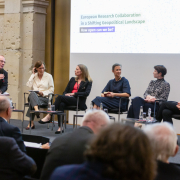
ALLEA marked its 30th anniversary with its general assembly in Berlin on 22–23 May 2024. The event featured a public symposium which convened prominent researchers, policymakers, and civil society representatives from across Europe to explore the complexities and opportunities of open research collaboration in today’s evolving geopolitical climate.
https://allea.org/wp-content/uploads/2024/06/Allea_220524_low-res_V7A2802.jpg6671000alleaadminhttps://allea.org/wp-content/uploads/2019/04/allealogo-1-300x83.pngalleaadmin2024-06-14 11:17:492024-06-17 10:08:19Event report: European Research Collaboration in a Shifting Geopolitical Landscape – How Open Can We Be?
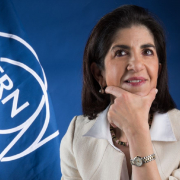
ALLEA is proud to announce that particle physicist Fabiola Gianotti has been awarded the 2023 Madame de Staël Prize for European Valuesin recognition of her remarkable scientific achievements and her exemplary leadership as Director-General of the European Organization for Nuclear Research (CERN).
“I am deeply grateful to ALLEA for this prestigious award, and truly honoured to receive it in the context of my work as the Director-General of CERN, one of Europe’s greatest achievements from the perspective of scientific excellence, societal impact and international collaboration, as well as for the values of diversity, inclusion and open science that it embraces and promotes,” said Fabiola Gianotti about her nomination.
The selection committee felt that Gianotti’s efforts in pursuing CERN’s mission of bringing European nations together and her commitment to fostering an environment in which research can flourish beyond national boundaries were both outstanding in their own right, as well as complementary to ALLEA’s own mission of facilitating scientific collaboration across borders and disciplines.
“The jury wholeheartedly agreed to award Fabiola Gianotti with the 2023 Madame de Staël Prize, as recognition of her outstanding scientific work in particle physics and, most notably, her exemplary achievements in shaping a truly collaborative research community at CERN. Under her directorship, CERN has evolved to become a research environment in which European values such as cultural diversity, borderless collaboration, and equal opportunities are central and essentially contribute to achieving the highest scientific standards,” said Antonio Loprieno, President of ALLEA and chair of the Madame de Staël Prize Selection Committee.
On Saturday 6 November, ALLEA celebrated its annual Madame de Staël Prize Lecture. On this occassion, the 2021 Madame de Staël Prize laureate, Professor Helen Keller, accepted her award and delivered the lecture “Climate Change in Human Rights Courts”. The event was hosted by the Swiss Embassy in Berlin and took place in a hybrid format as part of the Berlin Science Week.
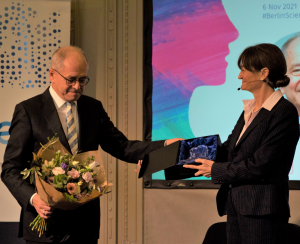
ALLEA President Antonio Loprieno hands over trophy to Professor Helen Keller, the 2021 Madame de Staël Prize laureate.
The Madame de Staël Prize Lecture is an annual scientific event hosted by ALLEA, the European Federation of Academies of Sciences and Humanities. Each year, the Madame de Staël Prize laureate delivers an interactive lecture related to their own research and reflecting on current affairs in the European political and scientific landscape. This year’s laureate, legal scholar and judge Helen Keller, delivered a lecture titled ‘Climate Change in Human Rights Courts: Overcoming Procedural Hurdles in Transboundary Environmental Cases’. Her lecture was followed by a panel discussion and Q&A session.
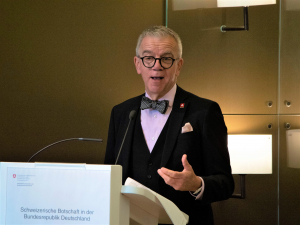
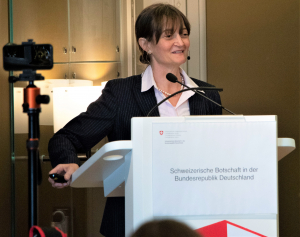
Ambassador Seger delivers the welcome remarks
The event was opened with welcome remarks by this year’s host, Dr Paul R Seger, the Swiss Ambassador to Germany. Ambassador Seger, also an international lawyer by training, celebrated the fact that Professor Helen Keller was the first Swiss scholar to receive the Madame de Staël Prize, and commended her for her work as a legal academic, a lawyer, and as a judge at the European Court for Human Rights (ECtHR), where she served from 2011 to 2020. Ambassador Seger also emphasised that through Professor Keller, the work of the ECtHR, and indirectly, also the work of the Council of Europe were being recognised as institutions whose contributions to human rights, to the rule of law, and to European cohesion deserve to be highlighted.
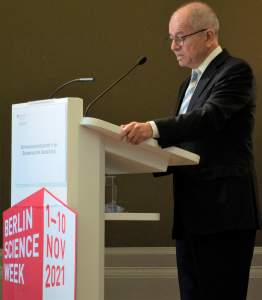
This was followed by a laudatory speech delivered by ALLEA President Antonio Loprieno. Professor Loprieno highlighted Professor Helen Keller’s important contributions to the development and the consolidation of human rights jurisprudence in Europe, and for her relentless commitment to fundamental rights:
Professor Antonio Loprieno delivers the laudation speech in honour of Professor Helen Keller.
“Professor Keller stood out among a dozen other candidates because she not only excelled in the theoretical and academic field, having led research projects and held teaching positions for the past 20 years, but she also greatly contributed to Europe’s political and social life, serving at the United Nations Human Rights Committee between 2008 and 2011, at the ECtHR in Strasbourg between 2011 and 2020, and at the Constitutional Court of Bosnia and Herzegovina since December 2020.”
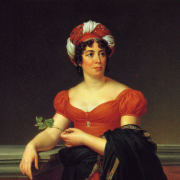
Professor Loprieno also stressed that the Madame de Staël Prize, named after Anne Louise Germaine de Staël-Holstein (commonly known as ‘Madame de Staël’), represents the values of inquisitiveness, European intellectualism, and individual as well as academic freedom, values that were embodied by Madame de Staël herself, who suffered the consequences of violence and political persecution in the 18th Century for the ideas she espoused and openly advocated for, but remained unshacken in her convictions.
Procedural Hurdles in Climate Change Litigations
Professor Helen Keller delivers the 2021 Madame de Staël Prize Lecture.
In her lecture ‘Climate Change in Human Rights Courts: Overcoming Procedural Hurdles in Transboundary Environmental Cases’, Professor Helen Keller introduced 3 procedural admissibility hurdles that can pose particular challenges for climate change cases brought before court. As Professor Keller explained, before the ECtHR can judge a case on the merits, it must check whether all the admissibility requirements have been met. More than 90% of all cases at the ECtHR fail to comply with admissibility requirements, which means the cases are declared inadmissible before they can be judged on the merits. Respecting the admissibility requirements is also important for the legitimacy of the Court, as these are the fundamental rules for the interaction between the Court and the Member States.
The first procedural hurdle Professor Keller introduced involves the demonstratation by the applicants that they have exhausted the domestic remedies; the second hurdle requires applicants to succesfully establish that they have victim status; the third hurdle requires applicants to meet their burden of proof to show that they face a significant disadvantage. For each of these hurdles, Professor Keller highlighted that there are important exceptions that have been made in previous cases, which can serve as legal precedent for future climate litigation cases.
As a conclusion, Professor Keller remarked that:
“National and international courts are being challenged in climate cases. The devil lies in the proverbial details of many admissibility requirements. For the ECtHR, this means that it has to set new standards for various admissibility requirements in the light of the climate crisis. This is possible, but the Court must handle these questions carefully so that the Strasbourg judges cannot be accused of activism, which could endanger their legitimacy.”
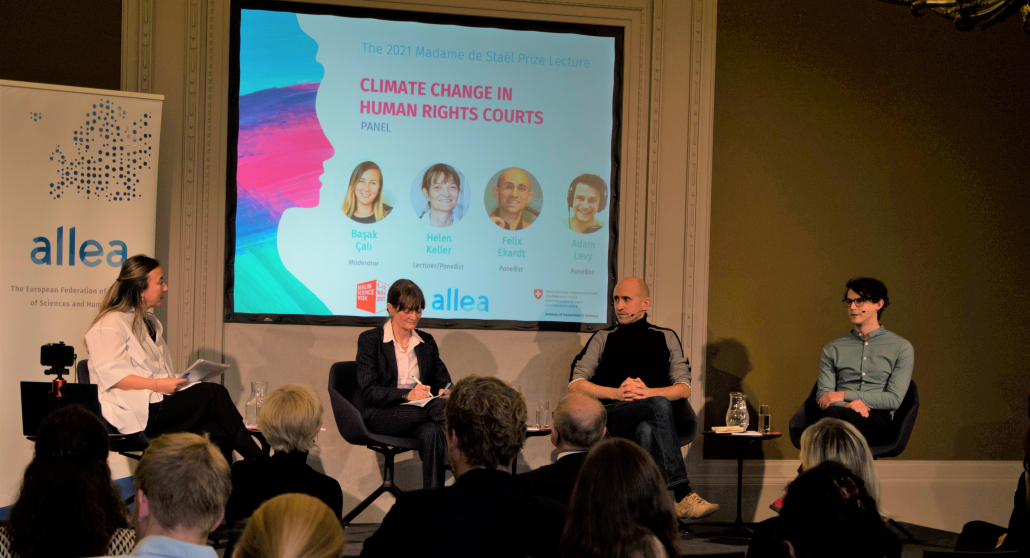
Professor Keller’s lecture was followed by an interactive panel discussion, moderated by Professor Başak Çalı, Professor of International Law at the Hertie School and Co-Director of the School’s Centre for Fundamental Rights. She was joined by Professor Felix Ekardt, Head of the Research Unit Sustainability and Climate Policy, and Professor of Public Law and Legal Philosophy at Rostock University; and by Dr Adam Levy, Doctor in Atmospheric Physics (University of Oxford), Science Journalist, and Climate Communicator.
The panel dug a little deeper on the 3 procedural hurdles mentioned in Professor Keller’s lecture, analysing them from a legal, but also political and climate science perspective. The floor was then opened for questions from attendees at the Swiss Embassy and for those who joined the event virtually.
The panel was moderated by Professor Başak Çalı (Hertie School) and compossed by Professor Helen Keller, Professor Felix Ekardt (Research Unit Sustainability and Climate Policy), and Dr Adam Levy (Science Journalist, and Climate Communicator).
This event was hosted in a hybrid format in the context of the 2021 Berlin Science Week. You can watch the full livestream below.
https://allea.org/wp-content/uploads/2021/11/1099214-scaled.jpg20862560Dino Tramontanihttps://allea.org/wp-content/uploads/2019/04/allealogo-1-300x83.pngDino Tramontani2021-11-09 16:06:472021-11-11 11:08:53ALLEA Awards Legal Scholar Helen Keller at the 2021 Madame de Staël Prize Lecture
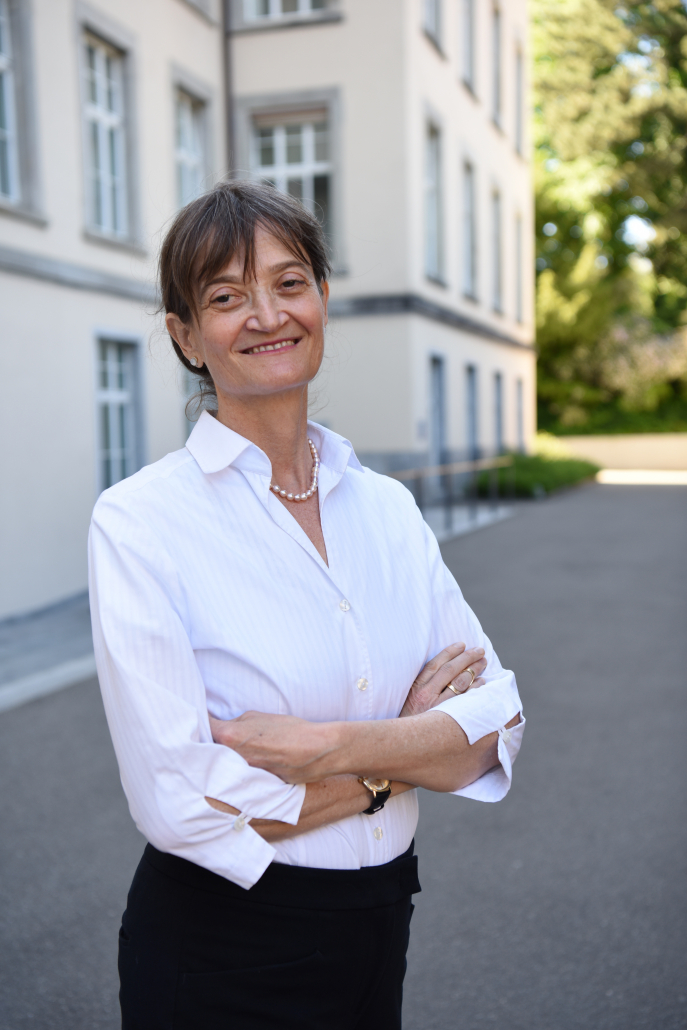
Professor Helen Keller is a renowned lawyer, international judge, and professor of law, and she is the 2021 Madame de Staël Prize laureate. She was chosen as the 2021 laureate on account of her contribution to the development and consolidation of human rights jurisprudence in Europe as well as her commitment to fundamental rights.
Professor Keller is Chair for Public Law, European and Public International Law at the University of Zurich. She is a former member of the UN Human Rights Committee and served as Judge at the European Court of Human Rights between 2011-2020. In December 2020, she was appointed Judge to the Constitutional Court of Bosnia-Herzegovina. We are privileged to have the opportunity to sit with Professor Keller and ask her some questions about her academic and jurist career.
“There are two big themes that have always interested me in my research: one is the question of how to engage the law in the protection ofcertain groups or interests. The second deals with the clash of different legal masses.”
Question: Professor Keller, what does winning the 2021 Madame de Staël Prize mean to you?
Helen Keller: I am honored and humbled, indeed. It is wonderful that my efforts in research, but also as a judge, for a strong and peaceful Europe are taken note of. This gives me strength to continue working. Of course, the prize also goes to the University of Zurich, which has always generously supported me in my involvement with the UN or the European Court of Human Rights.
Finally, the prize comes at a special time for Swiss research in general: because the Swiss government has broken off negotiations on a framework agreement with the EU, access for Swiss researchers in Europe is restricted. So this prize comes at just the right time: It should show the academics in Switzerland that we should nevertheless continue to work on European topics and that our voice is and can be heard in Europe.
Q.: Your work has focused on such diverse areas of jurisprudence; you have written extensively on issues pertaining to federal as well international law, and on topics ranging from the death penalty to environmental law. What would you say are your main areas of academic interest and why?
H.K.: There are two big themes that have always interested me in my research. One is the question of how to encourage and engage the law in the protection ofcertain groups or interests that are a priori badly protected. This concerns the research topics that revolve around human rights and environmental protection. The second theme deals with the clash of different legal masses, be it international law on national law or soft law on hard law. I have examined how courts deal with these situations.
“As a researcher, I always thought that the courts would write a judgment as if it were a scientific essay. But when you take part in deliberations, you see that the passing of a judgment is a process influenced by various opinions.”
Q.: Since the early 2000s you established yourself as a scholar of law, serving as visiting scholar at various academic institutions. Additionally, you have served as judge at the European Court of Human Rights (ECtHR) from 2011 to 2020 and you now serve as judge at the Constitutional Court of Bosnia-Herzegovina. How has this interplay between theory and practice throughout your career impacted your work and your mindset as a scholar and as a judge?
H.K.: Once you have sat on a bench, you certainly read judgments differently. As a researcher, I always thought that the courts would write a judgment as if it were a scientific essay, that the text would be a unified whole. But when you take part in deliberations, you see that the passing of a judgment is a process influenced by various opinions.Often compromises need to be madein order to win over enough judges for the majority. Sometimes compromises are made that are not always advantageous for the coherence of the text. When I go over judgements today, I recognise these fractures and I willtry to pass on this knowledge to my students.
Q.: What are the greatest achievements of the ECtHR that come to mind from your time as judge there? Any particular court cases that stuck with you throughout the years?
H.K.: The Court fulfills a very important task: it repeatedly reminds the 47 states of their obligations to protect human rights and democracy. The Court has to do this in a very difficult environment, as there are many states with unstable democratic structures that regularly trample on basic human rights.
One case that has forever tainted my memory is ‘El-Masri v. Northern Macedonia.’ The complainant in this case had the misfortune of having a very similar name to a man who was directly involved in the 9/11 terrorist attacks in the United States. That is why the Macedonian security forces mistakenly arrested him at the behest of the CIA and then handed him over to the CIA. He was laterforcibly transferred to Kabul, Afghanistan, where he was tortured for several months. In this judgement, the Court ruled in favour of the complainant, addressing for the first time the secret renditions and the secret prisons in Europe after 9/11. This was a taboo-breaking case, which was very important for the upholding of human rights in Europe.
Intersecting Law & Climate Change
“Climate change is where my two research topics come together. On the one hand, there is the question of how we can better protect the environment against exploitation; on the other hand, different bodies of law collide and need to be harmonized.”
Q.: Climate change is a multifactorial problem that has far-reaching consequences in different aspects of human life. In a broad sense, how is the field of law and the different judicial systems in Europe being impacted by climate change?
H.K.: Climate change is where my two research topics that I mentioned earlier come together. On the one hand, there is the question of how we can better protect the environment, the ecosystem and the climate, which we have used more or less for free for so many centuries, against exploitation. On the other hand, different bodies of law collide and need to be consolidated/harmonized: international and national law, hard law and soft law (e.g. voluntary commitments by companies) and administrative law and human rights.
Q.: What is the link between climate change and human rights? In a recent article you say that, when dealing with cases related to climate change, courts must be careful not to behave like activists, as this could jeopardize the legitimacy and reputation of a court. Why is this?
H.K.: We face a major gap in international law to combat global warming. Although there are more or less binding requirements for states to reduce CO2 emissions, we do not have an international body that would review violations of these obligations. This is where human rights come into play. In various countries, individuals file lawsuits against states (sometimes also against large international corporations such as Shell), claiming that their human rights have been violated because the state has done too little to combat global warming. This is the link between global warming and human rights. Because the latter are secured regionally and internationally by various judicial bodies (such as the Inter-American Court of Justice, the ECtHR, the Human Rights Council etc.), these people hope to succeed in the fight against global warming.
However, courts have to be careful. If judges want to force something that society is not ready for, courts risk having their legitimacy questioned. That ultimately also means that their judgement will then not be accepted and implemented.
“Climate disputes exist all over the world. We often focus on North America and Europe, but a lot is happening in Asia and Africa in this area. I think we can learn from each other.”
Q.: The number of lawsuits linked to climate change has grown exponentially in the last years. For instance, on 29 April 2021, the German Federal Constitutional Court, following a complaint brought by young climate activists, held the 2019 German Federal Climate Change Act as partially unconstitutional. What do you think about this decision?
H.K.: I consider the decision of the Federal Constitutional Court to be courageous and forward-looking, in the truest sense of the word. After all, the Federal Constitutional Court not only looked at the current situation for the climate and for the young applicants but said that it is important for politics to keep an eye on a period that goes beyond the current generation. Here we are facing an important problem in legal dogmatics: how do we protect the concerns and rights of future generations? The Federal Constitutional Court’s statement that politics must still enable these young complainants to have a life worth living in around 30 years’ time and beyond is an important step in the right direction.
H.K.: The first phase is to show that these climate disputes exist all over the world. We often focus on North America and Europe, but a lot is happening in Asia and Africa in this area. I think we can learn from each other.
Web portal of the Climate Rights and Remedies Project coordinated by Prof. Helen Keller at the University of Zurich
In a second phase, we will focus more on the content of the cases: How do the courts deal with questions of admissibility that arise in these climate lawsuits in a very specific and new way, e.g. who can look after the interests of future generations? How do the judges deal with the great technicality of the questions and the scientific data situation? And finally, what impact do these judgments have on improving the environmental situation in reality?
—
Professor Helen Keller received theMadame de Staël Prize on 6 November 2021 in a hybrid event during the Berlin Science Week, where she also delivered an interactive lecture relevant to her research at the Climate Rights and Remedies Project. You may read our summary of the event here and watch the full livestream here.
Subscribe to the ALLEA newsletter for future updates.
https://allea.org/wp-content/uploads/2021/09/TH8_2967-scaled.jpg17082560Dino Tramontanihttps://allea.org/wp-content/uploads/2019/04/allealogo-1-300x83.pngDino Tramontani2021-09-08 10:52:492021-11-12 11:12:40Law, Human Rights & Climate Change: A Conversation with Helen Keller
On 5 November, cultural historian Joep Leerssen and Laura Hood of The Conversation discussed why and how national cultures obstruct European politics.
Joep Leerssen, 2020 Laureate of the ALLEA Madame de Staël Prize for Cultural Values, is one of the most remarkable figures in the critical analysis of ethnic and cultural stereotyping. In this conversation with Laura Hood, he gave insights into image shifts and trends of European identities.
The event was organised as a part of the Berlin Science Week 2020.
The Madame de Stael Prize for Cultural Values is awarded by ALLEA, the European Federation of Academies of Sciences and Humanities, jointly with the foundation Compagnia di San Paolo as major supporter.
https://allea.org/wp-content/uploads/2020/11/Image-no-text-.png5121024alleaadminhttps://allea.org/wp-content/uploads/2019/04/allealogo-1-300x83.pngalleaadmin2020-11-06 17:56:182021-08-03 17:01:20ALLEA Webinar on Cultural Memories & Nationalist Sentiments – Recording Is Online
The Jury of ALLEA’s Madame de Staël Prize for Cultural Values paid tribute to Dutch cultural historian Joep Leerssen (University of Amsterdam), whose work has been quintessential in studying the emergence and the development of European national movements and stereotypes.
The award worth €10,000 is awarded by ALLEA, the European Federation of Academies of Sciences and Humanities, jointly with the foundation Compagnia di San Paolo as major supporter. The Prize recognises eminent scholars and intellectuals whose work represents a significant contribution to the cultural values of Europe and to the idea of European integration.
A comparatist by formation, Leerssen has devoted his career to analysing how Europe’s multinationality has been experienced in history, tracing Europe’s identity as an evolving multi-party discourse of perceptions and representations.
“European cultural history is an endlessly seductive labyrinth of mirrors, full of guilt, glory, and self-reflections”, he commented. “Poised between cosmopolitanism and nationalism, being European is a standing challenge to our creative intelligence as scholars and as citizens.”
Summarising the deliberations of the Madame de Staël Prize Jury, ALLEA President and Chairman of the Jury, Antonio Loprieno stated:
“Joep Leerssen is one of the world’s most remarkable figures in the critical analysis of ethnic and cultural stereotyping and in the comparative history of European nationalisms. In times when various forms of national rhetoric seem to play a prominent role in public discourse, we need the orientation provided by comparative cultural research in order to navigate the challenges faced by modern European societies. We are delighted to award the 2020 Madame de Staël Prize to one such renowned scholar and pay tribute to Professor Leersen’s remarkable scientific opus.”
Joep Leerssen is a cultural historian with training in Comparative Literature. He is currently Professor of European Studies at the University of Amsterdam, additionally holding a part-time research professorship at the University of Maastricht. In course of his professional career, he has held visiting appointments at Harvard, Cambridge, Göttingen, and the ENS (Paris), among others. He is a member of the Royal Netherlands Academy of Arts and Sciences.
With the funding attached to two major academic awards (the Spinoza Prize and a Royal Netherlands Academy Professorship), Leerssen set up the Study Platform on Interlocking Nationalisms in 2009-2010. Its flagship publication to date is the Encyclopedia of Romantic Nationalism in Europe (2015-18). Among his other books are Remembrance and Imagination (1996), De Bronnen van het Vaderland (2nd ed. 2011), Spiegelpaleis Europa (3rd ed. 2015), National Thought in Europe (3rd ed. 2018), Imagology and The Rhine: National Tensions, Romantic Visions (2007 and 2017, both co-edited with Manfred Beller), and Commemorating Writers in 19th-Century Europe (2014, co-edited with Ann Rigney).
Now in its seventh edition, the All European Academies Madame de Staël Prize honours outstanding scholarly and intellectual contributions to the advancement of Europe. Previous laureates include Mariana Mazzucato, Andrea Pető, Koen Lenaerts and others.
About Compagnia di San Paolo
Since 1563, we have been working out of Turin for the common good, with a focus on people. Our experience has taught us that the well-being of individuals is closely linked to that of their community. This is why, for us, the Sustainable Development Goals set by the United Nations are a valuable opportunity to contribute to the future of humankind at all levels: we have taken on this challenge and reorganised ourselves accordingly.
We have three main Goals: Culture, People and Planet, which can be achieved through fourteen Missions. We are committed to preserving and expanding our endowment in order to make contributions and develop projects working alongside institutions and in collaboration with our auxiliary bodies. This is our commitment, for the common good and for everyone’s future.
https://allea.org/wp-content/uploads/2020/04/JT_HeadshotByJohannesTimmermans.jpg396402alleaadminhttps://allea.org/wp-content/uploads/2019/04/allealogo-1-300x83.pngalleaadmin2020-04-24 09:55:322020-04-24 18:37:05ALLEA awards its 2020 Madame de Staël Prize to cultural historian Joep Leerssen