
Open Science and Data

Open and secure data lie at the heart of a trustworthy, innovative and globally competitive research system. As digital technologies rapidly transform the way knowledge is produced, shared and used, the responsible governance of data has become both an unprecedented opportunity and a complex challenge. For Europe’s academies, whose missions include safeguarding scientific quality, promoting evidence-informed policymaking, and enabling cross-border collaboration, these developments have profound implications. Ensuring that data can be shared openly where appropriate, and protected rigorously where necessary, is essential to advancing science as a global public good while upholding ethical, legal, and societal responsibilities.
European academies have long played a leading role in these debates. They bring together interdisciplinary expertise, long-term perspectives, and an independent voice that is crucial for navigating the evolving landscape of data access, data security, intellectual property, and digital research infrastructures. Through ALLEA, they have contributed to shaping policies that balance openness and protection, enable innovation, and reinforce public trust in science.
Through its coordinated activities, ALLEA aims to:
- Amplify the collective voice of European academies in shaping policies for open and secure data.
- Provide guidance for researchers, science managers and policymakers on best practices in data sharing, data protection, and intellectual property.
- Support the development of sustainable infrastructures that enable responsible data use across all disciplines.
- Promote the values of science as a global public good, making research outputs as open as possible and as closed as necessary.
- Ensure coherence between Open Science ambitions, data security requirements, and legal frameworks.
With its longstanding engagement and cross-disciplinary expertise, ALLEA continues to help Europe move towards a research ecosystem that is open, trustworthy, secure and prepared for the challenges of the digital age. These activities are building on long standing experience and scientific excellence in and across the European academies. For almost 30 years, the ALLEA Permanent Working Group on Intellectual Property Rights (IPR) provided authoritative guidance on how copyright, patents and related frameworks influence knowledge creation and dissemination. Their work emphasised that appropriate protection of inventions and creations is vital for fostering innovation, supporting technology transfer, and ensuring that academic research can effectively serve society.
At the same time, ALLEA’s work on Open Science helped advance Europe’s transition toward more transparent, reproducible and collaborative research practices. This included exploring the implications of digital publication, promoting FAIR data principles, strengthening open access, engaging with data management challenges in the humanities and social sciences, and addressing ethical and legal questions associated with opening research outputs. The Task Force highlighted the importance of publishing not only final results but also protocols, data sets, software, and other early-stage outputs, while also recognising the need to reform research culture and invest in sustainable infrastructures.
Together, these activities built a robust knowledge base on how data can be shared in ways that maximise scientific benefit while protecting sensitive information, respecting intellectual property, and maintaining research integrity.
ALLEA Task Force “Protecting and Sharing Data”
Today, these efforts are continued and expanded through the ALLEA Task Force Protecting and Sharing Data, which addresses the growing need for balanced, coherent and future-oriented data governance frameworks across Europe.
The Task Force analyses how researchers, institutions and policymakers can navigate competing imperatives: enabling open and FAIR data where it enhances scientific progress, safeguarding personal and confidential information, ensuring cybersecurity, and respecting intellectual property. By drawing on expertise from across ALLEA’s Member Academies, the group contributes evidence-based recommendations and fosters dialogue between scientific communities, legal experts, and policymakers.

Related Activities
Data Governance
ALLEA realises its activities on Data Governance from various angles and thereby aims to provide a truly interdisciplinary perspective. Our objective is to bring together Europe’s leading scientific experts, policymakers, civil society, and other stakeholders to find answers to challenging questions.
Transfer of Health Data

On 8 April 2021, ALLEA, the European Academies’ Science Advisory Council (EASAC), and the Federation of European Academies of Medicine (FEAM) published the joint report “International sharing of personal health data for research”. The report discusses how global sharing of health data benefits public research, describes the challenges imposed by the GDPR, and provides possible solutions through adapting or expanding the existing legal framework.
Intellectual Property System for New Genomic Techniques
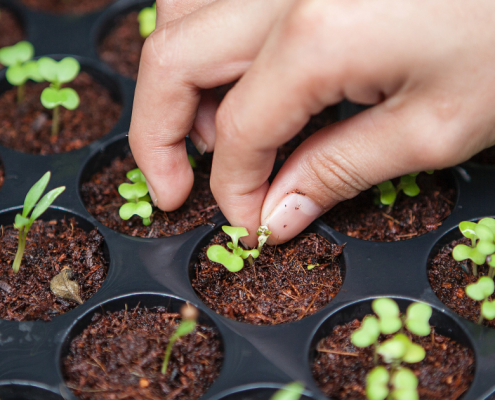
When considering the potential of New Genomic Techniques (NGTs) for crop improvement, such as genome editing using the CRISPR-Cas technology, (see ALLEA’s work on New Genomic Techniques), the protection of intellectual property (IP) rights is a critical concern. To address these issues in support of a more equitable system, ALLEA had established a dedicated Task Force consisting of some of Europe’s leading experts on the topic.
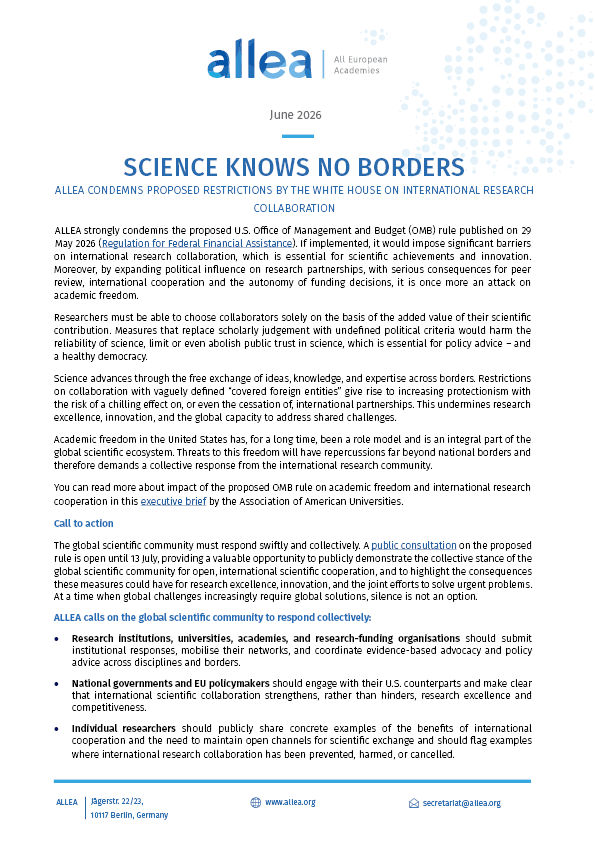 https://allea.org/wp-content/uploads/2026/06/ALLEA-Statement-on-new-omb-rule.png 842 595 maria ronald https://allea.org/wp-content/uploads/2019/04/allealogo-1-300x83.png maria ronald2026-06-29 11:22:572026-06-30 12:14:40Science Knows No Borders: ALLEA Condemns Proposed Restrictions by the White House on International Research Collaboration
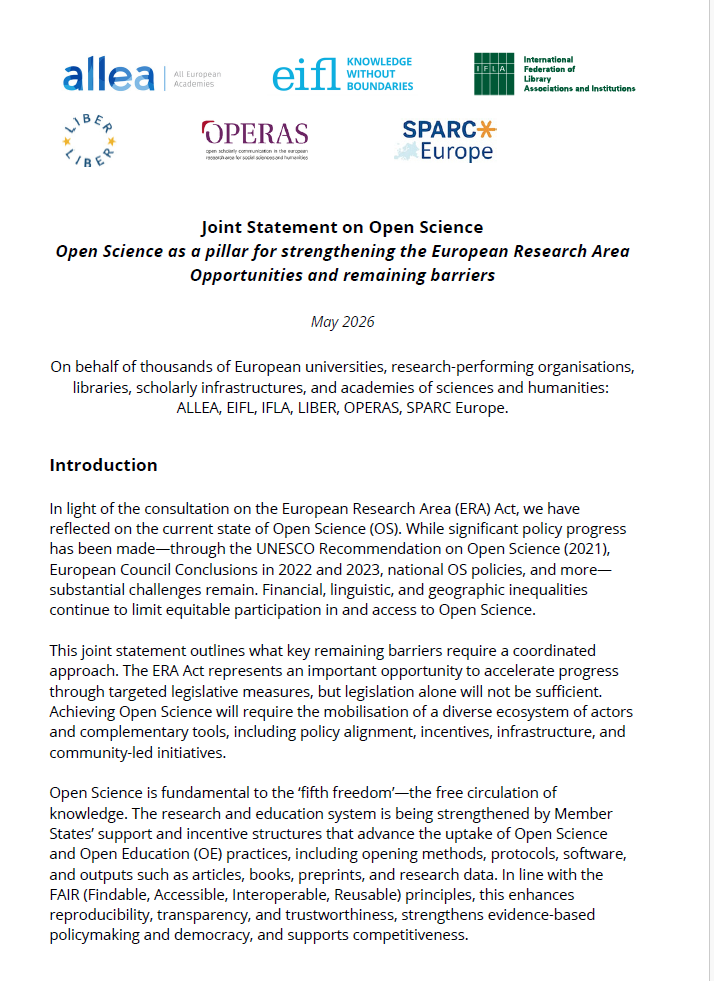 https://allea.org/wp-content/uploads/2026/06/open-science-statement-front-page.png 981 714 maria ronald https://allea.org/wp-content/uploads/2019/04/allealogo-1-300x83.png maria ronald2026-05-13 09:00:232026-06-19 17:16:36Joint Statement on Open Science: Open Science as a Pillar for Strengthening the European Research Area
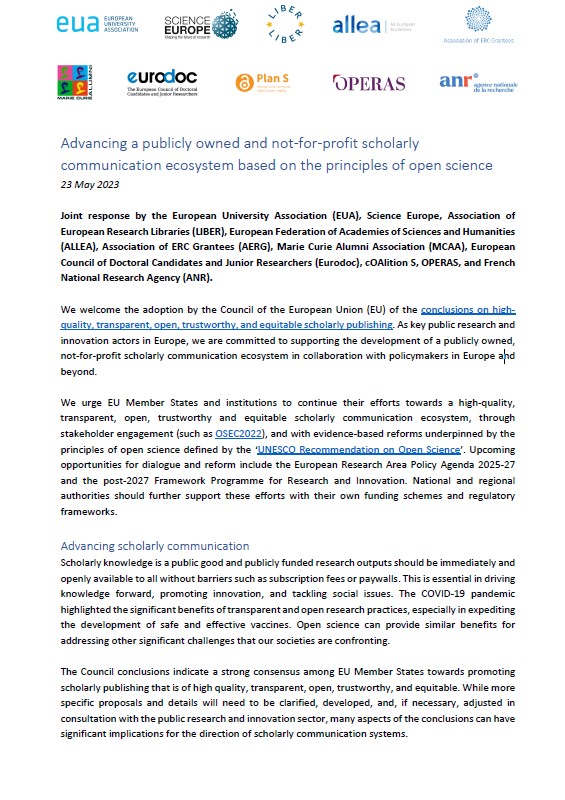 https://allea.org/wp-content/uploads/2023/05/statement-preview-1.jpg 800 565 maria ronald https://allea.org/wp-content/uploads/2019/04/allealogo-1-300x83.png maria ronald2023-05-23 14:09:062025-12-01 17:35:30Joint Statement on Advancing a Publicly Owned and Not-for-Profit Scholarly Communication Ecosystem Based on the Principles of Open Science
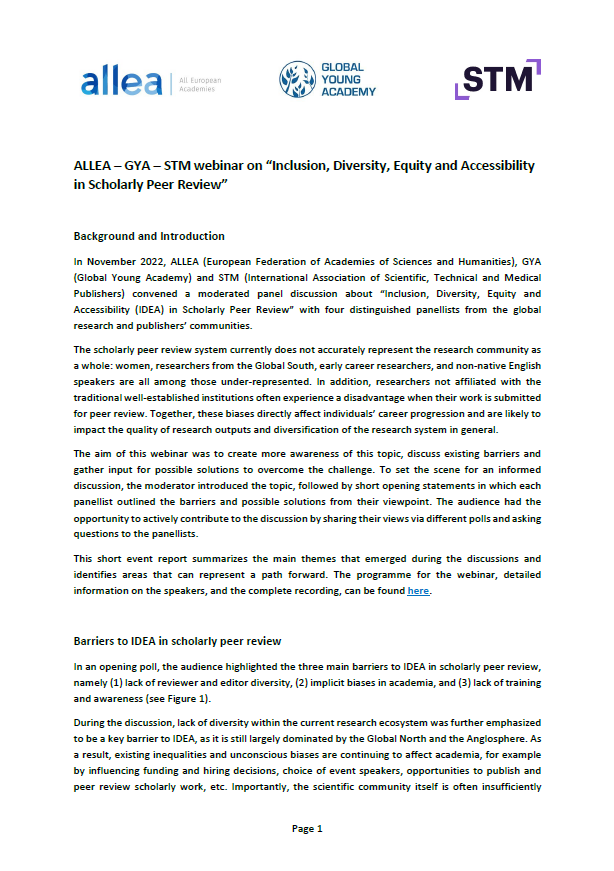 https://allea.org/wp-content/uploads/2022/12/Screenshot_2.png 871 614 Dino Tramontani https://allea.org/wp-content/uploads/2019/04/allealogo-1-300x83.png Dino Tramontani2022-12-19 14:51:222025-12-01 17:36:48Event Report – ALLEA-GYA-STM webinar on IDEA in Scholarly Peer Review
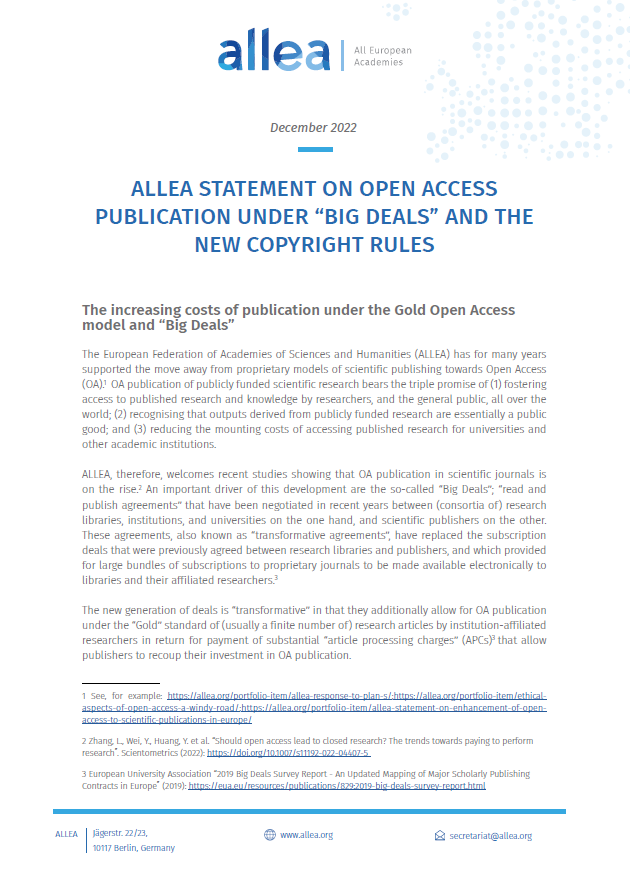 https://allea.org/wp-content/uploads/2022/12/Cover_statement_big_deals-Copy.png 870 630 alleaadmin https://allea.org/wp-content/uploads/2019/04/allealogo-1-300x83.png alleaadmin2022-12-12 13:33:252024-07-29 10:03:05ALLEA Statement on Open Access Publication Under “Big Deals” and the New Copyright Rules
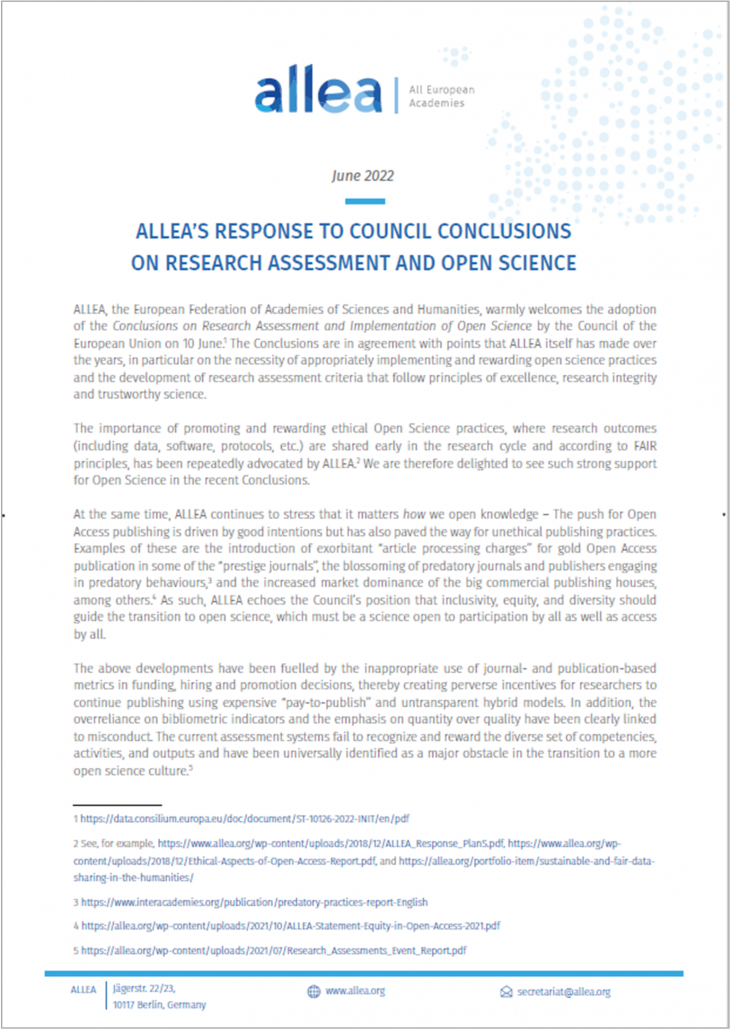 https://allea.org/wp-content/uploads/2022/06/Cover.png 2178 1545 Dino Tramontani https://allea.org/wp-content/uploads/2019/04/allealogo-1-300x83.png Dino Tramontani2022-06-14 12:08:592025-12-01 17:37:55ALLEA’s Response to Council Conclusions on Research Assessment and Open Science
 https://allea.org/wp-content/uploads/2022/05/cover.jpg 1115 789 alleaadmin https://allea.org/wp-content/uploads/2019/04/allealogo-1-300x83.png alleaadmin2022-05-23 10:50:122022-06-02 11:00:14ALLEA Activities Report (May 2021 – April 2022)
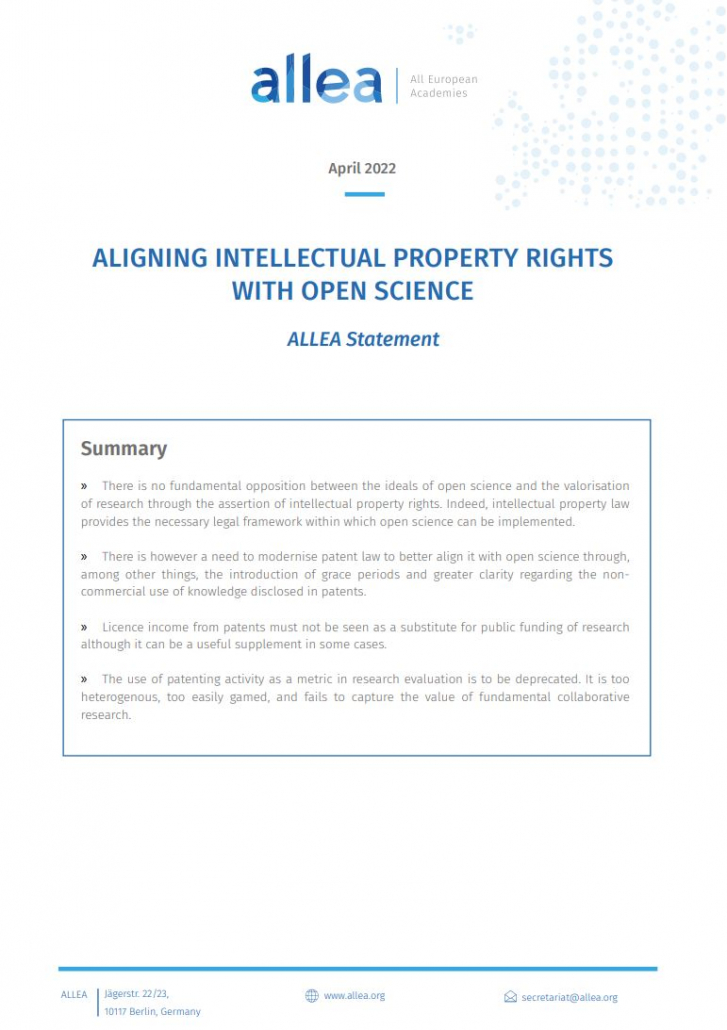 https://allea.org/wp-content/uploads/2022/04/Open_science_innovation-cover.jpg 1093 771 alleaadmin https://allea.org/wp-content/uploads/2019/04/allealogo-1-300x83.png alleaadmin2022-04-13 10:22:172022-04-13 10:23:07Aligning Intellectual Property Rights with Open Science
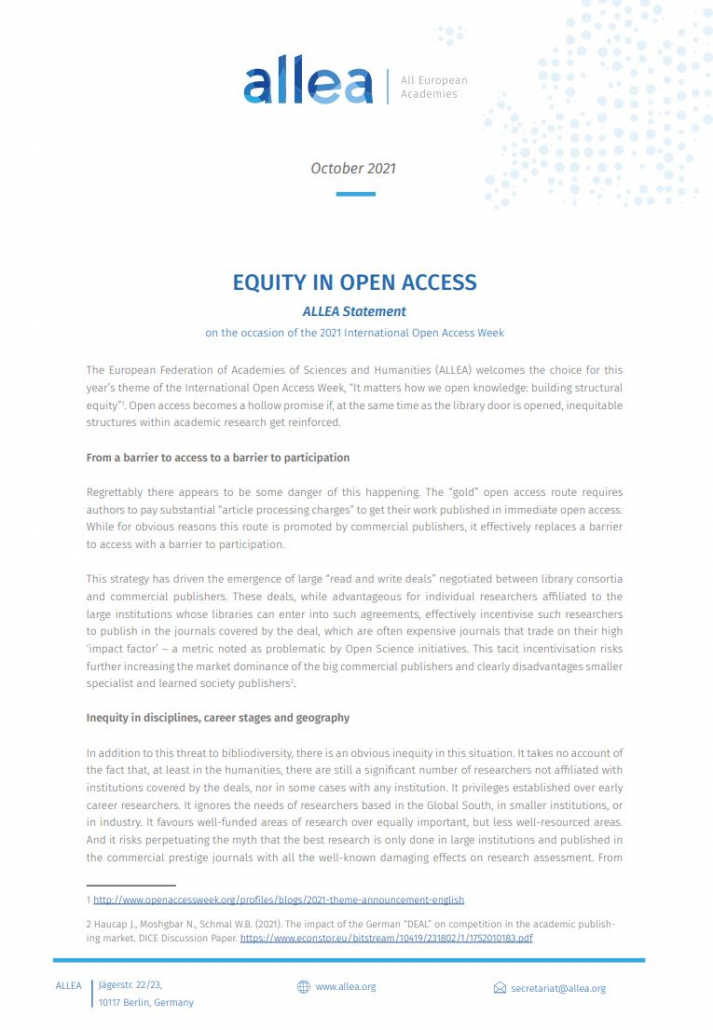 https://allea.org/wp-content/uploads/2021/10/Cover.jpg 1105 765 alleaadmin https://allea.org/wp-content/uploads/2019/04/allealogo-1-300x83.png alleaadmin2021-10-25 09:52:342025-12-01 17:38:28ALLEA Statement on Equity in Open Access
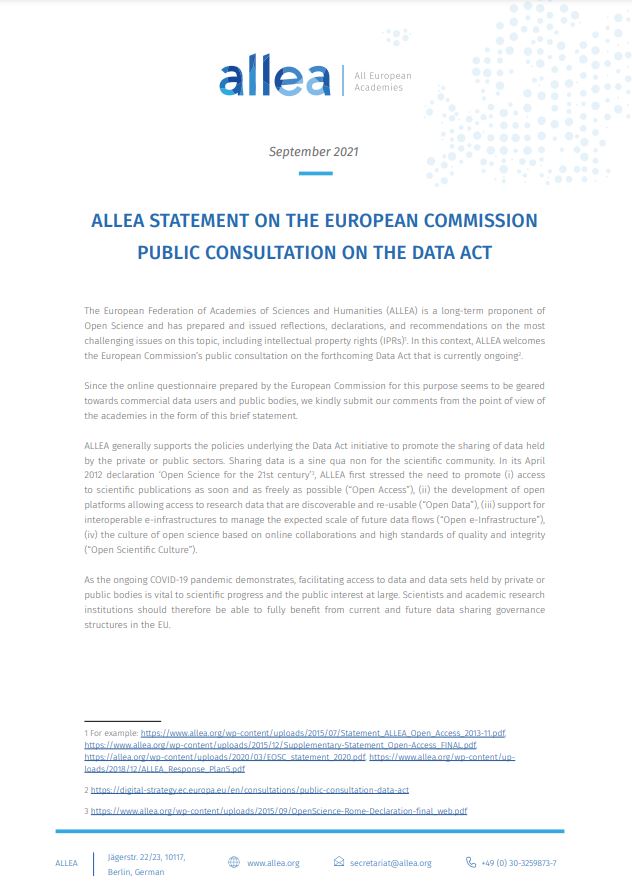 https://allea.org/wp-content/uploads/2021/09/cover.jpg 896 632 alleaadmin https://allea.org/wp-content/uploads/2019/04/allealogo-1-300x83.png alleaadmin2021-09-02 16:47:582021-09-02 16:49:03ALLEA Statement on The European Commission Public Consultation on the Data Act
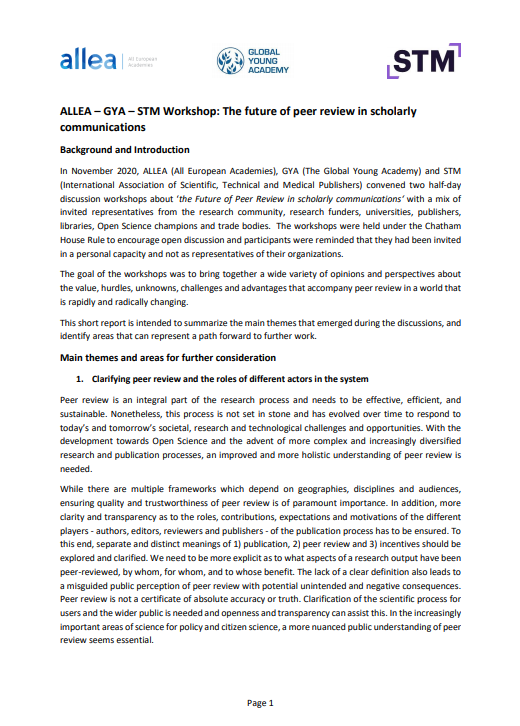 https://allea.org/wp-content/uploads/2021/03/cover-ALLEA-GYA-STM-Workshop.png 726 520 alleaadmin https://allea.org/wp-content/uploads/2019/04/allealogo-1-300x83.png alleaadmin2021-03-16 18:08:412025-12-01 17:39:36ALLEA – GYA – STM Workshop: The future of peer review in scholarly communications
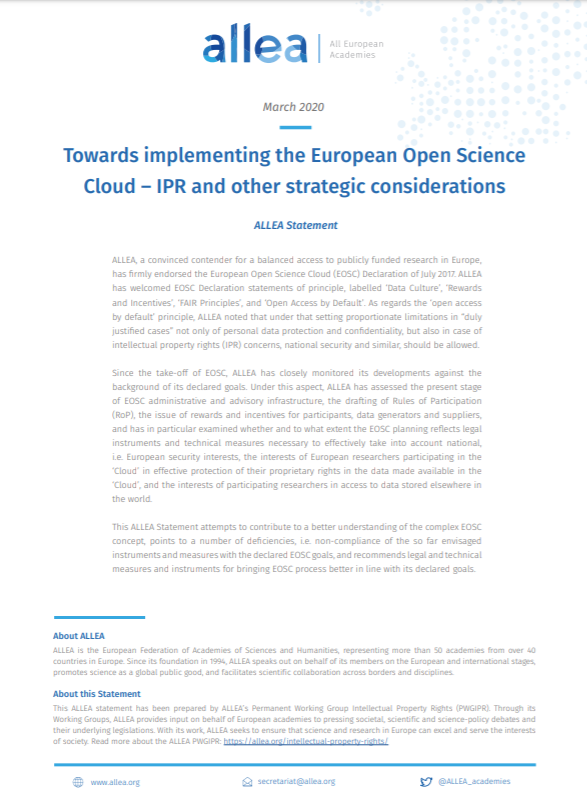 https://allea.org/wp-content/uploads/2020/03/eosc.png 790 587 alleaadmin https://allea.org/wp-content/uploads/2019/04/allealogo-1-300x83.png alleaadmin2020-03-31 10:56:462020-08-06 09:36:26Towards implementing the European Open Science Cloud – IPR and other strategic considerations
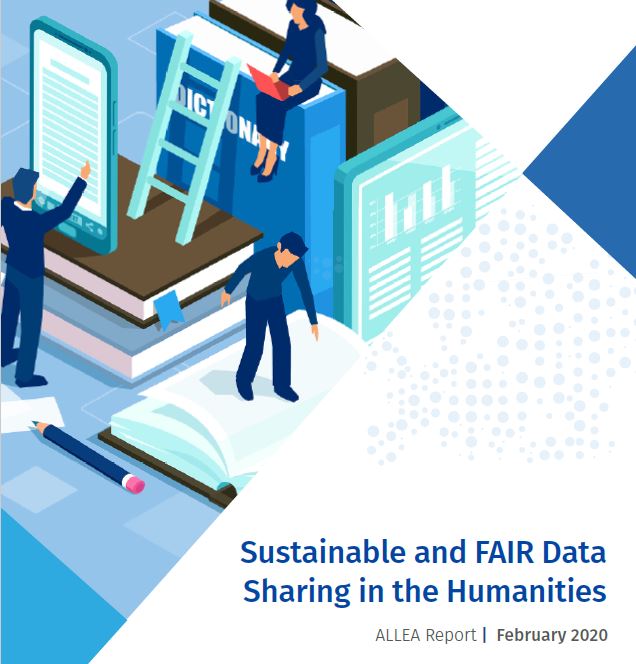 https://allea.org/wp-content/uploads/2020/02/cover.jpg 664 636 alleaadmin https://allea.org/wp-content/uploads/2019/04/allealogo-1-300x83.png alleaadmin2020-02-17 18:03:572021-04-21 13:16:29Sustainable and FAIR Data Sharing in the Humanities
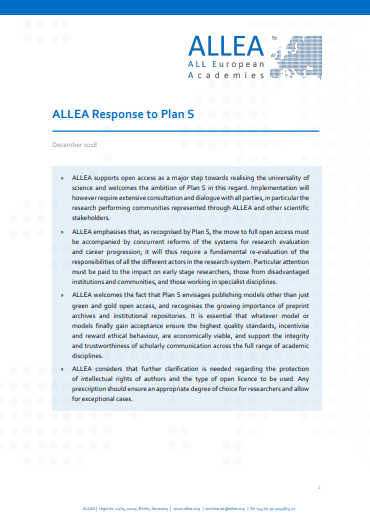 https://allea.org/wp-content/uploads/2019/06/Cover_Response-to-Plan-S.png 524 370 alleaadmin https://allea.org/wp-content/uploads/2019/04/allealogo-1-300x83.png alleaadmin2018-12-06 16:18:162025-12-01 17:40:07ALLEA Response to Plan S
 https://allea.org/wp-content/uploads/2019/06/Cover_Ethical-aspects-of-Open-Access.png 571 405 alleaadmin https://allea.org/wp-content/uploads/2019/04/allealogo-1-300x83.png alleaadmin2018-12-05 15:56:332021-04-08 12:16:02Ethical Aspects of Open Access: A Windy Road
 https://allea.org/wp-content/uploads/2019/06/Cover_Text-and-Data-Mining.png 559 395 alleaadmin https://allea.org/wp-content/uploads/2019/04/allealogo-1-300x83.png alleaadmin2017-11-06 15:55:512021-04-08 12:17:35The Text and Data Mining Exception and the Enhancement of Access to Scientific Information in Europe
 https://allea.org/wp-content/uploads/2019/06/Cover_Suplementary-Statement-on-Open-Access.png 559 394 alleaadmin https://allea.org/wp-content/uploads/2019/04/allealogo-1-300x83.png alleaadmin2015-10-06 14:14:052021-04-08 12:18:54Supplementary Statement on Enhancement of Open Access to Scientific Publications in Europe
Related News
 https://allea.org/wp-content/uploads/2021/11/Screenshot_3-1.png 644 994 Dino Tramontani https://allea.org/wp-content/uploads/2019/04/allealogo-1-300x83.png Dino Tramontani2021-11-30 13:56:512021-12-15 16:14:17UNESCO General Conference Adopts Recommendation on Open Science
 https://allea.org/wp-content/uploads/2021/10/Open-access-banner.jpg 550 1198 alleaadmin https://allea.org/wp-content/uploads/2019/04/allealogo-1-300x83.png alleaadmin2021-10-25 09:46:162021-10-25 09:46:16It Matters How We Open Knowledge – ALLEA Statement on Equity in Open Access
 https://allea.org/wp-content/uploads/2021/01/Peer-Review.jpg 532 1200 alleaadmin https://allea.org/wp-content/uploads/2019/04/allealogo-1-300x83.png alleaadmin2021-01-18 10:48:562025-12-12 12:56:41Shaping the Future of Peer Review