
ALLEA Open Science Task Force to Be Represented in Upcoming Events

ALLEA’s Open Science Task Force has been invited to participate in several upcoming events to present their latest work and vision on Open Science practises. The task force will be represented in these events by its chair and ALLEA Vice President, Professor Luke Drury, from the Royal Irish Academy. 

The upcoming events include:


Meeting of the US National Institute of Health Biomedical Informatics Coordinating Committee (BMIC)

20 April 2022

Following his participation at the US National Academies of Sciences, Engineering, and Medicine (NASEM) Roundtable on Aligning Incentives for Open Science, Prof Luke Drury has been invited to join the NIH Biomedical Informatics Coordinating Committee (BMIC) internal meeting on ‘Open Science, Integrity and Innovation’ as a guest speaker on 20 April to introduce ALLEA’s latest work on Open Science.  

The BMIC was established in 2007 to improve communication and coordination of issues related to clinical- and bioinformatics at US National Institute of Health (NIH). It is a forum where cross-cutting issues related to biomedical informatics, data science, and open science are communicated, discussed, and coordinated. 


AESIS seminar on Open Science & Societal Impact

20 April 2022

The international network for Advancing and Evaluating the Societal Impact of Science (AESIS) will be hosting an online seminar on ‘Open Science & Societal Impact’ on 20 April in partnership with the Federation of Finnish Learned Societies. Prof Luke Drury has been invited to chair the plenary opening panel titled ‘Open Science for Societal Good’ (9:40 – 11:50 EEST / 8:40- 10:50 CEST). 

Main topics to be discussed in the event include incentivisation strategies and policies to stimulate Open Science; safe spaces to facilitate open scientific discourse in academia; examining geopolitical implications of global policies for access to research data; Open Science policies and practices to foster public trust and understanding in science, among others. More information and registration are available here. 


Virtual Panel Discussion: Building Structural Equity and Inclusion in Open Scholarship

6 May 2022

The United Nations Dag Hammarskjöld Library (main organizer of the annual UN Open Science Conference) will host the virtual panel discussion ‘Building Structural Equity and Inclusion in Open Scholarship’ on 6 May (7:30 EST / 13:30 CEST) as part of the 2-day global forum 7th Multi-stakeholder Forum on Science, Technology and Innovation for the Sustainable Development Goals. 

Prof Luke Drury will join as a guest panellist to discuss, among others, recommendations from ALLEA’s recent statement on ‘Equity in Open Access’ as well as ALLEA’s contributions to the UNESCO Recommendation on Open Science. More information and registration are available here. 


Learn more about ALLEA’s Open Science Task Force


Patent System Needs Adjustment to Harmonise with Open Science Objectives, European Academies say

A new ALLEA statement examines the current patent system in the context of the ideals and objectives of open science and recommends, among others, the introduction of grace periods in patent applications to make knowledge open as early as possible.

In a new statement published today, ALLEA, the European Federation of Academies of Sciences and Humanities, advocates for the harmonisation of the patent system with open science. The academies urge policymakers to introduce a grace period of at least one year to ensure rapid open publication of research findings.

In addition, the authors conclude that patent income must not be seen as a substitute for public funding and patent activity should be used with great caution as an evaluation metric in assessing the performance of research institutions, projects, and individuals.

The statement, prepared jointly by ALLEA’s Open Science Task Force (OSTF) and the Permanent Working Group Intellectual Property Rights (PWGIPR), analyses the current debate on the possible synergies and perceived tensions between open science and patent protections.

The publication explores these two apparently contradictory views on research policy. On the one hand, a utilitarian view underlines the value of research as a key pillar of innovation in modern societies, wherein patents are considered important tools to valorise research findings. At the same time, an increasingly vocal open science movement advocates for knowledge generated through research to be considered as a global common good to be shared as openly and as rapidly as possible.

The authors consider that “there is no fundamental opposition between open science and protection of IPR; ideas can be freely shared even if their commercial use is subject to restrictions, and indeed this is only possible because of patent law. However, there are clearly operational problems with the way the patent system is currently structured.”

With the right adaptations to existing patent law, knowledge valorisation does not need to prevent early sharing of research findings. On the contrary, “a reformed patent system is essential to the widespread adoption of open science, and could even incentivise it”, states Luke Drury, Chair of the ALLEA Open Science Task Force.

In its conclusions, the statement recommends:

  1. The introduction of a carefully formulated grace period of at least one year in patent applications to allow open publication prior to obtaining protection.
  2. The existing research and experimentation exceptions should be strengthened and broadly interpreted to underpin the free non-commercial use by researchers of knowledge disclosed in patents.

In addition, it notes that:

  1. While patent income and license fees may play a useful role in supplementing the budgets of public research bodies and the salaries of some individuals, this must not be seen as a substitute for public funding.
  2. Patent activity should be used with great caution as an evaluation metric in assessing the performance of research systems, bodies, and individuals. Incentivising the accumulation of non-performing patents is counterproductive and a waste of resources.
  3. The value of curiosity-driven open research in publicly funded research and education bodies needs to be better acknowledged as the bedrock on which innovation and entrepreneurial activity is built, even if it is hard to quantify and valorise.
  4. Related to the last point, the role of distributed communities and teams of researchers needs to be better recognised. The emphasis in patent law on individual inventors is unhelpful in this regard and does not properly reflect how science operates.

Read the full statement

ALLEA Working Group European Research Area meets in Stockholm

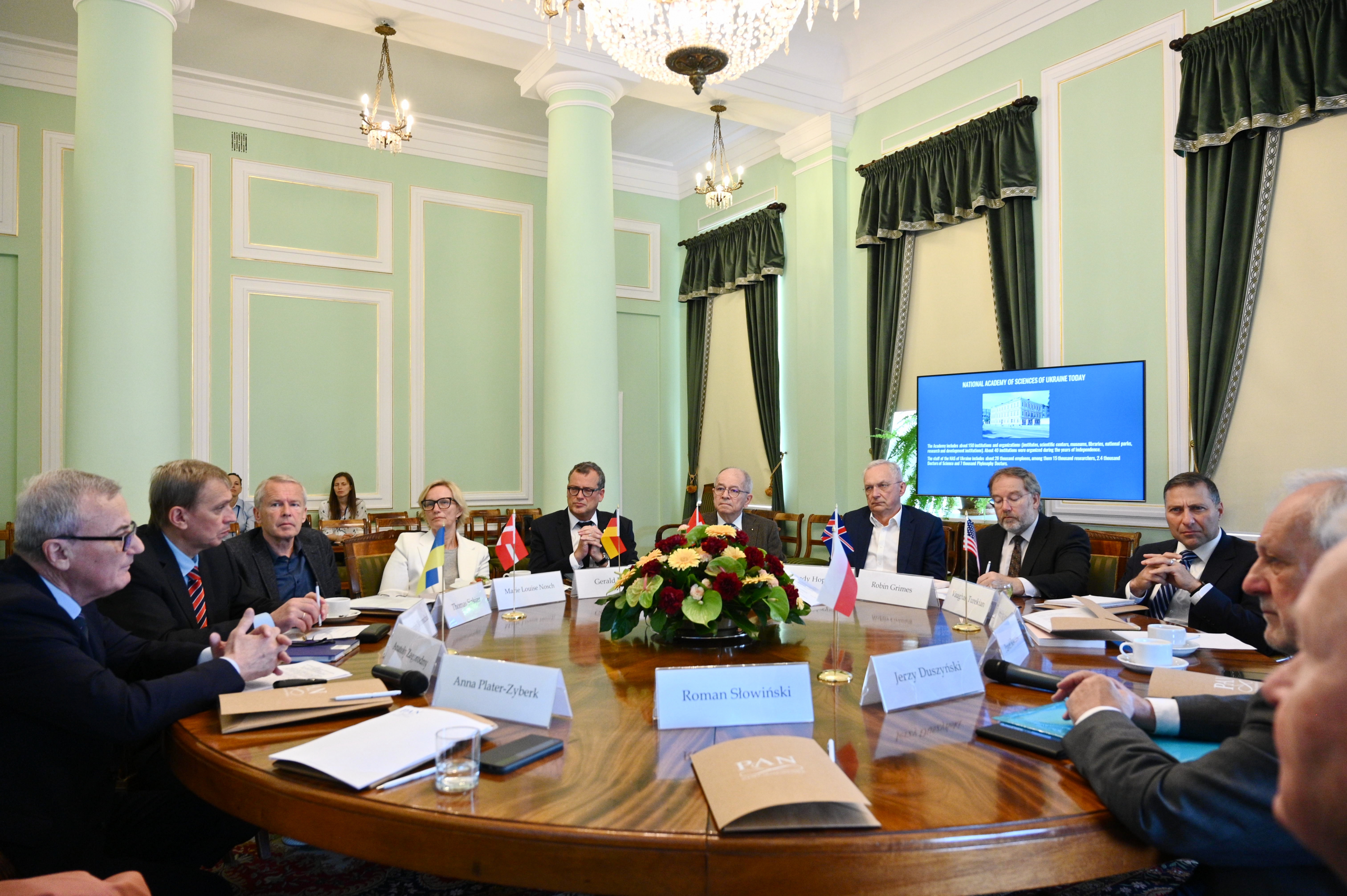
On Wednesday 6 April, the ALLEA Working Group European Research Area (ERA) met in Stockholm for its first in-person meeting. Representatives of European Academies gathered at the premises of the Royal Swedish Academy as well as remotely to discuss the most pressing issues regarding a new ERA for Research and Innovation”.

The meeting was opened with a warm welcome and introduction by the Working Group Chair, Professor Kerstin Sahlin (Royal Swedish Academy of Sciences & Royal Swedish Academy of Letters, History, and Antiquities). This was followed by a statement from Professor Volodymyr Radchenko, member of the Working Group who joined the meeting remotely from Kiev on behalf of the National Academy of Sciences of Ukraine. In his statement, Professor Radchenko thanked the European Academies for their ongoing support to Ukrainian researchers fleeing the war and lauded them for taking a clear stance in condemning the Russian invasion, while also calling for more support of researchers and research infrastructures within Ukraine*.

After Professor Radchenko’s moving intervention, ALLEA Board Member Maarten Prak (KNAW) stressed how academic cooperation has always been crucial in the creation of a shared (European) culture and identity, yet he also highlighted that the current war clearly shows that there is still a long way to go in overcoming major obstacles and challenges. This proves how important it is to further build and strengthen a European Research Area which works to promote peace, research integrity, academic freedom, and equal opportunities for all.

ALLEA participates in the ongoing ERA Forum Experts Group meetings as a stakeholder representing the European Academies of Sciences and Humanities. The ERA Forum is co-chaired by the European Commission and EU Member States. Associated countries and representatives of seven types of stakeholders are invited to join the meetings. The Forum has been established to implement and coordinate the objectives of the ERA, particularly by implementing the jointly developed ERA Policy Agenda.

The group generally welcomed the initiative for a stronger ERA and expressed their appreciation that the research community is actively involved in the process of drafting and commenting new policies. Among others, they stressed the importance to focus on excellence, young researchersmobility and career development, stopping the brain drain in some central and eastern European countries, international cooperation beyond Europe, research assessment and evaluation, and the opportunities for open science and its potentially dangerous impact on young researchers, the Humanities, Arts and Social Sciences, as well as research integrity.

In the months to come, the outcomes of this meeting will further inform ALLEA’s feedback to the European Commission. The results of this process are expected towards the end of the year.

Members of the ALLEA Working Group European Research Area gathered in Stockholm on 6 April 2022.

ALLEA is very grateful to the Working Group members for their active participation, and we also wish to thank the Royal Swedish Academy of Sciences and the Royal Swedish Academy for Letters, History and Antiquities for hosting this meeting and the following dinner. Everyone expressed their excitement of meeting in person again and look forward to shaping the development of a new ERA for Research and Innovation on behalf of the European Academies.  

For more information visit the webpage of ALLEA’s Working Group European Research Area (ERA)


*See ALLEA’s European Fund for Displaced Scientists and the response by the scientific community in support of Ukraine for more information on how Ukrainian research and researchers are being supported in and outside Ukraine.


“We Have to Be Ready to Support Ukrainian Researchers as Long as Necessary”


Professor Paweł Rowiński. Photo: Jakub Ostalowski


Since the Russian invasion of Ukraine shocked the world on 24 February 2022, and the humanitarian crisis that hence unfolded, more than 10 million people have been forced to flee their homes, with an estimated 6.5 million internally displaced within Ukraine, and an estimated 4 million fleeing to neighbouring countries, including Poland, Romania, Moldova and Hungary.

Of these neighbouring countries who have received Ukrainian refugees, Poland has received the largest amount, currently estimated at 2.3 million people. Thousands of them are scientists and researchers who have been forced to seek for a safe environment to continue their academic work. The international scientific community has mobilised fast to provide them with immediate assistance. Among them, the Polish Academy of Sciences (PAS), an ALLEA Member Academy, has set up a support programme with research stays specifically designed for scientists who have been displaced by the war.

“We do feel that systemic solutions are needed at this stage,” says Professor Paweł Rowiński, Vice President of the Polish Academy of Sciences and member of the ALLEA Board. He shares the current experience of the PAS in providing support to displaced scholars.


“The involvement of the civil society, non-governmental organisations and local governments over the last weeks has been impressive.”


Question: Almost 2.3 million refugees have crossed the Ukrainian-Polish border in the last weeks. How would you describe the general situation in Poland in relation to the arrival of Ukrainian refugees?

Paweł Rowiński: The current migration crisis poses a great challenge for Poland. However, the involvement of the civil society, non-governmental organisations and local governments over the last weeks has been impressive. In order to cope with this humanitarian crisis regular citizens have opened up their homes and invited guests from Ukraine to their spare bedrooms or living rooms. In the first weeks of war, when Polish border with Ukraine has been crossed by over 100.000 people daily, many Poles have been serving as ad hoc volunteers, preparing sandwiches or serving home-made soups on railway stations. Now, after over a month of war, the support is becoming more and more professional; however, many activities are still performed by regular citizens on a voluntary basis. We do feel that systemic solutions are needed at this stage.


Q.: Can you share the steps taken by the Polish Academy of Sciences to provide assistance to displaced Ukrainian scholars? 

P.R.: On March 1st the Polish Academy of Sciences has signed a new MoU with the National Academy of Sciences of Ukraine. On the same day, within the framework of this agreement, we have launched a call for proposals to support 3 to 6 month stays of Ukrainian scholars at the Institutes of the PAS. Note that under the umbrella of the PAS operate 70 research institutes. The funding was available to all researchers after their PhD regardless of their nationality, provided that before the war they had been employed at a Ukrainian scientific institution. Our budget allowed us to fund 50 scholars and it ran out within 4 days. We have therefore reached out to all international organisations the PAS is a member of to ask for additional support. We have received positive feedback from many organisations which either made a donation to our programme or waived our membership fees for 2022, allowing us to allocate our contributions to Ukrainian scholars at risk.

Thanks to the support of various institutions (see list below) we were able to support additional 20 scholars. All donations have been used in their entirety to support Ukrainian scholars. Simultaneously, many academies around the world reached out to us with their offers of help. We are truly grateful to our friends and partners around the world for their initiatives supporting Ukrainian scholars at risk. Thanks to our partnership with the National Academies of Sciences from the U.S. we are now able to continue the support scheme for displaced Ukrainian scholars at the PAS.

I need to also emphasize other ways of support. For example, the PAS Conference Centre in Jablonna offered free meals for more than 100 refugees from Ukraine. Our botanical garden and museums offered free access to all Ukrainian citizens. Most of our institutes proposed their own ways of support. Many of them prepared free accommodation for numerous researchers, and some researchers were also offered various kinds of contracts. One of our institutes – the Institute of Low Temperature and Structural Research in Wrocław – is in the process of transferring all the resources of three Ukrainian institutes to its own server in Poland. It will allow B.Verkin Institute for Low Temperature Physics and Engineering of the National Academy of Sciences of Ukraine in Kharkov, O.Ya. Usikov Institute for Radiophysics and Electronics and Institute of Radio Astronomy of the National Academy of Sciences of Ukraine to continue their operation. Moreover, two serious Ukrainian journals: Journal of Mathematical Physics, Analysis, Geometry and Fizika Nizkikh Temperatur – Low Temperature Physics are continuously issued by that institute in Wroclaw. Plenty of alike initiatives are born in other PAS institutes.


“Right now we need financial support to provide basic living conditions for scholars who have fled Ukraine.”


Q.: Has the PAS received any support from EU-level institutions? Which other scientific organisations have you been collaborating with and how?

P.R.: We did not receive any support from EU-Level institutions. We hope that the EU will follow soon with providing support to all Ukrainian scholars at risk. Many academies set up different support schemes. For example Academia Sinica from Taiwan invited students and scholars from Ukraine for up to 6 month stays in Taiwan while the U.S. National Academy of Sciences has provided additional budget for scholars hosted in the Institutes of the PAS. Thanks to the partnership with our friends from the US. the support scheme launched in cooperation with the National Academy of Sciences of Ukraine is again operational. We are also promised to receive additional funds from the Polish government but it is yet to materialise and for now we need to wait.


Q.: What type of help is most needed right now, and what would be the best way for the international scientific community to support the actions being taken by the Polish Academy of Sciences?

P.R.: Right now we need financial support to provide basic living conditions for scholars who have fled Ukraine. We have to remember however that many scholars, including male scholars aged between 18-60 years old, cannot leave the country. So we need to find a way to support their work in Ukraine. Many Ukrainian science institutions advocate for remote/online opportunities for their students and staff – open training courses, virtual labs, mentoring programmes, etc.


Q.: Given the current state of affairs, how much longer do you foresee that the PAS will be able to provide this support to scholars displaced by the war?

P.R.: The budget from the U.S. National Academy of Sciences allows to fund ca. 150 stipends for 3 months, or fewer stipends but for longer periods. At this moment in time we are not able to predict when Russia will stop the attack on Ukrainian civilians, schools, universities, hospitals, etc. We have to be ready to support Ukrainian researchers as long as necessary. Not to mention the investments that will have to be made to restore Ukrainian science base after the war.


Q.: What recommendations can you provide from the experience of the PAS to other scientific institutions setting up support schemes for displaced scholars?

P.R.: Stay in touch with the community under threat. Build your programmes in cooperation with the institutions affected by war. Act fast. Focus on people but don’t forget about the infrastructure.


About Paweł Rowiński

Professor Paweł Rowiński holds a degree in mathematics by the University of Warsaw, and doctoral and habilitation degrees in earth sciences with a specialisation in geophysics by the Institute of Geophysics, Polish Academy of Sciences.

Professor Rowiński has published more than 170 refereed scientific publications. He serves as Associate Editor for several prominent scientific journals and publications. In 2018 he was elected the Vice Chair of the Europe Division Leadership Team of the International Association for Hydro-Environment Engineering and Research IAHR. Since May 2015, he serves as Vice-President of the Polish Academy of Sciences.


The following institutions have provided support for the Polish Academy of Sciences to continue assisting scholars in need:

  • International Astronomical Union
  • International Centre for Mechanical Sciences
  • International Geographical Union
  • Nuclear Physics European Collaboration Committees
  • International Union of Geodesy and Geophysics
  • International Committee of Historical Sciences
  • International Union of Forest Research Organization
  • International Union of Biochemistry and Molecular Biology
  • International Astronautical Federation
  • International Association of Byzantine Studies
  • The Alloy Phase Diagram International Commission
  • Scientific Committee on Oceanic Research
  • International Federation for Structural Concrete
  • Permanent International Committee of Linguists
  • International Institute of Noise Control Engineering
  • International Numismatic Council
  • International Union of Nutritional Sciences
  • International Commission of Military History
  • International Union of History and Philosophy of Science


ALLEA has partnered with the Breakthrough Prize Foundation to support scholars and scientific institutions impacted by the war in Ukraine, learn more about this initiative here. You can also read about other support schemes by European academies and ALLEA partners on our portal Support for Ukraine.


Breakthrough Prize Foundation Partners with ALLEA To Support Scientists Forced to Leave Ukraine

Foundation Dedicates $1.5 Million from a $3 Million Pledge for Impacted Scientists to ALLEA, the European Federation of Academies of Sciences and Humanities, for Distribution Via European Academic Institutions

The Breakthrough Prize Foundation announced that it is extending its existing partnership with ALLEA, the European Federation of Academies of Sciences and Humanities, with a donation of funds to support scientists and scientific institutions impacted by the war in Ukraine.

As part of a $3 million fund pledged to this cause, the Foundation will dedicate $1.5 million to ALLEA, who will encourage academic institutions in Europe to apply for funding support to host scientists forced to flee from their homes. ALLEA will also assist affected Ukrainian universities, academies and research institutes in maintaining their operations and rebuilding Ukrainian scientific facilities and research collaborations in a safe, free and independent post-war Ukraine.

The millions of civilians displaced by the conflict already include many scientists, and a number of research centres, including the well-known Kharkiv Physics and Technology Institute, that have also suffered damage.


The programme

The programme, which is set to launch this spring, has two main aims. The first is to provide immediate assistance for scholars who have already left or will soon leave the country, so that they can continue their research in a safe environment. The second aim is to facilitate support to Ukrainian institutions to continue their operations, rebuild their research networks, and foster the return of scientists to Ukraine after the war.

Academic institutions from Council of Europe member states that are accepting Ukrainian refugees will be able to apply for up to one year’s funding support. This will be used to finance new or existing positions for postdoctoral researchers, as well as assistant, associate, or full professors affiliated with Ukrainian institutions. ALLEA will launch a Europe-wide call for these applications and work with its more than 50 member academies to widely disseminate it throughout the European research community.

The program will be spearheaded by an independent selection committee composed of senior officials from science organisations across Europe. This committee will cooperate with the hosting institutions to conduct the selection of applicants and supervise funding decisions to support Ukrainian research institutions.

While assisting scientists displaced outside Ukraine is an urgent task, it is also crucial that relief efforts avoid exacerbating “brain drain” from the country. To this end, the programme will encourage hosting institutions to prepare measures that continue to support their academic guests when it becomes realistic for them to return to their home institutions in Ukraine. To add to these efforts, ALLEA will reserve 20% of the overall programme funds to support actions that help maintain and rebuild Ukrainian scientific facilities after the war, as well as initiatives that foster reintegration of researchers after their return home.

“We are pleased to be working with ALLEA to expedite vital humanitarian relief to scientists displaced by the war in Ukraine,” said Dr. Pete Worden, Executive Chairman of the Breakthrough Prize Foundation.  “Science is an international endeavor, and we hope that by working together we can make a real difference to our colleagues who have been forced to leave Ukraine.”

“We are very thankful for the generous funding of the Breakthrough Prize Foundation and will work closely with them and European academies to set up a Europe-wide fellowship programme that we hope will motivate more colleagues to take action and help. Science is a community of reason, collaboration, and perseverance. In these dark times, we have the responsibility to join forces and find safe workspaces for scholars fleeing from Ukraine and support them to thrive and continue their research without harm and fear,” said Professor Antonio Loprieno, President of ALLEA.

Further details about the funding will be soon available at:

https://allea.org/european-fund-for-displaced-scientists/


An Ongoing Partnership

The $1.5 million donation to support this programme is a new initiative in the ongoing partnership between the Breakthrough Prize and ALLEA which pursues their shared goal of promoting science. Each year, ALLEA helps to facilitate nominations for the annual Breakthrough Prize among its members.


# # #


About the Breakthrough Prize Foundation

The Breakthrough Prize Foundation is a non-profit organization dedicated to recognizing the world’s great scientists, advancing cutting-edge scientific research, and helping to create a knowledge culture in which everybody, especially the next generation, can be inspired by the big questions of science.

The Breakthrough Prize recognizes the world’s top scientists in the fields of Life Sciences, Fundamental Physics and Mathematics. Each prize is $3 million. The Breakthrough Junior Challenge is an annual global video competition for students to inspire creative thinking about science.

More information can be found at:

https://breakthroughprize.org/

https://www.breakthroughjuniorchallenge.org/


About ALLEA

ALLEA is the European Federation of Academies of Sciences and Humanities, representing more than 50 academies from over 40 countries in Europe. Since its foundation in 1994, ALLEA speaks out on behalf of its members on the European and international stages, promotes science as a global public good, and facilitates scientific collaboration across borders and disciplines. Jointly with its Member Academies, ALLEA works towards improving the conditions for research, providing the best independent and interdisciplinary science advice, and strengthening the role of science in society. In doing so, it channels the intellectual excellence and experience of European academies for the benefit of the research community, decision-makers and the public.


More information can be found at:

www.allea.org

For media inquiries about the Breakthrough Prize:

media@breakthroughprize.org

OR

Rubenstein Communications, Inc.

New York, New York

Janet Wootten

jwootten@rubenstein.com / +1-212 -843-8024

Kristen Bothwell

kbothwell@rubenstein.com / +1-212-843-9227


For media inquiries about ALLEA:

Susana Irles

irles@allea.org

Tel: +49 (0)30 206 066-507

ALLEA Joins InsSciDE Conference on Science Diplomacy

ALLEA was invited to join InsSciDE’s third open conference, held on 22-24 March at the premises of the Lisbon Academy of Sciences and the Universidade Nova de Lisboa. This year’s InsSciDE’s conference focused on the Global South and explored crucial themes in Europe’s relationships to the many emergent poles of scientific expertise and influence. Different perspectives were prompted on how a new vision and practice of science diplomacy may be critical to bridging the Global North and South interests and contribute to finding common, albeit diverse, solutions. 

On day 1, the focus of the conference was on the role of Academies of Science in science diplomacy to delineate the role of such academies as science diplomacy organisations, particularly concerning their international involvement and role in asserting science diplomacy. The four sessions throughout the day engaged a diverse group of scholars and professionals to chart Academies’ international action in the present and as far back as the 18th century.

Daniel Kaiser presents a brief introduction of ALLEA and its involvement in Science Diplomacy at the Lisbon Academy of Sciences.

ALLEA’s Scientific Policy Officer Daniel Kaiser joined session 3 as a moderator and session 4 as a panelist, where he delivered a brief presentation on the history of ALLEA and its work on science diplomacy throughout the years. In his presentation, Daniel Kaiser emphasised that ALLEA “strives to advance the role of Science Diplomacy in Europe, promote a global approach to science and research, and provide an international structure for enhanced cooperation on global challenges as well as high-quality independent science advice for policy.”

On day 2 of the conference, diverse stakeholders came together to discuss the entanglements between science diplomacy and four topics that the conference deemed as central to future action: Open Science, Anthropocene, Technoscience and Innovation Diplomacy, New Actors and a New Definition of Science Diplomacy. ALLEA was represented by its President, Professor Antonio Loprieno, who joined the morning roundtable on Open Science. He briefly presented the work of ALLEA’s Open Science Task Force and introduced ALLEA’s involvement with the UNESCO Recommendation on Open Science.

President Antonio Loprieno virtually joined InsSciDE to introduce ALLEA’s activities on Open Science.

Speaking on the changes needed for succesful Open Science, Professor Loprieno remarked that “the move to full open access must be accompanied by concurrent reforms of the systems for research evaluation and career progression; it will thus require a fundamental re-evaluation of the responsibilities of all the different actors in the research system. Particular attention must be paid to the impact on early-stage researchers, those from disadvantaged institutions and communities, and those working in specialist disciplines.”

On the third and final day of the conference, the focus of discussion was on InsSciDE’s historical case studies from the forthcoming book of Harmonized Case Studies. In this session, case study authors, invited experts and public attendees engaged with the research to identify cross-cutting themes and present-day applications for teaching, training and everyday practice.

You can read the full programme of the three-day conference here or visit the conference’s website here.

“Science Communication Is How Society Talks About Science”

Professor Massimiano Bucchi

The increasing amount and spreading capacity of online disinformation related to critical sociopolitical issues, such as vaccines or climate change, coupled with the ongoing global health crisis of the Covid-19 pandemic have all made it painfully clear that we need to become more adept at communicating science within society. Seeking to dissect the importance of increasing and improving communication channels between science and society, we talked with Massimiano Bucchi, Professor of Sociology of Science and Communication, Science and Technology at the University of Trento and one of the leading European scholars on the science of science communication.

Professor Bucchi, together with his colleague Brian Trench, defines Science Communication as “the social conversation(s) around science” and he explains in more detail what this definition encompasses. While he certainly believes that organisations should devote more resources training experts in science communication, he also believes that there should be an increased focus on “developing communication and engagement activities that are grounded on the  theoretical and empirical literature about science communication.”


Unfortunately, a representation of the public as hostile, sceptical and ignorant is still widespread among policy makers and experts, supporting a paternalistic and authoritarian vision of science communication and of science in society.


Question: You have been working in the field of science communication for many years, and you are now the Director of the International Master programme SCICOMM at the University of Trento. Where did your interest in the field of science communication originate from?

Massimiano Bucchi: As a sociologist, I think it is not possible to understand contemporary societies without taking into account the increasingly relevant role of science and technology. I am interested in science communication as one of the keys to study science in society dynamics and their transformations.


Q.: In a recently published essay you co-authored with Brian Trench, you define science communication as “the social conversation(s) around science.” Can you briefly elaborate on this definition?

M.B.: Science communication as social conversation is a broad, inclusive definition: science communication is “how society talks about science”, including everyday stories about science on radio programmes, in social networks, in artists’ studios, in cafés and bars. Add to that the novels, pop and rock songs, theatre and comedy performances that give presence to science in public and popular culture and in everyday life.

This view emphasizes a mode of interactive communication that is set in contrast with dissemination or other hierarchical modes, and a concept that embraces all that is being said on a certain matter in society. Our inclusive definition of science communication not only validates activities such as science cafés and science comedy that are oriented to pleasure, but also recognises as part of the wider practice of science communication the ‘spontaneous’ use in popular culture of images and ideas from and related to science.


“In many cases, communication by scientific experts (and sometimes even by research institutions) has been guided mostly by personal goodwill and inclination, without much consideration given to the extensive literature available on this topic, to data on public perception and audience intelligence .”


Q.: Why do we need experts specialising in science communication?

M.B.: We certainly need resources trained in science communication, particularly for research organisations. The point is not so much teaching practical science communication skills, or training science journalists (for whom, unfortunately, there are very few jobs) but developing communication and engagement activities that are grounded on the now vast and profound theoretical and empirical literature about science communication, its actors, processes and audiences.


Q.: In a 2010 commentary piece, you argued that science communication “is not (yet) established as an academic discipline but that [it] could emerge as a discipline with strong interdisciplinary characteristics.” Do you think this has changed over the last decade?

M.B.: Yes, the field has become more structured and established. But the importance of high quality science communication, which cannot be improvised or left to the individual talent or good will of natural scientists or general staff has still to be understood in many research and policy organisations.


I am not sure misinformation is the main challenge, at least in the narrow way in which it is usually defined through terms like “fake news”. The broader, central challenge is the quality of science communication: how to improve it, how to reward it, how to distinguish it.”


Q.: What do you think the Covid-19 pandemic has demonstrated about what is done right, and what still needs to improve in the way we communicate science? What would you say is the main impact that the pandemic has had in the field of science communication?

M.B.: We have been through the most spectacular science communication experiment in human history. Several international studies found citizens to be in general attentive to communication about the pandemic provided by health institutions and mostly sceptical of social media, with trust in institutions playing a key role. 

The unprecedented exposure of expert sources across the media has found many institutions unprepared to deal with such responsibility. In many cases, communication by scientific experts (and sometimes even by research institutions) has been guided mostly by personal goodwill and inclination, without much consideration given to the extensive literature available on this topic, to data on public perception and audience intelligence 


Q.: What are effective ways in which science communicators can contribute to the fight against scientific disinformation (i.e. on topics like anti vaccination or climate change denialism)? 

M.B.: I am not sure misinformation is the main challenge, at least in the narrow way in which it is usually defined through terms like “fake news”. The broader, central challenge is the quality of science communication: how to improve it, how to reward it, how to distinguish it from low quality, improvised science communication with unclear aims and limited intelligence of the context. Another long-term, educational challenge is building awareness for the quality of information and its value and cost (not just about science) among citizens.

Unfortunately, a representation of the public as hostile, sceptical and ignorant is still widespread among policy makers and experts, supporting a paternalistic and ultimately authoritarian vision of science communication and of science in society. As the literature from the past two decades clearly shows, this representation largely reflects unfounded prejudices.


Q.: What advice do you have for experts that wish to go in the science communication field? 

M.B.: Study and read broadly: history of science, sociology, psychology, literature.
 

Q.: Many creative formats, such as Nerd Nite, Pint of Science, or Long Night of Museums have been established to communicate science in a fun and innovative way, mixing knowledge with entertainment. What is your opinion of such formats? 

M.B.: The idea that the format shapes or guarantees the quality of the content today is very popular but probably misleading. Some of the content hosted within such formats may be more interesting or fun. However, we should look at the long-term consequences of such formats in terms of audience perception. Do they convey an idea that science – and science communication – can be easily and quickly improvised? This may not be a very constructive message, particularly for younger generations. 


Professor Massimiano Bucchi will be one of the panelists at this year’s Future of Science Communication Conference 2.0, organised by Wissenschaft im Dialog in partnership with ALLEA. The conference will take place in Brussels on 26 April 2022.


About Massimiano Bucchi

Massimiano Bucchi (Ph.D. Social and Political Science, European University Institute, 1997) is Full Professor of Science and Technology and Society and Communication, Science and Technology at the University of Trento and Director of the International Master  programme SCICOMM.

He has been visiting professor in Asia, Europe, North America and Oceania. Since 2018, he is director of the Master in Communication of Science and Innovation. He is the author of  several books (published in more than twenty countries) and papers in journals such as Nature, Science, PLOS ONE. Among his books in English: Science and the Media (Routledge, 1998); Science in Society (Routledge, 2004); Beyond Technocracy (Springer, 2009); Handbook of Public Communication of Science and Technology (2 eds. 2008, 2014, with B. Trench, Routledge) and the 4 vols. anthology The Public Communication of Science (Routledge, 2016). He has been the editor of the international peer reviewed journal Public Understanding of Science (Sage, 2016-2019) and regularly contributes to newspapers and TV programmes.

Recently published articles by Massimiano Bucchi

To boost vaccination rates, invest in trust

Rethinking science communication as the social conversation around science

Public Perception of COVID-19 Vaccination in Italy: The Role of Trust and Experts’ Communication


Czech Translation of ‘Fact or Fake? Tackling Science Disinformation’ is Now Available

ALLEA publishes the Czech version of Discussion Paper #5 ‘Fact or Fake? Tackling Science Disinformation’.

In March 2022, ALLEA published the Czech translation of its Discussion Paper ‘Fact or Fake? Tackling Science Disinformation’, which was translated in partnership with the Czech Academy of Sciences. The Discussion Paper was first published in May 2021.

ALLEA Discussion Paper ‘Fact or Fake? Tackling Science Disinformation’

The paper describes and discusses the problems and the consequences of science disinformation in three areas of concern, namely climate change, vaccines and pandemics, and what we can do to increase awareness and minimise harm caused by the spread of disinformation. It does so by highlighting the societal value of the scientific method, research integrity, open science communication and the resulting trust in science. The underlying question is how to protect the pillars of science from the severe consequences of disinformation while maintaining openness and democratic principles. The paper identifies underlying cognitive, social and economic mechanisms that amplify the spread of disinformation and evaluates potential solutions, such as inoculation, debunking, recommender systems, fact-checking, raising awareness, media literacy, and innovations in science communication and public engagement.

You can read the Czech translation here.

ALLEA and ENYAs Join Forces at Upcoming Annual Meetings in Brussels

The landscape of European National Young Academies (ENYAs) is rapidly evolving, with new alliances for connecting young scientists and scholars being established and expanded throughout Europe. ALLEA welcomes these developments and acknowledges that combining efforts in shaping the European research ecosystem is crucial for researchers of all generations to flourish.

Antonio Loprieno, President of ALLEA, already delivered a talk at the (online) ENYA annual conference in 2020, and ALLEA and the ENYAs now are seeking to further intensify their collaboration. After two years of online meetings, delegates from both networks will get together at the Academy Palace in Brussels on 11 May, as part of the ALLEA General Assembly and the ENYA Annual Meeting.

Throughout Europe, we can find examples of national Young Academies who have quickly realised their potential and can in many ways be considered role models in guiding the way with innovative formats and ideas. In ALLEA we look forward to an open exchange on how we can work together towards a robust and dynamic academic community.” says Antonio Loprieno.

Shared programme parts will include networking opportunities and round-table discussions on topics of international and intergenerational interest. Together, the participants will explore the role of academies in supporting a fair and balanced assessment of research careers, the transition towards a climate sustainable academic system, and diversity and inclusivity of science advice mechanisms, among others.

The parallel meeting of ALLEA and the ENYAs means that a large and diverse group of representatives of the European scientific community will be gathered in Brussels.”, says Sarah Verhulst (professor Information Technology, Ghent University and internationalisation board member of the Young Academy of Belgium), “This makes it an excellent opportunity to learn from each other and to set up a dialogue on topics that concern us both as academics and engaged citizens.

In recent years, ALLEA has intensified its collaboration with young academies. For instance, in 2019, ALLEA launched a strategic partnership with the Global Young Academy, which started with joint projects on research assessment models and the future of peer review. In 2020, ALLEA accepted its first young academy, Die Junge Akademie (the German Young Academy), which is currently leading the project ‘Climate Sustainability in the Academic System’.

Statement by the ALLEA Board on the Suspension of the Russian Academy of Sciences and the National Academy of Sciences of Belarus

The Board of ALLEA has released a statement on the suspension of the Russian Academy of Sciences and the National Academy of Sciences of Belarus. The statement reads:

In light of the unprovoked invasion of Ukraine initiated by the Russian government and supported by the Belarusian government, ALLEA, the European Federation of Academies of Sciences and Humanities, has decided to suspend the membership of the Russian Academy of Sciences and the National Academy of Sciences of Belarus.

ALLEA restates the European Academies’ commitment to academic freedom and human rights and hopes that efforts to defend democracy and the rule of law will eventually prevail. Conscious of its duty to uphold these fundamental values and giving practical expression to the moral outrage of the academic community, the ALLEA Board decided to enact this extraordinary measure, in line with international sanctions against institutions in the two states.

The Board is aware that this step might have an unintended impact on individual scientists and international scientific collaboration, but it concludes that the ability of these academies to act autonomously and independently from their governments has come into question – and therefore warrants this decision targeting only the institutional level. This suspension will be reconsidered by ALLEA member academies in their upcoming General Assembly on 11 May 2022.

The full statement is available here. ALLEA released an initial statement in support of Ukraine, its citizens and academics on 25 February. A list of resources, including funding and hosting tools aimed at helping Ukrainian scientists, can be found on this webpage.