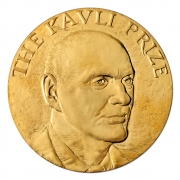
Research in observational X-ray astronomy, inventions of aberration-corrected lenses in electron microscopes, and the discovery of sensory receptors for temperature and pressure win USD 3 million Kavli Prizes
The Norwegian Academy of Science and Letters, Member Academy of ALLEA, announced the 2020 Kavli Prize Laureates in the fields of astrophysics, nanoscience and neuroscience today. This year’s Kavli Prize honours scientists whose research has transformed our understanding of the very big, the very small and the very complex. The laureates in each field will share USD 1 million.
This year’s Kavli Prize Laureates are:
Kavli Prize in Astrophysics: Andrew Fabian (UK)
Kavli Prize in Nanoscience: Harald Rose (Germany), Maximilian Haider (Austria), Knut Urban (Germany) and Ondrej L Krivanek (UK and Czech Republic)
Kavli Prize in Neuroscience: David Julius (US) and Ardem Patapoutian (US)
“The 2020 Kavli Prize Laureates represent truly pioneering science, the kind of science which will benefit humanity in a profound way, inspiring both current and future generations,” says Hans Petter Graver, president of The Norwegian Academy of Science and Letters.
https://allea.org/wp-content/uploads/2020/05/FredMedal_announcement.jpg10001200alleaadminhttps://allea.org/wp-content/uploads/2019/04/allealogo-1-300x83.pngalleaadmin2020-05-27 17:45:532020-05-27 17:48:20The Norwegian Academy of Science and Letters announces the 2020 Kavli Prize Laureates
Climate Change Education initiatives in addition to looking at causes of climate change need to expand to focus more on mitigation and adaptation, and help students understand that mitigation is not only crucial for future generations but is also essential for current disadvantaged populations on whom climate change is having the biggest impact.
The report’s further headline recommendations include amongst others:
Existing high-quality examples of Climate Change Education resources for different age groups should be collated so that educators throughout Europe could use them in different educational settings.
The development, implementation and assessment of high-quality professional development programmes for teachers and the impact of these professional development programmes on the teaching and learning about climate change should be focused on.
More local initiatives that are fully contextualised and address the needs of communities should be developed.
Climate Change Education resources and programmes should adopt more solution-oriented and collective action approaches to climate change.
Cliona Murphy, chair of the working group who wrote the report commented:
“It is encouraging to see that there is a myriad of educational resources available to support teachers in teaching about climate change. However, it is also apparent that climate change education faces numerous challenges that require urgent actions, actions that will require significant financial support. It is essential therefore that a funding framework, perhaps similar to those of the highly successful FP6 and FP7 EU funding Frameworks, is established to support research in and the development of effective approaches for teaching and learning about Climate Change.”
The online survey was administered by ALLEA and shared with its membership of more than 50 sciences academies across Europe, which were encouraged to further reach out to relevant universities, education providers and outreach organisations that address climate change education in their work.
Thus, this scoping survey maps a sample of current Climate Change Education initiatives in a non-exhaustive way, to identify commonalities, gaps, and best practices. While the sample in the current study is relatively small, it provides informative and relevant findings that are particularly timely taking cognisance that climate change is one of the key challenges identified by the European Commission in their 2020 Work Plan among others. Key findings from this exercise aim to inform a more representative large-scale survey of Climate Change Education initiatives throughout Europe.
https://allea.org/wp-content/uploads/2020/05/climate_change_education_post.jpg466700alleaadminhttps://allea.org/wp-content/uploads/2019/04/allealogo-1-300x83.pngalleaadmin2020-05-27 13:45:302020-05-28 11:56:50Climate Change Education should focus more on mitigation, adaptation, and climate justice
ALLEA is pleased to announce a new project on international transfer of health data for research. The initiativeis the first tripartite collaboration between ALLEA, EASAC, and FEAM and will examine various aspects of data sharing in health research with particular attention to the implications of the EU General Data Protection Regulation (GDPR).
Data sharing is an essential part of modern research. Within medical research, pooled data on individuals are often needed to ensure sufficiently large study numbers, and to replicate findings and identify complex pathways. The EU General Data Protection Regulation 2016/679 (GDPR) has harmonised legislation on the processing of personal data within the European Economic Area (EAA, which comprises EU member states plus Iceland, Liechtenstein, and Norway). However, substantial challenges remain for data sharing outside of the EEA. In particular, there is a lack of non-consent based transfer mechanisms that can be used for sharing personal data with public institutions in other countries such as the USA.
This project aims to:
illustrate the value of multinational medical research
compare the potential of different solutions for ensuring sufficient transfer of health data outside of the EEA;
inform the European Institutions in the forthcoming evaluation of the GDPR, especially with regard to the transfer of personal data outside of the EEA (chapter V) so as to improve procedures for international transfer of high quality, personal research data, safely and effectively.
The project will exemplify how data sharing adds value to EU research and its translation to policy, innovation and practice, and it will clarify principles and options for reform taking into consideration the legal, ethical, and in particular privacy implications.
https://allea.org/wp-content/uploads/2020/05/international-health-data-transfer.png5011200alleaadminhttps://allea.org/wp-content/uploads/2019/04/allealogo-1-300x83.pngalleaadmin2020-05-04 12:45:542021-04-08 13:30:14New project: international transfer of health data for research
EU and national authorities need to act now to support the health of migrants, according to European academy networks ALLEA and FEAM.
In a joint statement published today, European academy networks ALLEA and FEAM call on EU and national authorities to undertake crucial actions to support the health of migrants. This situation has become more critical as the lack of basic services and overcrowded conditions in refugee camps start to sound alarms all over Europe, especially during the coronavirus crisis.
The statement reviewed evidence showing that, in contrast to previous concerns, the transmission of communicable diseases from migrants does not appear to be a substantial problem. However, evidence also shows that migrants and other vulnerable populations are at high risk for several non-communicable and communicable diseases, including COVID-19.
“During this terrible crisis the issue of migrant health has been almost completely forgotten in Europe,” says Professor Luciano Saso, Vice-Rector for European University Networks of Sapienza University of Rome. “Forcibly displaced migrants are still struggling to reach Europe, exposing themselves to COVID-19. The incipient economic crisis threatens to further reduce the resources allocated by the EU to face migrant health issues.”
Academies recommend wider and easier access to healthcare services for forced migrants, and at least basic and emergency healthcare for irregular or undocumented migrants. Early access to healthcare may also lead to cost-savings for host countries.
According to Professor Alfred Spira, a member of the French Academy of Medicine,
“All international and European legal instruments recognise the right of everyone to the enjoyment of the highest attainable standard of physical and mental health, and all EU Member States should act to allow access to these basic human rights for everyone, including migrants and refugees.”
The coronavirus crisis has provided a global opportunity to enhance the integration of migrants while addressing shortages of healthcare workers. The recommendations within this statement, though drafted before the COVID-19 outbreak began, have acquired new relevance as several countries such as Germany, the UK, the US and Australia are incorporating refugees with foreign qualifications to address shortages in their health workforce.
The document concludes that reliable, validated and comparable data across countries and regions is the key element that will inform policies and confront myths around migration and health. Academies offer their support to lead the dialogue and scientific work to guide policies in this complex area.
This statement has been published at a time when developing evidence-based policies is particularly important. These recommendations, if transformed into policy, will enhance the protection of migrant health and of public health overall.
The recommendations from the academies include:
More scientifically validated data and frequent updates on migrant health should be produced and reflected in evidenced-based policies.
Increased cross-sectorial collaboration is needed to address current challenges in migrant health, also with a view towards tackling shortages of healthcare workers.
The health sector should be actively involved in policy discussions and actions on migration.
National health systems should allow for personal health information to be easily transportable and accessible while ensuring the protection of personal data.
This statement came about as the result of a joint ALLEA-FEAM conference on Migration, Health and Medicine held on 22 November 2019 in Brussels. Attended by stakeholders from research, policy and the civil society, this event strove to approach the topic of migrant health from a multidisciplinary, cross-sectoral point of view and in a coordinated fashion transcending national boundaries. This places the Academies of Sciences and Medicine in a critical position as they offer impartial scientific advice to policymakers for taking informed decisions.
https://allea.org/wp-content/uploads/2020/04/MH3.png294697alleaadminhttps://allea.org/wp-content/uploads/2019/04/allealogo-1-300x83.pngalleaadmin2020-05-04 10:40:272020-05-04 09:40:59Migrants need better access to healthcare, European Academies say
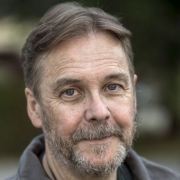
The Jury of ALLEA’s Madame de Staël Prize for Cultural Values paid tribute to Dutch cultural historian Joep Leerssen (University of Amsterdam), whose work has been quintessential in studying the emergence and the development of European national movements and stereotypes.
The award worth €10,000 is awarded by ALLEA, the European Federation of Academies of Sciences and Humanities, jointly with the foundation Compagnia di San Paolo as major supporter. The Prize recognises eminent scholars and intellectuals whose work represents a significant contribution to the cultural values of Europe and to the idea of European integration.
A comparatist by formation, Leerssen has devoted his career to analysing how Europe’s multinationality has been experienced in history, tracing Europe’s identity as an evolving multi-party discourse of perceptions and representations.
“European cultural history is an endlessly seductive labyrinth of mirrors, full of guilt, glory, and self-reflections”, he commented. “Poised between cosmopolitanism and nationalism, being European is a standing challenge to our creative intelligence as scholars and as citizens.”
Summarising the deliberations of the Madame de Staël Prize Jury, ALLEA President and Chairman of the Jury, Antonio Loprieno stated:
“Joep Leerssen is one of the world’s most remarkable figures in the critical analysis of ethnic and cultural stereotyping and in the comparative history of European nationalisms. In times when various forms of national rhetoric seem to play a prominent role in public discourse, we need the orientation provided by comparative cultural research in order to navigate the challenges faced by modern European societies. We are delighted to award the 2020 Madame de Staël Prize to one such renowned scholar and pay tribute to Professor Leersen’s remarkable scientific opus.”
Joep Leerssen is a cultural historian with training in Comparative Literature. He is currently Professor of European Studies at the University of Amsterdam, additionally holding a part-time research professorship at the University of Maastricht. In course of his professional career, he has held visiting appointments at Harvard, Cambridge, Göttingen, and the ENS (Paris), among others. He is a member of the Royal Netherlands Academy of Arts and Sciences.
With the funding attached to two major academic awards (the Spinoza Prize and a Royal Netherlands Academy Professorship), Leerssen set up the Study Platform on Interlocking Nationalisms in 2009-2010. Its flagship publication to date is the Encyclopedia of Romantic Nationalism in Europe (2015-18). Among his other books are Remembrance and Imagination (1996), De Bronnen van het Vaderland (2nd ed. 2011), Spiegelpaleis Europa (3rd ed. 2015), National Thought in Europe (3rd ed. 2018), Imagology and The Rhine: National Tensions, Romantic Visions (2007 and 2017, both co-edited with Manfred Beller), and Commemorating Writers in 19th-Century Europe (2014, co-edited with Ann Rigney).
Now in its seventh edition, the All European Academies Madame de Staël Prize honours outstanding scholarly and intellectual contributions to the advancement of Europe. Previous laureates include Mariana Mazzucato, Andrea Pető, Koen Lenaerts and others.
About Compagnia di San Paolo
Since 1563, we have been working out of Turin for the common good, with a focus on people. Our experience has taught us that the well-being of individuals is closely linked to that of their community. This is why, for us, the Sustainable Development Goals set by the United Nations are a valuable opportunity to contribute to the future of humankind at all levels: we have taken on this challenge and reorganised ourselves accordingly.
We have three main Goals: Culture, People and Planet, which can be achieved through fourteen Missions. We are committed to preserving and expanding our endowment in order to make contributions and develop projects working alongside institutions and in collaboration with our auxiliary bodies. This is our commitment, for the common good and for everyone’s future.
https://allea.org/wp-content/uploads/2020/04/JT_HeadshotByJohannesTimmermans.jpg396402alleaadminhttps://allea.org/wp-content/uploads/2019/04/allealogo-1-300x83.pngalleaadmin2020-04-24 09:55:322020-04-24 18:37:05ALLEA awards its 2020 Madame de Staël Prize to cultural historian Joep Leerssen
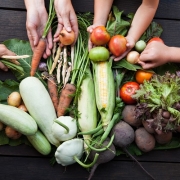
Food insecurity and sustainability are among the most significant global challenges facing humanity today. They are linked to a range of other challenges including malnutrition, biodiversity loss, climate change, soil degradation, and water quality.
The new SAPEAreport on “A Sustainable food system for European Union”addresses these questions and considers how a socially just and sustainable food system for the EU can be best defined and attained.
The reportwas coordinated by ALLEA, the European Federation of Academies of Sciences and Humanities, and was written by a multidisciplinary group of15 leading scientistsnominated by academies across Europe. This report was requested by the Group of Chief Scientific Advisors to the European Commission and it informs theirScientific Opinion, which contains a set of recommendations for the European Commission. The two documents were published recently.
We are talking with Peter Jackson, the chair of the SAPEA expert group who wrote the report. Peter Jackson is aProfessor of Human Geography at the University of Sheffield in the UK and co-Director of the Institute for Sustainable Food.
Transcript of the interview
Good morning.Today we will discuss food sustainability and a new SAPEA report on that topic.We are talking with Peter Jackson, the Chair of the SAPEA expert group who wrote the report.Peter is a Professor of Human Geographyat the University of Sheffield in the UK and the co-Director of the Institute for Sustainable Food.Peter, thank you for being here with us!And the first question I wanted to ask you is that the report saysthat a shift to a sustainable food system in Europe is necessary. Could you tell us why?
Yes, thank you. The current food system is widely acknowledged to be unsustainable, and that’s because of a number of reasons.The food system is a major contributor to greenhouse gas emissions, accounting for more than a third of total global greenhouse gas emissions.It’s also a major contributor to soil depletion, to soil quality impoverishment, and a rage of other ecological consequences, including the loss of biodiversity.
For all these reasons we think the food system is unsustainable.It’s also unsustainable in terms of food waste:as much of a third of the food we produce is lost to human consumption at various points along the supply chain.And lastly, in terms of food security, there’s been an alarming increase in the number of people needing access to emergency forms of food aid, such as food banks. So across all those criteria, it’s fair to say that the current food system is unsustainable.
And howcan we make this shift towards sustainability happen? What does evidence say about it?
Conventional approach to solving food system challenges is framed in terms of sustainable intensification.And that means using agri–tech and other scientific interventions to grow more food using less land and fewer inputs. Others disagree with that approach, and suggest we need to focus on agroecology, or organic farming, or to support a return to more local and seasonal food supplies. We clearly also need a concerted approach to reduction offood loss and food waste, but others would also say we need to explore alternative forms of protein, or a move to more plant-based diets.
So there are a whole range of solutions being advocated, and our report tries to weigh up the scientific evidence for one or more of those approaches. Generally though, we support a system-wide and radical change to the current food system, exploring all those options.
TheSAPEA report that you worked on sets down key messages for policy-makers, which are then used by the Scientific Advisors to develop recommendations for the European Commission.But this time, we wanted to ask about your personal opinion as an expert: what would be the most important step towards a sustainable food system in Europe?
It’s actually hard to separate more a personal opinion from the conclusions we came to in the report as a whole.But our main approach has been to suggest that no single actor, or single action,holds the key to transitioning to a more just and sustainable food system.
We argue in the report that we need to combine so-called hard and soft measures.So the hard measures would include taxation and legislation, and the softer measures would include consumer education, health campaigns and behaviour change approaches.
But we suggest that the evidence leads us to the conclusion that combination of hard and soft measures is likely to be more effective than single measures taken on their own.
SAPEA is known for bringing together scientists from all disciplines and across Europe. What was it like to work in such a group? Was there anything that surprised you in this way of working?
It was actually a pleasure to work with members of the Working Group. We worked very well together and were able to combine a whole series of different disciplinary approaches, including psychology and sociology, geography, economics, and some natural science.
So the lessons on the whole were very positive, in terms of collaboration across disciplinary boundaries.Where there were differences, they were mostly resolved through mutual understanding and cooperative learning. So for example some would advocate quantitative others more qualitative approaches, or some might take a more individualistic, psychological approach, whereas others would think more sociologically about the need for addressing collective behaviour and a more social practice approach. But on the whole we came to a consensus view, the report is signed by all of us collectively, and it was a good lesson I think in terms of the need for interdisciplinary approaches to food system challenges.
And Advisors to the European Commission have explicitly asked for the social sciences perspective in this report. Why is that? What makes this perspective so important in this project?
The scoping paper to which we responded refers to a social science deficit in current approaches to the food system. And by that it argued that across the sciences in general there was a good degree of agreement on what was needed, in terms of dietary change for example, or in terms of more sustainable agricultural production.
But what was lacking was a sense of what works in terms of different policies,and that’s where social science perhaps can contribute most. So through the systematic review process that underpinned our report, we were able to identify scientific work which had evaluated the effectiveness of different kinds of policies. And that then provides an evidence-based approach to what works.
We also used the systematic review process to identify a series of case-studies, ofbest practice, ofthings that might work at the local scale or within a single nation, but which might be scaled-up, or rolled out across Europe more generally.
Well thank you very much!
Thank you!
https://allea.org/wp-content/uploads/2020/04/food_sustainability.jpg400600alleaadminhttps://allea.org/wp-content/uploads/2019/04/allealogo-1-300x83.pngalleaadmin2020-04-17 19:03:322020-06-09 17:36:53How can we make Europe’s food system sustainable?
ALLEA is pleased to share a PEriTiA Call for Papers for the upcoming international workshop “Social Indicators of Trust in Experts” to be held in Paris on 1-2 October 2020. The deadline for submission of abstracts has been extended to 30 April. The aim of this event is to help understand what informal social indicators people use in order to evaluate the trustworthiness of experts.
PEriTiA International Workshop: Social Indicators of Trust in Experts
Date: October 1-2 2020
Organizer(s): Gloria Origgi and Ty Branch, PEriTiA
Location: Paris, Institut Jean Nicod, Ecole Normale Supérieure (ENS)
Keynote speakers: Dan Sperber, Mark Alfano, Cristina Bicchieri
Call for Papers
When we are not competent enough ourselves, we rely on experts to advise us and to act in our best interest, with the vulnerability involved in such a dependence on the competence and goodwill of others. How do we evaluate the trustworthiness of experts? Since we appeal to experts when we lack relevant epistemic competence, we cannot judge their trustworthiness on direct epistemic grounds. Reliance on experts and appeal to their domains of expertise extends well beyond traditional measures of impact, authority, and ranking. Formal indicators are complemented by informal social indicators (quality, credibility and trustworthiness), which work as cues of reputation that are distributed in a social environment.
The aim of this conference, as part of the EU funded project PEriTiA – Policy, Expertise, and Trust in Action, is to help understand what informal social indicators people use in order to evaluate the trustworthiness of experts. Among the informal social indicators there are emotions, gossip, authority, social status and the biases that underscore them. For example, when lay persons rapidly estimate the credibility of a doctor, they rely on informal social indicators like recommendations from trusted individuals (word-of-mouth), perceived social prestige (social status), and emotional response to the doctor. Such examples show how social indicators can combine and conflict in expected and unexpected ways, the consequences of this socially shaped reliance on expertise, and their overall social impact.
On the subject of informal social indicators, we welcome theoretical and empirical contributions (including case studies) addressing epistemic, normative and practical aspects of trust in experts. Questions/topics for consideration include, but are not limited to:
How do people use reputation in order to establish the epistemic credibility of experts?
What is epistemic authority and when is it reasonable to attribute it to experts?
How status relations influence the credibility of experts?
To what extent can gossip be a reliable way of extracting information from an epistemic social environment?
What are the social biases that participate into the formation of credibility deficits of a group?
What are the emotional aspects that influence the attribution of epistemic authority and status to experts?
Papers will be presented in sessions of 40 minutes and a selection of papers will be published in a journal.
Abstract submission details
We invite abstracts of 500-1000 words by 30 April 2020.
Information regarding acceptance should be available by mid-May.
https://allea.org/wp-content/uploads/2020/03/callforpapers.png4241180alleaadminhttps://allea.org/wp-content/uploads/2019/04/allealogo-1-300x83.pngalleaadmin2020-04-14 08:08:032020-04-14 09:14:04PEriTiA Call for Papers: Social Indicators of Trust in Experts
Europe’s top scientists agree that a radical change is coming in how we produce and distribute food, to ensure food security and deliver healthy diets for all.
Now a new report from SAPEA lays out the social science evidence on how that transition can happen in an inclusive, just and timely way.
The Evidence Review Report ‘A sustainable food system for the European Union’ was coordinated by ALLEA and it provides an evidence base for the scientific opinion of the European Commission’s Chief Scientific Advisors. It was requested by the College of Commissioners and written by a multidisciplinary group of leading scientists, nominated by academies across Europe.
Based on the best available evidence and supported by a detailed systematic review, the report concludes that the key steps towards the new model are not only to reduce food waste and to change our consumption patterns — but also to recontextualise how we think about food in the first place.
Professor Peter Jackson, the chair of the working group that wrote the report, said:
“Food is an incredibly complex system, with social, economic and ecological components. Yet, it contributes significantly to greenhouse gas emissions and plays a key role in driving climate change. The food system is responsible for around a third of global greenhouse gas emissions. The UN’s Food and Agriculture Organisation estimates the annual financial cost of wasted food to be €900 billion in economic costs and an additional €800 billion in social costs. That’s why ‘business as usual’ is no longer an option.
“Our report doesn’t stop at highlighting the problems, which are now widely recognised. It also provides a range of evidence-based examples about how the transition to a sustainable food system can happen.”
Among the report’s other main conclusions are:
The transition to a more just and sustainable food system needs to be coordinated at multiple levels of governance and involve a range of actors in both land-based and marine environments.
To change how our society consumes food, we must first change people’s routines, habits and norms. Behaviour change is best effected with joined-up actions, addressing groups rather than individuals.
Taxation and legislation are key ways to drive change, while European policies in agriculture and fisheries offer great opportunities for developing robustness and sustainability in food production.
The report informs the Scientific Opinion from the European Commission’s Group of Advisors, which is also being published today which in turn will inform the Commission’s new ‘Farm to Fork strategy for a sustainable food system’.
https://allea.org/wp-content/uploads/2020/04/shutterstock_535115455.jpg49127360alleaadminhttps://allea.org/wp-content/uploads/2019/04/allealogo-1-300x83.pngalleaadmin2020-04-09 18:12:382020-04-09 18:13:43The shift to a more sustainable food system is inevitable. Here’s how to make it happen
European scientific and research community organisations are invited to nominate outstanding candidates for membership of the Group of Chief Scientific Advisorstothe European Commission.
The deadline for submissions is 15 June 2020 (12:00 CET). These submissions should be sent to EC-SAM@ec.europa.eu with “GCSA Nominations 2020” in the subject line. Details of the submissions process can be found on the website of the European Commission.
According to the European Commission website, the identification committee will consider specific factors and criteria for the selection process. Gender balance, the reflection of the breadth of the research community across Europe and consideration of younger next-generation leaders, are among these.
The Group of Chief Scientific Advisors provides high quality, timely and independent scientific advice to the College of European Commissioners on any subject when requested to do so by the College. Its seven members are appointed by the Commissioner for Research, Science and Innovation from a short list established under the responsibility of an independent, high-level identification committee. Learn more here.
https://allea.org/wp-content/uploads/2019/06/eparliament.png400600alleaadminhttps://allea.org/wp-content/uploads/2019/04/allealogo-1-300x83.pngalleaadmin2020-04-06 11:09:142020-04-06 17:23:49Call for nominations for the Group of Chief Scientific Advisors
ALLEA welcomes in a new statement the progress of the European Open Science Cloud (EOSC) and highlights its great potential to accelerate the transition towards open science. The document presents a set of legal instruments and technical considerations which aim to reinforce the sustainability of EOSC.
Data are vital resources for research and technological development and the lifeblood of artificial intelligence. DeployingEOSC, an open platform of research tools, infrastructures and procedures for data and research sharing across borders and scientific disciplines, can significantly foster knowledge exchange and facilitate the quicker uptake of scientifically informed policies to tackle major societal challenges like climate change or health threats.
Such an ambitious and wide-ranging endeavour can only succeed with appropriate legal and technical instruments which ensure an encouraging research environment for individual researchers and high-risk research investments in today’s global and competitive world.
“The deployment of the European Open Science Cloud is clearly needed for accelerating the sharing of data and research results within the scientific community in Europe and beyond. Together with other measures favouring open science, this will help to find fact-based responses to major societal challenges such as fighting the spread of coronavirus. Interoperability with other data clouds should be ensured, and, where necessary, reciprocity of access or other conditions could be required to promote the progress of science while supporting investments in research”, says Alain Strowel, Chair of the Permanent Working Group Intellectual Property Rights.
IPR and strategic considerations
ALLEA was amongst the first endorsers of the EOSC declaration in 2017 and since then has closely monitored deliberations and developments regarding its implementation. This statement points to still unaddressed questions especially in the area of Intellectual Property Rights (IPRs). It also advocatesthat the Rules of Participation (RoP) should further define access conditions in line with the EOSC principles to make the cloud “as open as possible and as closed as necessary”.
Thoseregulations should set proportionate limitations in “duly justified cases” of IPR concerns, national security, and alike. In particular, the statement notes that the current RoP only consider ‘copyright’ as a category of IPRs and disregards patents, the most important tool for protecting research inventions, and for incentivising and securing high-risk investments in research and development, both in the public and private sectors.
ALLEA’s statement presents necessary considerations to establish a solid legal and technical framework for an effective and sustainable open science cloud, including among others:
An overall legal design that ensures reciprocity of access for participating researchers submitting data according to the EOSC RoP and to EOSC compliant users of data stored elsewhere.
Interoperability with other regional data clouds which also promote interoperability and development of common global standards enabling scholarship and science to be shared as public goods for the benefit of all.
Staggered security regulations as regards data and processes, with due consideration of all relevant aspects (i.e. machines, tools, people), while different requirements, depending on the security level, must also be foreseen.
Open source should be promoted as a standardto ensure security.
Licensing models should be harmonised so that detrimental effects ofdifferent types of open source licences are mitigated.
Data should be stored, unless it is proven impossible,on servers and equipment operated in Europe and subjectto EU rules.
https://allea.org/wp-content/uploads/2020/03/Mesa-de-trabajo-1.png5161080alleaadminhttps://allea.org/wp-content/uploads/2019/04/allealogo-1-300x83.pngalleaadmin2020-03-31 10:55:042020-08-06 09:41:38European Open Science Cloud needs improved legal and technical foundations to go global